
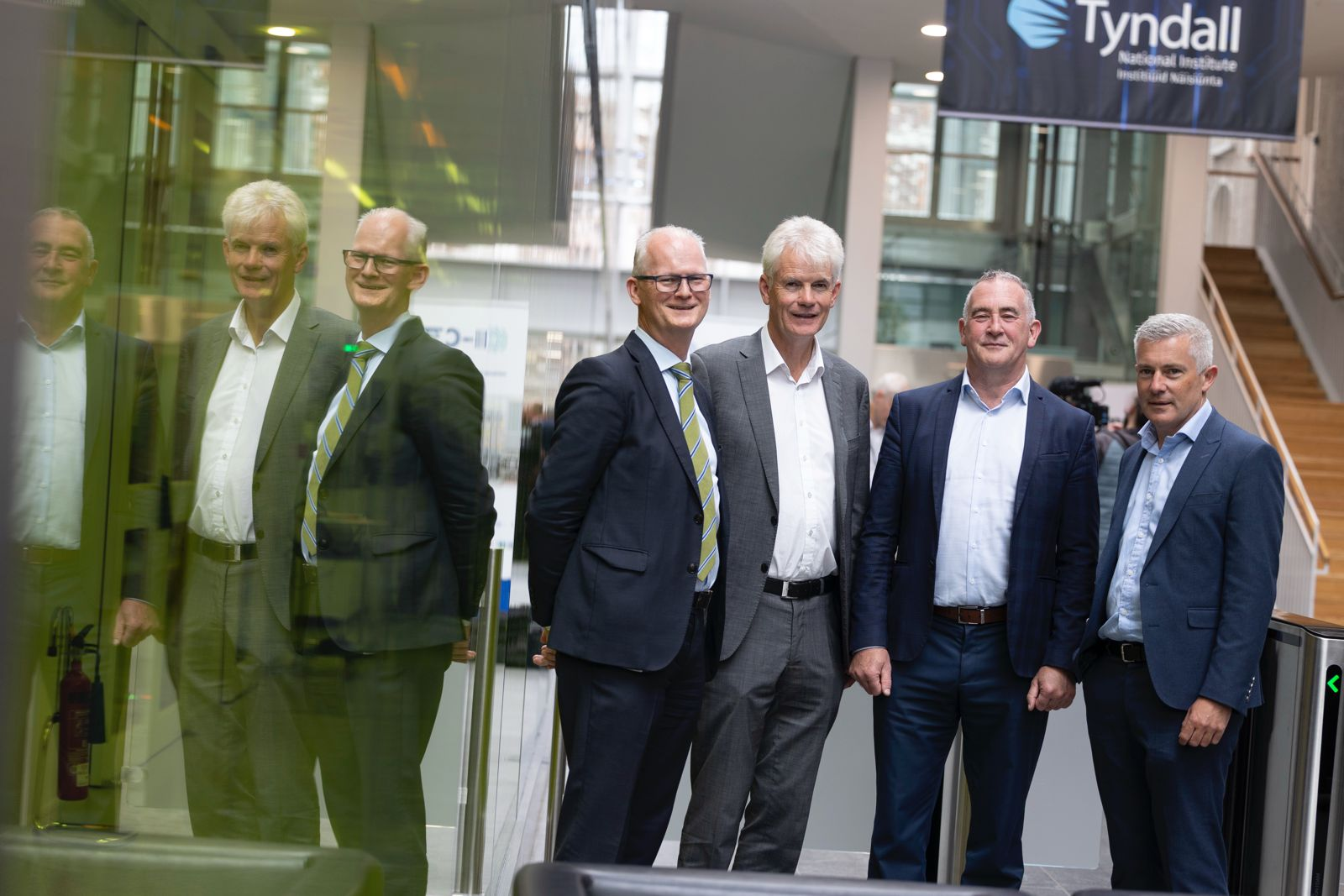
IN Brief:
- Ireland has launched I-C3, a national semiconductor competence centre coordinated by Tyndall.
- The programme targets startups and SMEs with access to design tools and pilot line facilities.
- The initiative is linked to Chips for Europe under the European Chips Act and Chips JU co-funding.
Ireland has launched I-C3, its National Competence Centre in Semiconductors, aimed at giving startups and SMEs practical access to resources that are routinely out of reach for smaller organisations: chip design tools, training, pilot line pathways, and clearer routes to funding.
The centre is coordinated by Tyndall National Institute and supported by the Department of Enterprise, Tourism and Employment through Enterprise Ireland, with co-funding secured under the European Union’s Chips Joint Undertaking. Structurally, it is a consortium spanning Tyndall, MCCI, MIDAS Ireland, NovaUCD, and University College Dublin, with the stated intent of connecting early-stage companies to capability across design, production, and skills development rather than leaving them to navigate Europe’s semiconductor ecosystem alone.
I-C3 is also framed as part of the “Chips for Europe” initiative envisaged by the European Chips Act, which calls for a network of competence centres across member states to expand access to semiconductor technologies and address skills gaps. Ireland’s centre is described as one of 30 being established across 27 EU countries.
The offer to startups and SMEs is straightforward in concept, and difficult in practice: hands-on access to design platforms and pilot production lines. In many cases, the blocker is not an absence of ideas, but a lack of affordable EDA access, insufficient engineering time to become proficient in complex toolchains, and limited ability to validate prototypes through credible manufacturing routes. By bundling training, design tools, and pilot line connectivity into a single programme, I-C3 is intended to reduce those friction points and shorten the path from concept silicon to manufacturable designs.
The government is also anchoring the announcement in industrial scale. The department describes Ireland’s semiconductor footprint as more than 130 indigenous and foreign subsidiary companies employing over 20,000 people, set within a broader ICT sector of 175,000 people and annual exports of €13.5 billion in products. Multinational names cited as long-term R&D investors in Ireland include Intel, Apple, Qualcomm, AMD, and Analog Devices, with I-C3 positioned as an additional mechanism to raise the ceiling for indigenous innovation rather than relying solely on foreign direct investment gravity.
Tyndall’s role reflects its positioning as Ireland’s largest research and technology organisation specialising in electronics and photonics, with a stated base of more than 650 staff across 50 nationalities and over 200 industry partners worldwide. That matters because competence centres live or die on execution: access to equipment, the ability to broker credible connections to pilot lines, and the capacity to translate “here is a tool” into “here is a design you can ship”.
I-C3’s success will be measured less by launch-day rhetoric and more by whether it can move SMEs from development kits and outsourced modules into credible custom silicon — and whether it can do so fast enough to compete in a European landscape that is, finally, attempting to build semiconductor infrastructure at pace.

