
IN Brief:
- Murata’s SCA3400-D01 accelerometer is now available through Mouser for industrial sensing and machine-control applications.
- The three-axis device combines low noise density, high linearity, and long-term offset stability for harsh operating environments.
- Target applications include structural health monitoring, construction tools, machine control, and inertial measurement units.
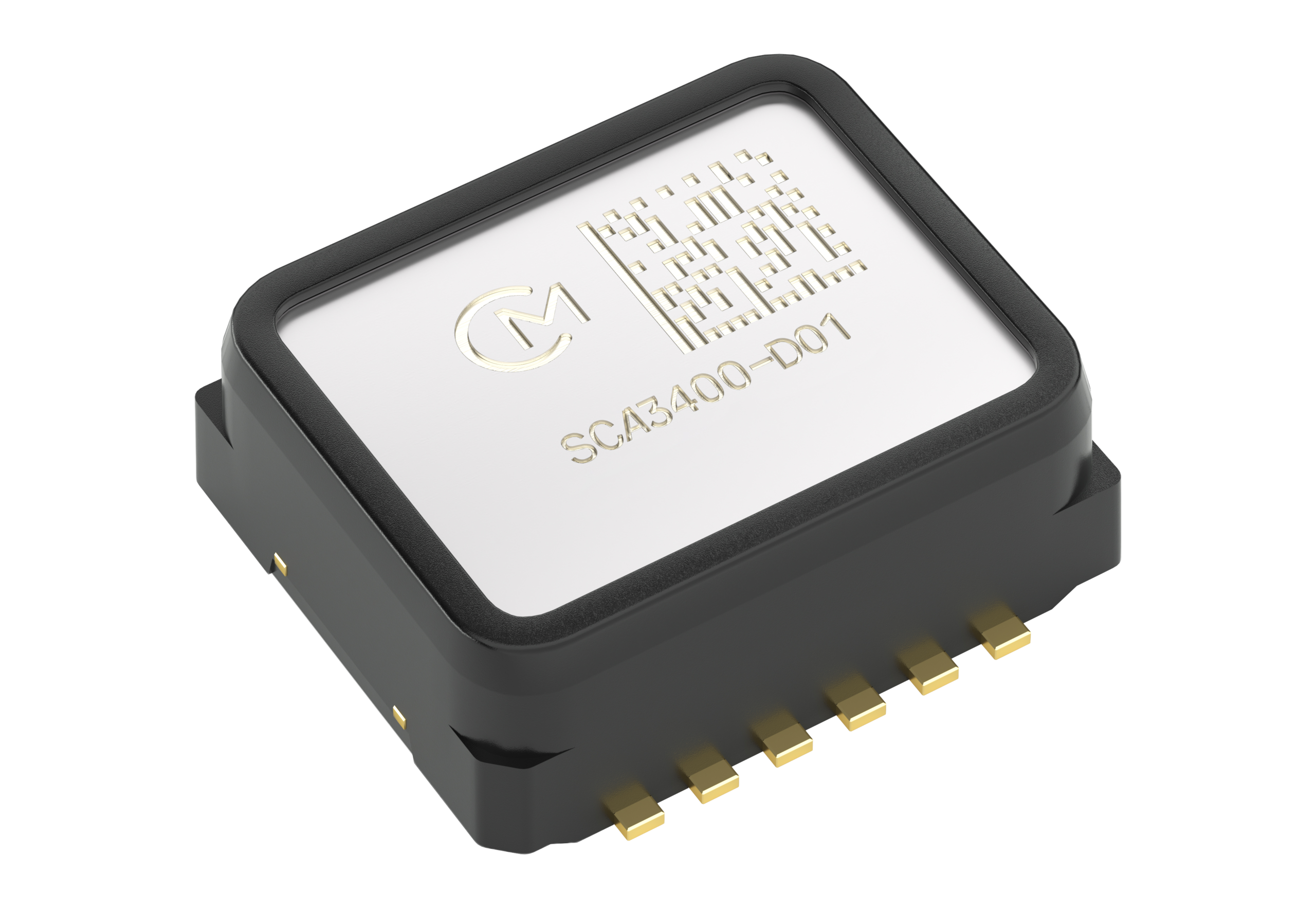
Murata’s SCA3400-D01 high-performance three-axis accelerometer is now available through Mouser Electronics, adding a rugged sensing option for industrial systems that require stable motion, tilt, and vibration measurement over extended operating periods.
The device is aimed at structural health monitoring, machine control, construction tools, and inertial measurement units. It combines low noise density, high linearity, self-diagnostics, and offset stability, supporting measurement tasks where small changes in movement or vibration may indicate mechanical stress, wear, deformation, or early-stage system failure.
The accelerometer offers lifetime offset drift of 0.5mg for the X and Y axes and 2mg for the Z axis. Offset error introduced by operating-temperature changes is specified at 2mg on the X and Y axes and 3mg on the Z axis. For precision measurement, the device provides a 1mg linearity error over a 1.2g range and a noise density of 20µg/√Hz.
Murata has also included user-selectable dynamic range, low-pass filtering, self-diagnostic functions, and capacitive 3D-MEMS sensing technology. These features support embedded systems where the sensor has to contribute clean measurement data while also allowing the host system to verify basic device health.
Structural and machine-monitoring systems increasingly depend on distributed sensors placed close to the physical asset. In civil infrastructure, accelerometers can be used to track vibration, movement, resonance, and tilt in bridges, towers, buildings, and heavy structures. In industrial equipment, the same measurement principles apply to rotating machinery, production equipment, construction tools, and motion-sensitive systems.
Condition-monitoring systems are shifting from periodic manual inspection towards continuous measurement. That places heavier demands on component stability, because a sensor installed for long-term monitoring must provide repeatable data across temperature changes, mechanical stress, and ageing. Drift, noise, and offset variation can make it harder to distinguish normal operating movement from degradation.
The SCA3400-D01 is positioned for designs where basic shock detection is not enough. Structural health monitoring and precision machine control need low-noise measurement, stable offsets, and predictable behaviour over time. Those requirements are especially important when acceleration data is being fed into predictive maintenance software, control loops, or safety-related monitoring functions.
Industrial sensing is also becoming more closely tied to edge processing. Sensors that once delivered simple threshold alerts are now part of wider data acquisition chains, feeding controllers, gateways, analytics platforms, and digital maintenance systems. Signal quality at the sensing point has a direct effect on the usefulness of the data further downstream.
Mouser’s stock availability gives design teams a route to source the device for new monitoring systems, retrofit sensor platforms, and ruggedised industrial equipment. As factories, infrastructure operators, and machine builders add more embedded sensing to physical assets, accelerometer performance remains a practical constraint on the accuracy and durability of those systems.

