
IN Brief:
- Tobii is providing webcam-based eye tracking for Lenovo’s Legion Y900 13 tablet.
- The integration uses Tobii Nexus software running on a Qualcomm SoC, with gaze data generated from standard webcam images.
- Software-based eye tracking points to wider use of camera-derived sensing in embedded HMI, accessibility, medical, and industrial interfaces.
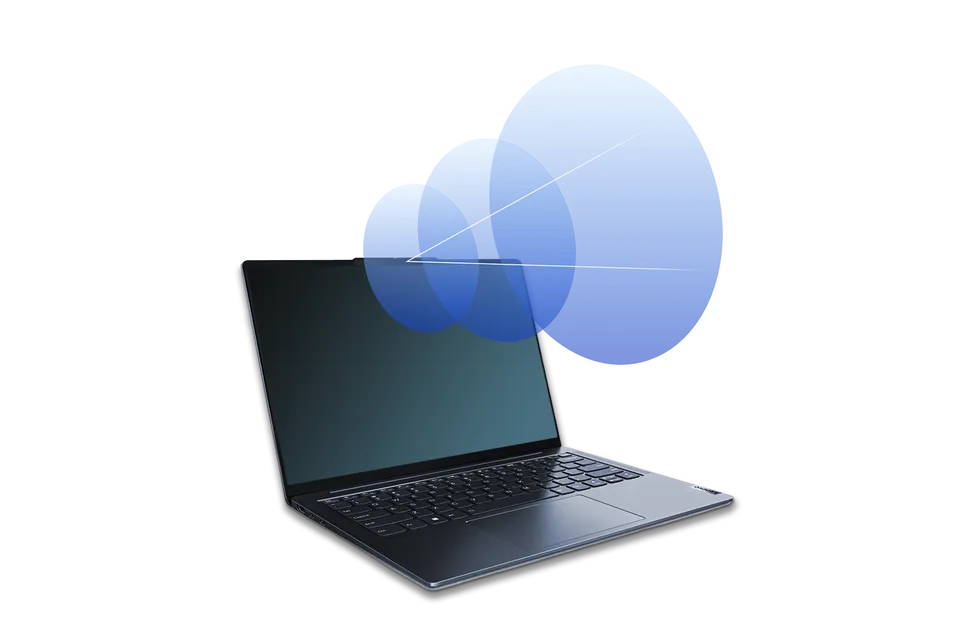
Tobii is providing webcam-based eye tracking for Lenovo’s Legion Y900 13, a large-screen Android tablet that uses software-derived gaze data to support multimodal AI interaction.
The tablet was released by Lenovo on 19 May and includes a custom integration built around a Qualcomm SoC. Tobii Nexus, the company’s software-based eye-tracking platform, converts images from standard webcams into real-time eye-tracking data, reducing the need for dedicated eye-tracking camera hardware.
The integration gives Lenovo’s tablet a low-footprint route to gaze-aware interaction, with additional AI features expected through future updates. The design win was first disclosed in Tobii’s interim report for the first quarter of 2026, before the Lenovo product and model name were identified.
“We are very excited to see the first consumer device featuring webcam eye tracking enabled by Tobii Nexus. Lenovo has found a very innovative way of utilizing the possibilities provided by our webcam eye tracking to create value-adding new features to how users can interact with their product,” said Gunnar Troili, acting senior vice president, integrations, at Tobii.
Although the first named product is a consumer tablet, the engineering direction is relevant to embedded interface design more broadly. Webcam-based eye tracking reduces the hardware barrier for gaze-aware systems by using image data from an existing camera and processing it locally through software. That can simplify mechanical design, reduce bill-of-materials cost, and make attention-aware interaction available to platforms that already include a camera and sufficient processing capability.
Interface design is moving beyond touch alone. Transparent HMI film combining force and touch sensing shows how input layers are becoming richer and more context-aware. Eye tracking adds another modality, allowing systems to respond to gaze, attention, and intent without requiring an additional physical control.
That approach has potential in medical electronics, assistive technology, industrial HMIs, test equipment, operator terminals, and training systems. Each use case brings its own technical constraints: camera quality, lighting variation, user calibration, compute load, latency, privacy, and power consumption all influence whether software-based gaze tracking can be deployed reliably.
Local processing is particularly important where image data is sensitive or connectivity is limited. Generating gaze data on the device can reduce the need to move raw video off-platform, while also lowering latency for interface responses. In regulated or controlled environments, that can make software-derived sensing easier to integrate than cloud-dependent analytics.
The use of a Qualcomm SoC also underlines the power and thermal requirements of the application. Eye tracking has to run alongside the main user interface, AI features, display processing, wireless connectivity, and operating-system workload. Efficient execution is therefore part of the design requirement rather than a secondary optimisation.
Tobii’s integration with Lenovo’s Legion Y900 13 shows how eye tracking is moving from dedicated hardware toward software-enabled camera systems. As embedded products add AI-driven interfaces, gaze data is likely to become one of several local signals used to make devices, panels, and terminals more responsive without adding another layer of controls.

