IN Brief:
- ROHM’s 750V SiC MOSFET has been adopted in a BBU for AI server power supplies.
- The SCT4013DLL device is used in the power supply section of a ±400V architecture.
- HVDC server power is increasing demand for low-loss, high-temperature SiC devices.
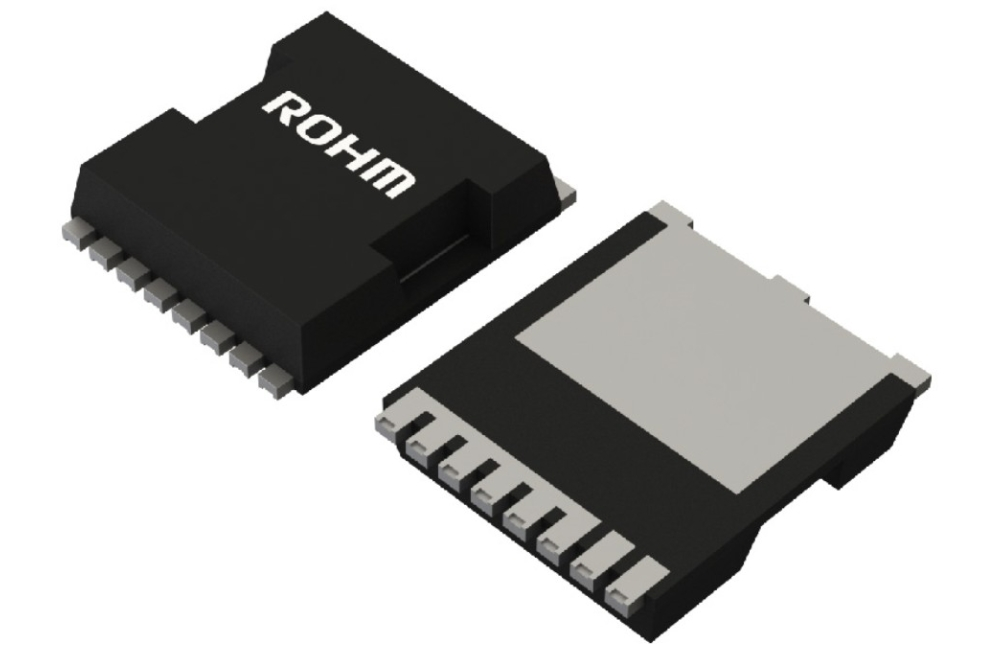
ROHM has secured adoption of its 750V SiC MOSFET in a battery backup unit for AI server power supplies, as high-voltage DC architectures move further into data-centre power design.
The SCT4013DLL silicon carbide MOSFET is being used in the power supply section of a ±400V architecture for AI servers. The device supports high-temperature operation with a maximum junction temperature of 175°C, helping address the heat generated as server power systems move to higher voltage and higher density.
Battery backup units and capacitor units are taking on a larger role at rack level, where they must support high voltages and large currents quickly during power abnormalities, momentary interruptions, or outages. In next-generation 800VDC architectures, the voltage delivered to the battery pack inside the BBU is expected to reach around 560V, placing 750V-rated SiC MOSFETs directly inside the design window.
AI compute is stretching the limits of conventional low-voltage distribution. As accelerator power rises and rack densities climb, losses in distribution, conversion, and backup stages become harder to absorb. High-voltage DC architectures reduce current for a given power level, easing some copper and loss constraints, while raising demands around switching devices, insulation, protection, control, and service safety.
SiC devices are suited to parts of that transition because they combine high-voltage capability, low switching loss, and high-temperature performance. In backup systems, the device also has to respond reliably under abnormal conditions, where fast control and low loss both contribute to system resilience.
The adoption sits within a broader redesign of AI infrastructure power. Siemens’ reference architecture for NVIDIA AI centres connected electrical distribution, storage integration, controls, and modular power blocks directly to compute deployment. The same pressure is now visible inside the rack, where the power path has become a design domain in its own right.
ROHM’s device also connects component choice to system availability. AI servers are consuming more power while carrying workloads that require continuous operation. Rack-level backup systems need to bridge power events without introducing high conversion losses or excessive thermal stress during normal service. That places SiC switches alongside capacitors, batteries, controllers, sensors, and protection devices in the reliability chain.
The move toward 800VDC and ±400V architectures will vary across facilities, depending on installed infrastructure, safety requirements, service procedures, and supply-chain readiness. Even so, AI infrastructure is pulling high-voltage power electronics closer to mainstream server design.
For ROHM, the adoption places its SiC portfolio inside a fast-growing power segment beyond automotive and industrial drives. For system designers, it reinforces the shift from processor-led performance planning toward full rack-level electrical architecture, where power conversion, backup, thermal behaviour, and maintainability all shape deployment.