
IN Brief:
- ROHM has selected AIXTRON’s G10-GaN system for in-house GaN epitaxy.
- The platform will support 8-inch wafers for 650V and 100V GaN power devices.
- AI server power, EV charging, and accelerator VRMs are increasing pressure on GaN manufacturing capacity.
ROHM Semiconductor has selected AIXTRON’s G10-GaN deposition system to support in-house gallium nitride epitaxy at its Hamamatsu plant in Japan.
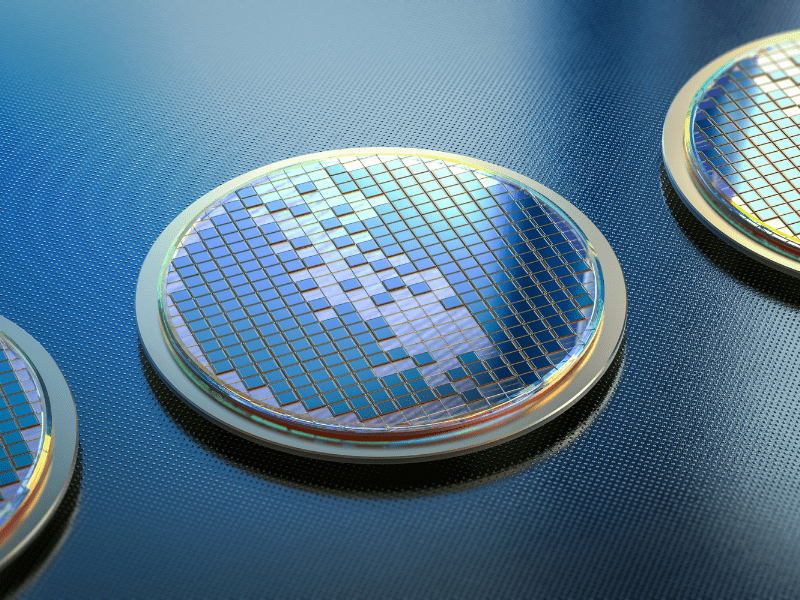
The system is ramping for volume production of 8-inch GaN epitaxial wafers for ROHM’s 650V and 100V power device platforms. Bringing the epitaxy process in-house gives the company more direct control over wafer quality, device performance, and production scheduling after previously relying on external foundry manufacturing for its 650V GaN devices.
The 650V platform addresses server power supplies, on-board chargers, and DC-DC converters, while the 100V product line is aimed at voltage regulator modules for AI accelerators and GPU-based compute platforms. Those application areas are placing heavier demands on conversion efficiency, thermal performance, and power density as compute and electric-vehicle systems move to higher electrical loads in tighter physical envelopes.
AIXTRON’s G10-GaN platform is built for high-volume GaN-on-silicon epitaxy, with process control designed to support high breakdown voltage, low on-resistance, and thermal stability. ROHM and AIXTRON are also working together on process optimisation and long-term technology roadmap alignment, extending the relationship beyond equipment installation.
AI infrastructure is giving GaN a stronger role in board-level and rack-level power conversion. Server racks are moving toward more demanding power architectures, with accelerator platforms increasing the strain on VRMs, auxiliary supplies, and backup power paths. In related AI power hardware, ROHM’s 750V SiC MOSFET has already been adopted for AI server backup power, showing how wide-bandgap devices are being pulled deeper into data-centre electrical design.
GaN and SiC are not interchangeable across every conversion stage. SiC remains strong in many higher-voltage and higher-power applications, while GaN is gaining ground where high switching frequency, compact magnetics, and lower switching losses can shrink the total system. For GaN, the value of the transistor depends heavily on repeatable epitaxy, device uniformity, gate behaviour, package integration, and application support.
Automotive electrification adds a second driver. On-board chargers, DC-DC converters, and future inverter designs need lighter, smaller, and more efficient conversion stages, but automotive qualification leaves little room for process instability. Closer control of epitaxy gives ROHM more influence over one of the manufacturing steps that shapes yield, reliability, and long-term supply resilience.
As GaN moves from specialist device launches into high-volume industrial, automotive, and computing platforms, wafer process control becomes part of the commercial proposition. The ROHM-AIXTRON partnership brings that manufacturing discipline closer to the device roadmap.

