IN Brief:
- DroneShield has produced its first European-built counter-UAS system.
- The system uses the same design as its Australian-built units while drawing on a primarily European supply chain.
- Counter-drone electronics are moving closer to local production as European defence demand accelerates.
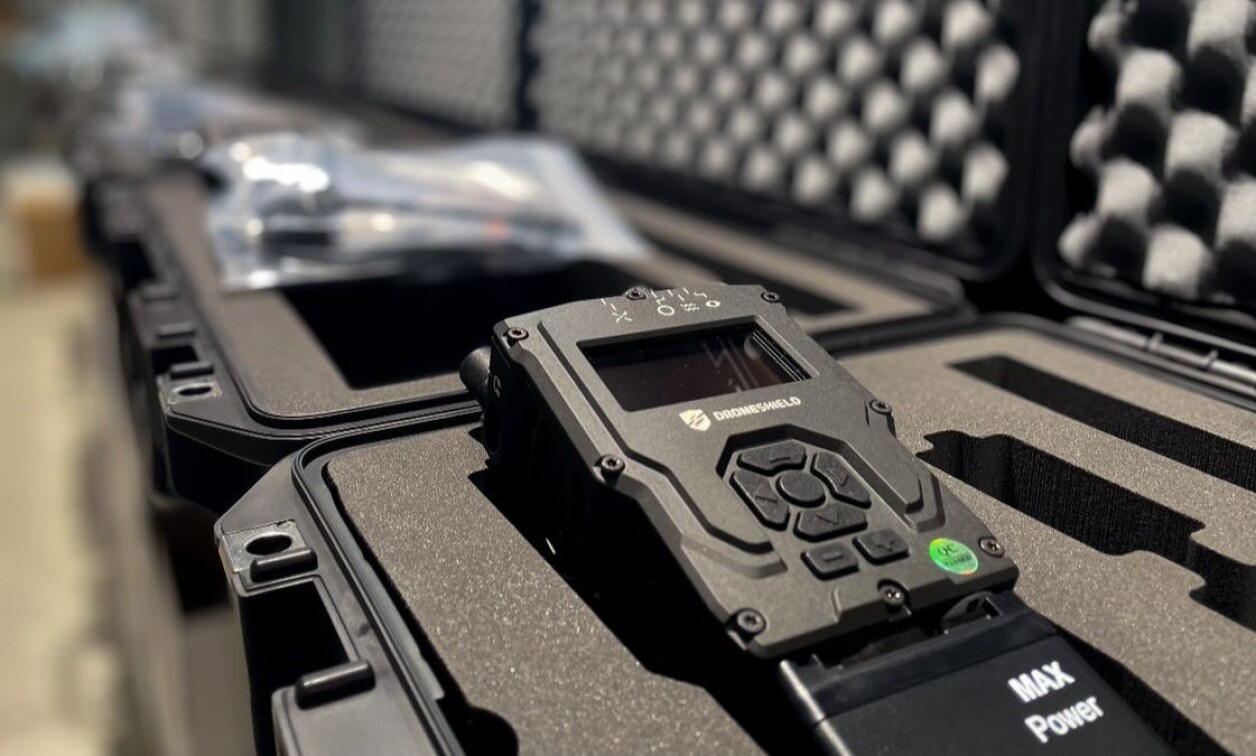
DroneShield has produced its first European-built counter-unmanned aerial system, extending its manufacturing footprint for regional defence and security customers.
The system has been built using a primarily European supply chain while retaining the same design as DroneShield’s Australian-manufactured units. The company expects European production to support military, government, and critical infrastructure demand as customers seek local supply, maintainable equipment, and faster access to counter-drone capability.
The European-produced system provides AI-powered detection of unmanned aerial threats across military and civilian environments. Production is expected to expand as demand grows for layered air defence, border protection, infrastructure security, and battlefield counter-UAS deployments.
Counter-UAS systems bring together RF sensing, signal processing, embedded compute, software classification, threat libraries, ruggedised electronics, operator interfaces, and integration links to wider command systems. Detection performance depends on the quality of the electronics and algorithms, while operational value depends on update cadence, repairability, support infrastructure, and the ability to sustain systems as drone behaviours change.
Europe’s counter-UAS demand has accelerated as small drones have moved from isolated nuisance events into mainstream security and military planning. Low-cost UAVs, commercial quadcopters, first-person-view drones, improvised loitering munitions, and more autonomous systems are now part of the threat environment. Military users require detection and classification at speed, while infrastructure operators increasingly need persistent airspace awareness around energy assets, ports, airports, prisons, industrial sites, and public venues.
The electronics problem is becoming more complex as drone systems shift frequencies, reduce emissions, rely more heavily on autonomy, or blend into congested spectrum. RF detection equipment must separate drone signals from benign activity, maintain usefulness in difficult electromagnetic environments, and work with threat libraries that can be updated as new systems appear.
AI-assisted classification can reduce operator burden, although it does not remove the need for robust sensor design or careful validation. Models and reference data have to be maintained, while the hardware has to support deployment in mobile, fixed, and sometimes harsh operating conditions. A counter-UAS product is therefore a sensing platform and a software-supported system at the same time.
The move toward local manufacturing aligns with European counter-drone programmes that are placing sensors, effectors, communications, and command links into integrated platforms. That pattern is visible in GDELS’ Pandur GBAD layered air-defence vehicle, where counter-UAS capability is being built into mobile air-defence architectures rather than left as a standalone perimeter tool.
Sovereign supply has particular weight in this market because demand can rise sharply after battlefield lessons or high-profile incidents. Imported systems will remain part of procurement, but local production, regional repair, and software support increasingly influence whether equipment can be adopted across fleets rather than trialled in small numbers.
Counter-drone systems also have to communicate with the rest of the defensive architecture. Detection must feed command systems, share tracks, cue jammers or interceptors, support rules of engagement, and operate alongside radar, optical, acoustic, and electronic-warfare layers. Interoperability, cybersecurity, and timing behaviour are becoming engineering requirements rather than later integration tasks.
DroneShield’s European production milestone strengthens its ability to serve customers seeking regional supply without changing the product design. The decision preserves continuity with existing systems while addressing procurement concerns around lead times, sovereignty, and support. In a market where drone threats change quickly, manufacturing location and lifecycle support are becoming part of the technical offer.