IN Brief:
- Robin Radar Systems is adapting IRIS On-The-Move for maritime counter-UAS operations.
- The system detects, tracks, and classifies drones from moving vessels at speeds up to 54 knots.
- The development brings mobile radar sensing into ports, harbours, vessels, and offshore infrastructure.
Robin Radar Systems has expanded its IRIS On-The-Move counter-UAS radar capability into maritime environments, adapting the system for drone detection around ports, harbours, vessels, offshore infrastructure, and strategic coastal assets.
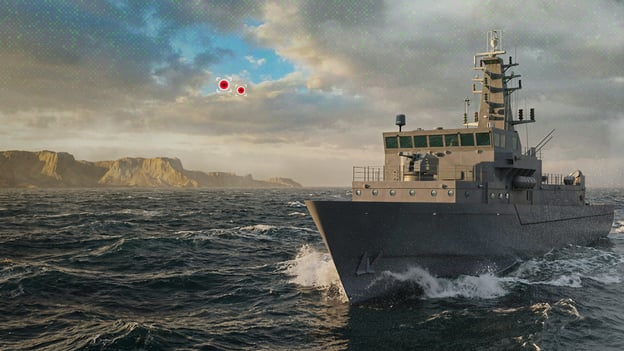
IRIS OTM at Sea builds on a radar platform originally developed for moving land vehicles. The maritime version is being developed to detect, track, and classify drones while mounted on vessels travelling at up to 54 knots, combining mobile deployment with software updates for sea clutter, platform movement, and difficult coastal conditions.
The system is being engineered for salt, corrosion, resonance, and electromagnetic compatibility requirements at sea. Its software stack is being updated to filter heavy sea reflections and environmental clutter, while still detecting small, fast, and low-flying unmanned systems close to the waterline.
IRIS is purpose-built for drone detection rather than conventional marine or air surveillance. The maritime configuration is intended to track targets ranging from hovering drones to high-speed aerial threats travelling at up to 100 metres per second. Existing IRIS users will be able to access the update without replacing hardware, allowing capability to be extended through software and configuration changes.
Maritime counter-UAS sensing is a more complex electronics problem than fixed perimeter detection. The radar platform is moving, the surface environment is dynamic, reflections change constantly, and low-altitude targets can blend into coastal or sea clutter. A vessel-mounted sensor must therefore distinguish drone signatures from water movement, vessel motion, bird activity, harbour structures, and other airborne or surface objects without creating a false-alarm burden.
Those constraints are pushing counter-UAS systems away from static installations and towards domain-specific electronics. Ports, naval facilities, offshore wind farms, oil and gas assets, and strategic shipping corridors all require local detection that can move with the protected asset. A fixed radar installation may cover a terminal or harbour entrance, but patrol vessels, support craft, and naval units need sensing that remains useful while underway.
At the production end of the same market, DroneShield’s move into European counter-UAS manufacturing shows how fast drone-defence technology is being pulled into regional supply and deployment requirements. Robin Radar’s development adds a different layer to that picture, with the emphasis on mobile sensing, target classification, and adaptation to a harsh operating domain.
The convergence between civil infrastructure protection and defence electronics is also narrowing the gap between port security, naval operations, and industrial asset protection. Drones can threaten physical security, disrupt operations, collect intelligence, or interfere with safety-critical activity. Detection remains the first engineering bottleneck, since defeat systems, alarms, and operational response all depend on reliable target identification.
By extending IRIS OTM into maritime use, Robin Radar is addressing a sensing problem that is likely to become more common as low-cost aerial systems continue to proliferate. The performance challenge will sit in the radar processing, environmental filtering, classification reliability, and integration with wider command systems, but the direction of travel is already evident: counter-UAS sensing is becoming mobile, software-defined, and domain-specific.