
IN Brief:
- Taiwan Semiconductor has introduced 40V and 60V automotive-grade TQM N-channel MOSFETs.
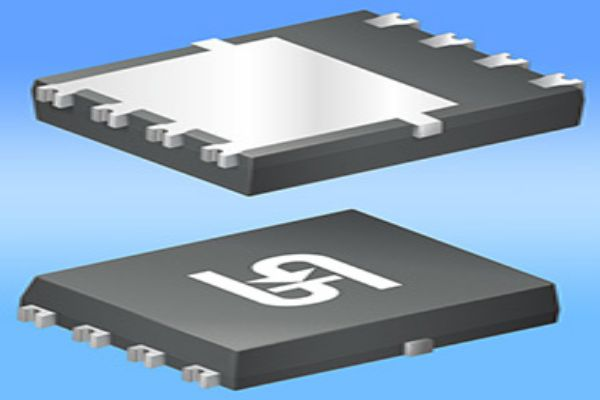
- The devices use 5mm x 6mm PDFN56U wettable-flank packaging for inspection and thermal performance.
- Target applications include 48V systems, industrial motor control, server power, and DC-DC conversion.
Taiwan Semiconductor has introduced the TQM series of automotive-grade N-channel power MOSFETs, offering 40V and 60V devices in 5mm x 6mm PDFN56U wettable-flank packages.
The series targets high-efficiency power conversion and motor-control designs in automotive and industrial systems. Its wettable-flank package improves solder-joint visibility during automated optical inspection, supporting production quality control in applications where board-level reliability is as important as electrical performance.
The low-profile package uses heat-spreader contacts to improve thermal dissipation, helping the devices support higher power density in compact PCB layouts. Taiwan Semiconductor has also designed the package for drop-in compatibility with several existing formats, including TDSON-8, LFPAK56, and DFN5x6, allowing easier substitution or platform migration where footprints are already fixed.
The initial series includes three devices. TQM033NB04CR is a 40V device with maximum RDS(on) of 3.3mΩ at 10V and 5.1mΩ at 7V, rated at 121A with a maximum junction temperature of 175°C. TQM150NB04CR is another 40V device, with maximum RDS(on) of 15mΩ at 10V and 21mΩ at 7V, rated at 41A. TQM050NB06CR is a 60V device with maximum RDS(on) of 5mΩ at 10V and 7mΩ at 7V, rated at 104A.
Applications include 48V automotive architectures, industrial motor drives, solenoid control, server power supplies, telecom power, switched-mode power supplies, and high-reliability DC-DC converters. Samples are available through DigiKey and Mouser, with production lead times of eight to 14 weeks for volume quantities.
The automotive-grade label carries growing value outside vehicle electronics. Industrial automation, robotics, telecoms, server power, and infrastructure equipment increasingly share automotive-like expectations around long service life, thermal resilience, inspection, and documented reliability. A device that can combine low resistance, compact packaging, and production inspection compatibility becomes useful well beyond its first target market.
The same direction can be seen across other recent power-device releases. ROHM’s work on 48V MOSFETs and Vishay’s 1200V rectifier expansion sit at different points in the voltage and application spectrum, but both reflect a common pressure to improve efficiency, thermal performance, and package suitability in dense power electronics.
Wettable-flank packaging is particularly relevant in high-volume or high-reliability production. Power devices often fail the broader design requirement through assembly, thermal path, or inspection limits rather than through headline silicon capability. Improved optical inspection of solder joints can reduce uncertainty in production and qualification, especially when devices are being assembled onto boards that must survive vibration, thermal cycling, and long operating periods.
Footprint compatibility also gives the TQM series a practical supply-chain role. Many power designs are locked around existing package geometries, and changing a board layout can reopen mechanical, thermal, and compliance work. A compatible MOSFET option allows engineers to manage availability, efficiency upgrades, and qualification pathways with less disruption to established platforms.
As 48V rails and compact motor-control designs spread across industrial and automotive-adjacent equipment, the distinction between component performance and manufacturability becomes harder to maintain. Taiwan Semiconductor’s TQM devices address both sides of that requirement, pairing low-resistance MOSFET silicon with a package format built for inspection, thermal dissipation, and long-term production control.

