IN Brief:
- Galaxia will develop and supply an autonomous flight safety system for Maritime Launch Services.
- The planned onboard system will assess launch vehicle sensor data against termination criteria.
- The announcement is a development agreement, not evidence of completed flight qualification.
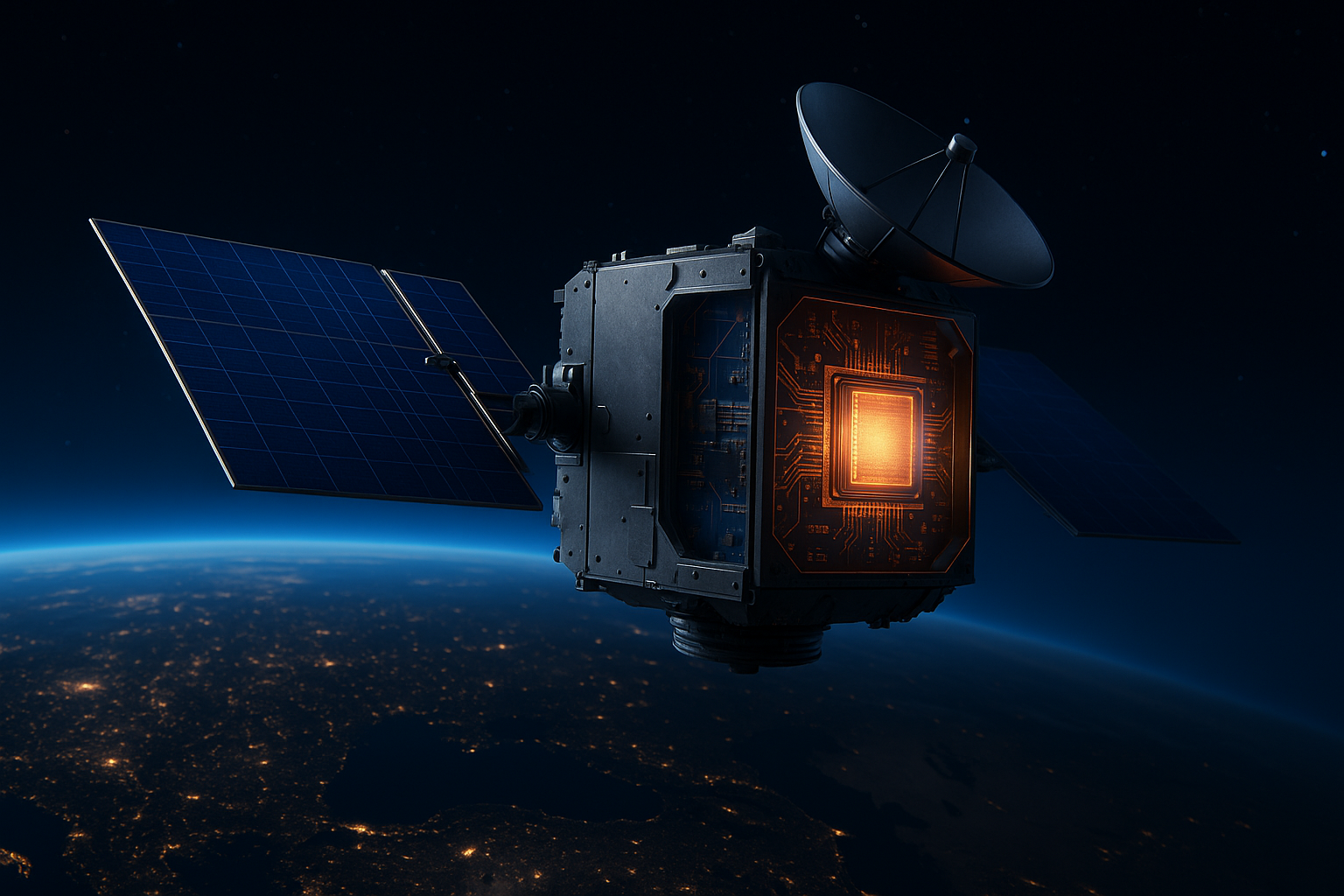
Galaxia will develop and supply an autonomous flight safety system for Maritime Launch Services to support future operations at Spaceport Nova Scotia, moving defined flight safety decisions into onboard computing equipment rather than relying exclusively on ground-based assessment.
The two Halifax companies announced the agreement on 7 October. Their proposed autonomous flight safety system will process launch vehicle sensor data and determine whether predetermined flight termination criteria have been met. It is a development commitment, not an announcement of completed hardware, flight certification or an operational launch installation.
Autonomous flight safety arrangements are designed to perform specific range safety functions. A launch vehicle may leave a prescribed flight corridor or otherwise reach a condition requiring a termination decision, and the system must evaluate the applicable criteria using information available during flight.
Moving this assessment onboard can reduce dependence on a ground decision process for particular safety functions. It does not mean that ground monitoring, launch authorisation and the other responsibilities of the range safety organisation disappear.
Onboard sensor information must be acquired and processed within time limits compatible with the safety task. A measurement that is accurate but arrives too late may be unsuitable for a decision, particularly when vehicle motion is changing rapidly.
The companies have not published the final sensor suite or processor architecture. Position, velocity and attitude are examples of measurements relevant to flight safety engineering generally, but their use in this specific programme must not be described as confirmed without further technical disclosure.
The decision software must distinguish a genuine breach of a safety criterion from a measurement error or system fault. A false activation could terminate a mission unnecessarily, while a missed activation could allow an unsafe trajectory to continue. Both possibilities shape the safety case for such equipment.
Redundancy, input validation and independently monitored computing are possible engineering approaches to managing these risks. The October announcement does not identify which of these methods Galaxia will implement, so they remain general design considerations rather than claimed system features.
Real-time computing provides another challenge because safety functions need predictable execution behaviour. A processor with sufficient average throughput might still be unsuitable if its worst-case response time cannot satisfy the required operational deadline.
The system must also tolerate the launch environment, which can include acceleration, vibration, rapid changes in temperature and electromagnetic interference. Qualification must address the actual electronic assemblies, software versions and installation conditions specified for the vehicle.
Galaxia describes experience in space-qualified computing and high-reliability spacecraft systems as the foundation for its planned work. That background is relevant to its capability but is not equivalent to qualification of the newly commissioned autonomous flight safety system.
Maritime Launch is supporting the development, with additional assistance from the National Research Council of Canada's Industrial Research Assistance Program. The agreement builds on the companies' participation in Atlantic Canada's commercial space and defence technology sector.
Spaceport Nova Scotia is being developed as a Canadian orbital launch location. Launch safety electronics are one enabling element alongside vehicle certification, ground systems, communications and range procedures; completing one element would not establish the readiness of the wider launch service.
The safety logic also needs a documented relationship between the measured data, the programmed termination boundaries and any response commanded by the system. Those boundaries are specific to an approved launch configuration and its operating rules. They cannot be inferred from general descriptions of autonomous flight safety technology. Verification must show that the installed hardware interprets measurements consistently, including under the timing and fault conditions selected for testing.
The companies have not specified an initial flight date, completed processor design or approval timetable for the autonomous system. Further milestones will include detailed system engineering, integration, testing and the evidence required by the relevant launch and range safety authorities.