IN Brief:
- ORCA's PT-3 is operating at Digital Realty's London Innovation Lab, occupying two standard racks and consuming approximately 6kW.
- A hybrid NVIDIA Proteína experiment reportedly improved the proportion of useful protein designs by 20% against its classical baseline.
- ORCA reports that a 25,755-variable energy optimisation workflow ran more than twelve times faster than on PT-2 at comparable solution quality.
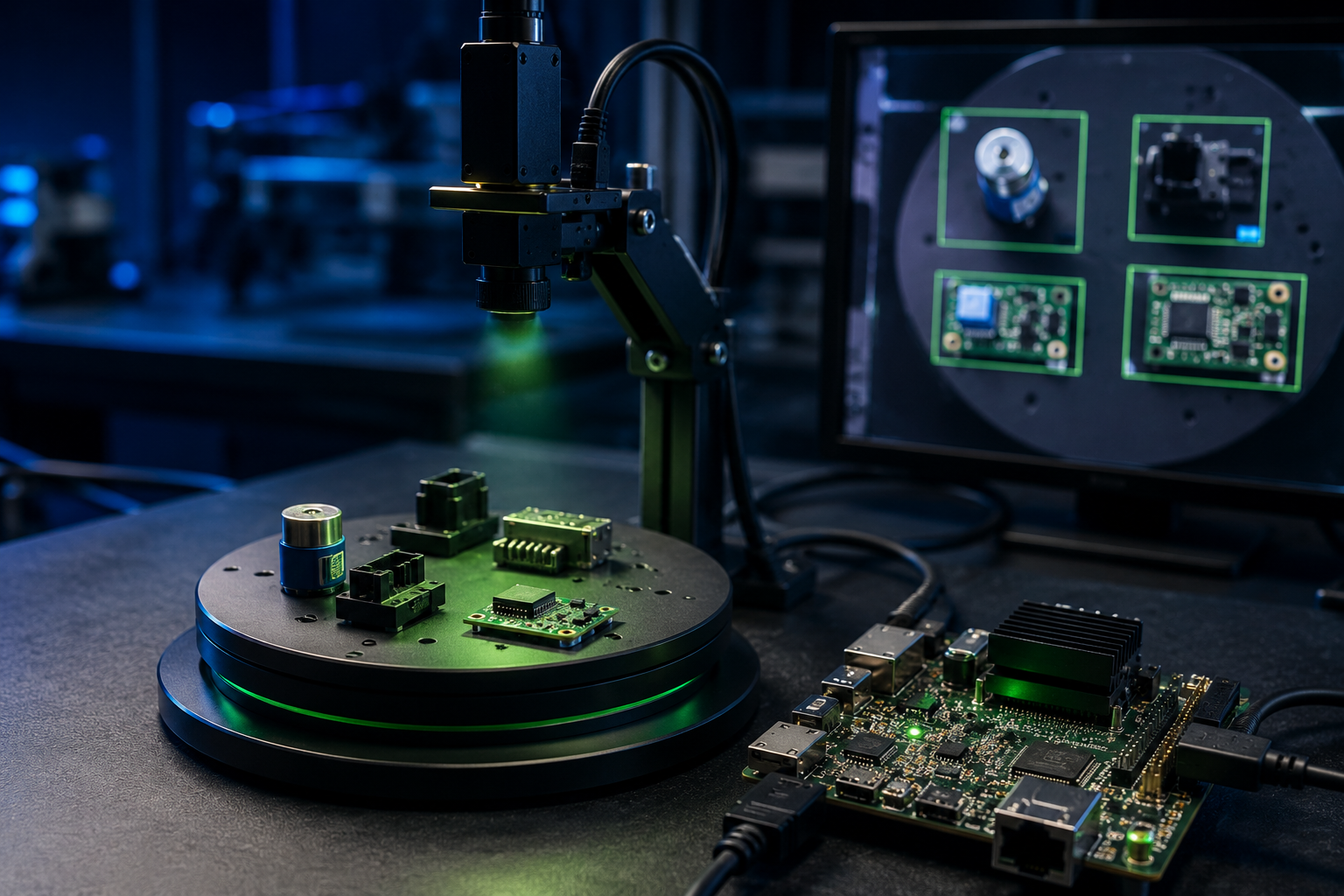
ORCA Computing has launched its PT-3 photonic quantum computer, with the first system operating alongside NVIDIA accelerated computing hardware at Digital Realty’s Innovation Lab in London. The deployment, announced on 15 October, places a modular optical quantum processor within an existing data centre environment and provides a platform for hybrid quantum and classical computing applications.
PT-3 occupies two standard data centre racks, operates at room temperature and consumes approximately 6kW, according to ORCA. The company says the system can become operational within hours of installation and has been designed for upgrades in the field. These characteristics distinguish its physical deployment from superconducting quantum computers that require dilution refrigerators operating at extremely low temperatures, although the photonic system still uses specialist optical components, control electronics and supporting infrastructure.
The London installation runs alongside NVIDIA accelerated computing resources, allowing ORCA to combine selected quantum operations with conventional processing. The company is evaluating the arrangement in scientific modelling and industrial optimisation, where quantum processing can be incorporated into workflows that continue to depend substantially on classical algorithms and computing hardware.
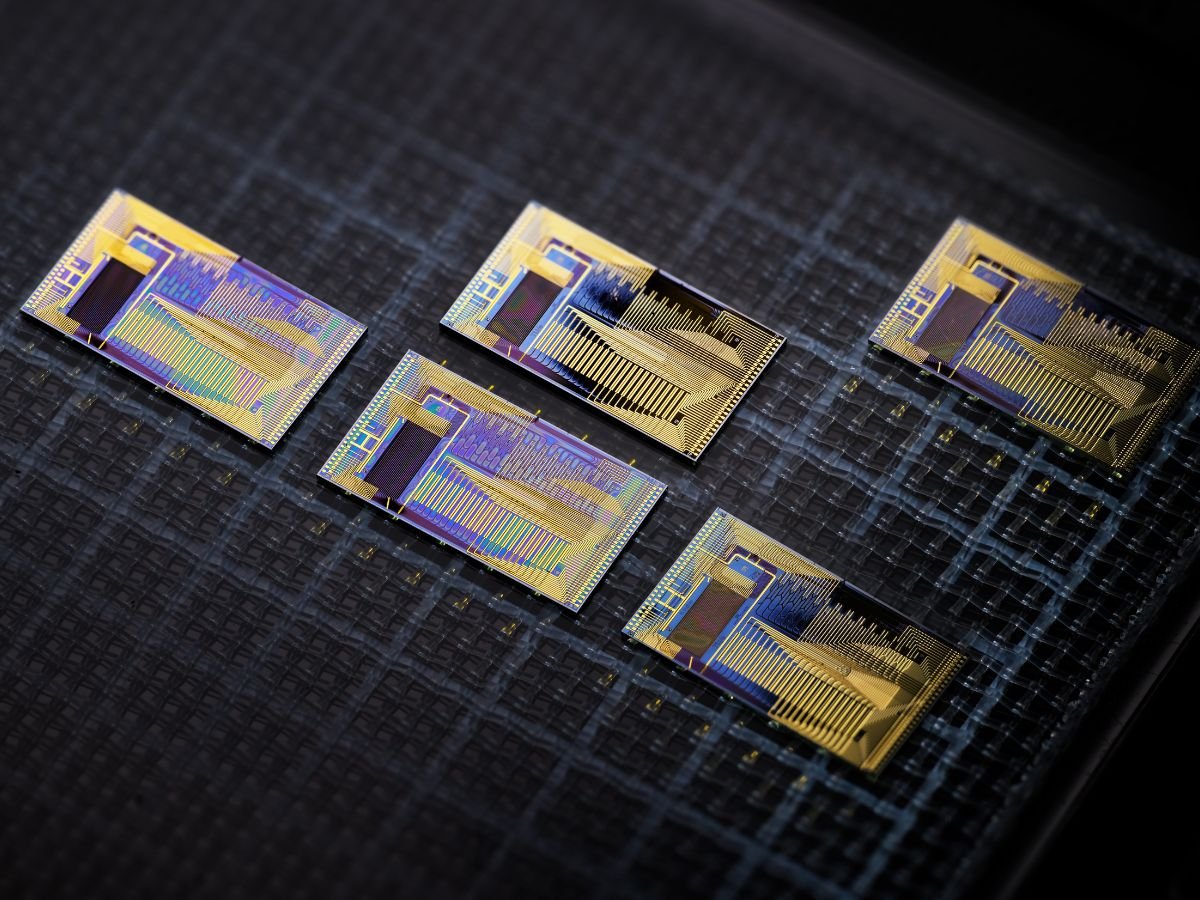
ORCA’s architecture uses quantum states of light to represent and manipulate information. Photons pass through optical components that prepare, transform and measure those states, while electronic control systems coordinate operations and process the resulting measurements. The computing capability therefore depends on the optical architecture, available quantum states, measurement fidelity and software methods rather than an unrestricted equivalence between photon count and conventional processor capacity.
The company has reported results from an extension of NVIDIA’s Proteína generative model for protein design. Its hybrid configuration used 32 NVIDIA Hopper GPUs together with a PT-3 operating with 64 photons across 128 optical quantum modes, or qumodes. The modes describe available states within the photonic system and should not be interpreted as equivalent to the physical qubits specified for a superconducting or trapped-ion processor.
Proteína is intended to generate candidate protein structures using patterns learned from training data. ORCA’s hybrid approach introduces quantum processing into the modelling workflow to investigate whether a different representation of those patterns can improve the generation of useful candidates. The company reports that the proportion of useful protein designs increased by 20% compared with the classical baseline used in its experiment.
That result is a comparison under the reported model and benchmark conditions, rather than evidence of a 20% improvement in all protein-design applications. ORCA also reports a different distribution of secondary structures among the generated proteins. Experimental assessment remains necessary to establish whether particular candidates have the stability, binding characteristics or biological activity required for a practical application.
The result extends earlier work on ORCA’s PT-2 platform, including research undertaken with the Technical University of Denmark. That programme examined peptide binders and molecular generation, with the company reporting laboratory validation of selected peptide results. Those earlier findings provide research context, but measurements from the different hardware generations and models cannot be combined into a single performance comparison without equivalent test conditions.
Energy scheduling provides a second application area for PT-3. ORCA has been working with Japanese optimisation specialist JIJ on hybrid algorithms for unit commitment, the process of determining which electricity-generating resources should operate over a defined period. The optimisation must account for electricity demand alongside constraints associated with generator availability, operating limits, start-up behaviour and changes between successive time intervals.
Such problems can require large numbers of interconnected decisions. Some represent whether a generating unit is committed during a particular interval, while others describe quantities or relationships that must satisfy operational constraints. Translating the full problem into a form suitable for quantum processing involves mathematical reformulation, and the resulting quantum workload forms part of a broader calculation involving classical optimisation.
ORCA reports that PT-3 completed a hybrid workflow for a 25,755-variable unit-commitment benchmark in approximately one hour. This was more than twelve times faster than its predecessor, PT-2, at comparable solution quality. The comparison establishes a reported improvement between successive ORCA systems under the specified workflow, not a twelvefold advantage over the fastest available classical computer.
Earlier testing by JIJ and ORCA, undertaken with bp and the UK’s National Quantum Computing Centre, compared hybrid methods with a commercial optimisation solver. The company says the hybrid approach achieved competitive solution quality and, when allowed additional runtime in that earlier testing, found particularly strong solutions. The relevant comparison depends on the problem formulation, time allowed and method used to assess solution quality.
Total execution time is especially important when assessing a hybrid processor. Preparing an optimisation problem, transferring information between computing resources, executing repeated quantum operations and evaluating the returned solutions can all contribute to the time required to complete a workflow. A reduction in quantum processing time alone does not necessarily produce an equivalent reduction in end-to-end application runtime.
The PT-3 has been designed around a modular architecture intended to support hardware upgrades without replacing the complete installation. ORCA says this will allow performance to increase as its photonic components and control methods develop. The company has not provided a universal upgrade schedule or quantified the improvement that each subsequent hardware revision will deliver.
ORCA is trialling applications with customers in life sciences, defence, energy and logistics. Richard Murray, co-founder and chief executive officer, has identified the combination of photonic hardware and accelerated classical computing as the basis for those activities. The announcement does not include independently verified operating savings from customer deployments or establish that the system delivers a computational advantage across every intended application.
The London installation is an operational hardware milestone supported by two company-reported benchmark examples. Further comparisons against appropriate classical methods, together with published application results, will determine the practical performance of the architecture as customers evaluate it. Its immediate contribution is a room-temperature photonic computer operating within a conventional data centre alongside established accelerated computing equipment.