IN Brief:
- Vantron's 11 × 10 × 2.28mm VT-MOB-AH-8108 integrates Morse Micro's MM8108 with USB, SDIO and SPI host interfaces.
- Morse Micro reports CE, FCC and UL certification; the stated 43.3Mbit/s rate is a maximum physical-layer figure.
- The module's 902–928MHz specification does not override European or UK spectrum allocations, antenna conditions or finished-product compliance checks.
Morse Micro has announced CE, FCC and UL certification for Vantron’s VT-MOB-AH-8108 Wi-Fi HaLow module, a compact wireless component built around the Australian semiconductor developer’s MM8108 system-on-chip. The 15 October announcement marks a further qualification step for the module and identifies industrial monitoring, smart infrastructure and networked edge devices as intended applications. It is not a claim that every finished product using the module is approved for every country or installation.
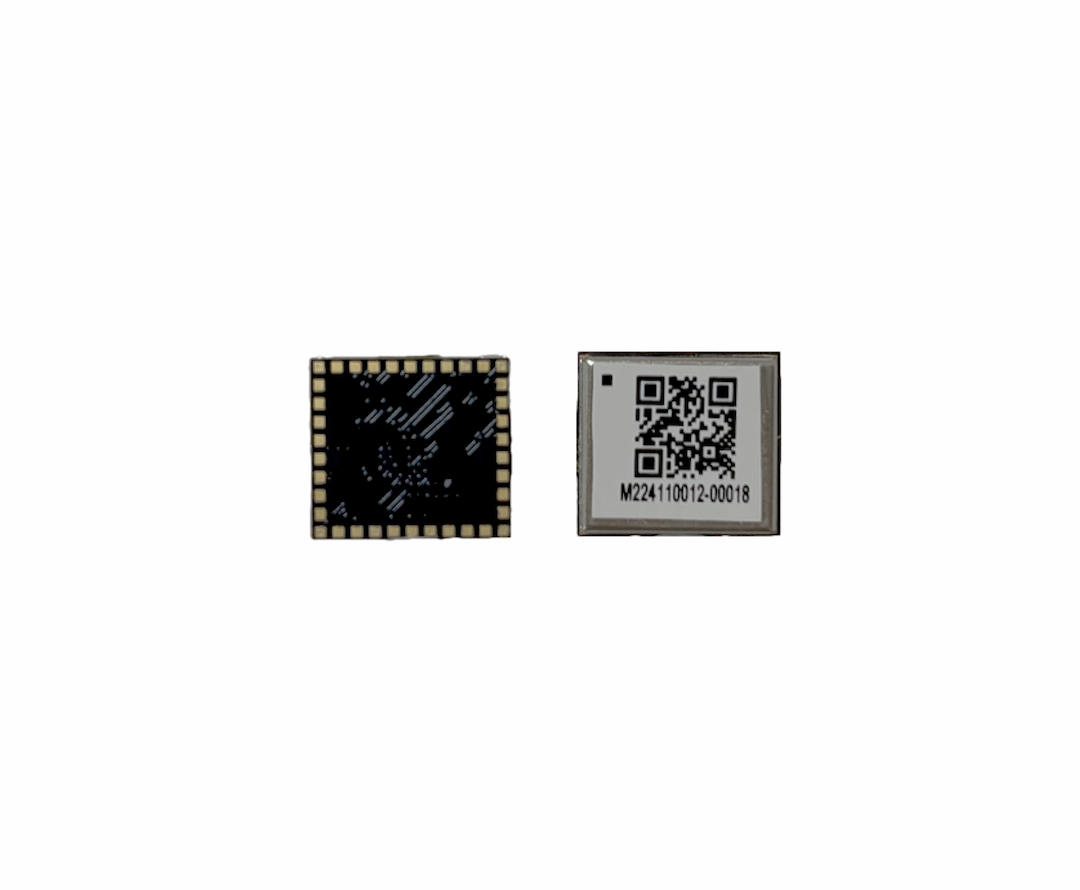
The module is a 38-contact land grid array device measuring 11 × 10 × 2.28mm. Host connections include USB 2.0, SDIO 2.0 and SPI, giving embedded equipment developers different ways to connect a processor to the radio. The host system still needs compatible drivers, firmware, power regulation and application software, together with a layout that respects the module maker’s antenna and supply requirements. Modular certification cannot resolve these separate design tasks or establish the compliance of the completed machine.
Wi-Fi HaLow uses the IEEE 802.11ah family of wireless networking technologies, operating in sub-1GHz spectrum rather than the 2.4, 5 or 6GHz bands associated with many conventional Wi-Fi products. The longer wavelength can support wider coverage and penetration through some obstructions, although performance depends on transmit power, antenna design, interference and the regulatory channel allocation. Its narrower channel options also impose a different throughput and coverage trade-off from ordinary Wi-Fi links.
Vantron specifies 1, 2, 4 and 8MHz channel widths, with a maximum single-stream physical-layer rate of 43.3Mbit/s for the 8MHz setting. That is a PHY signalling limit, not guaranteed usable data throughput. Link overhead, modulation selection, packet losses and competing devices can reduce the rate delivered to applications, while coverage changes as channel width and radio conditions change. The module supports station and access point modes, so it can be deployed as a network endpoint or in an access-point role where the configuration and local rules permit.
The MM8108 radio architecture combines an integrated power amplifier, low-noise amplifier and transmit-receive switching function. Those elements reduce the number of external RF building blocks that must be designed around the chip, but they do not eliminate antenna matching, layout or electromagnetic compatibility considerations. The module is specified with up to 23dBm transmit power. Whether that level is permissible depends on the regional regulatory regime and the antenna or product configuration actually deployed.
Morse Micro’s product listing specifies a 902–928MHz frequency range while reporting CE, FCC and UL certifications. That stated range does not establish permission to transmit across 902–928MHz in Europe or the United Kingdom: locally permitted sub-1GHz channels, bandwidths, power levels and operating conditions differ from those in North America. A CE marking is not a substitute for the applicable radio spectrum rules, and an FCC grant applies to its stated technical configurations. A finished device may also require testing or documentation concerning its antenna, enclosure, host electronics and co-located transmitters.
Morse Micro describes WPA3 security support and integrated networking functions, giving system designers access to contemporary Wi-Fi authentication and encryption mechanisms. Secure operation still depends on credential provisioning, firmware maintenance and device lifecycle management. A long-range radio increases the practical network boundary, so installers also need to consider access-point placement, segmentation and the consequences of an exposed endpoint even when link encryption is enabled.
The FCC equipment authorisation history distinguishes an original grant dated 27 July 2026 from a Class II permissive change dated 15 October. The October press announcement therefore consolidates existing and updated approvals rather than establishing that every certification began on that date. The grant identifies OEM installation constraints, including antenna selection, radio-frequency exposure separation and assessment of simultaneously operating transmitters. Integrators need the actual grant conditions and regional frequency plan, not only the summary certification labels, when designing a production unit.
Vantron supplies embedded computing and connected-device designs in addition to radio modules, while Morse Micro provides the underlying semiconductor platform. The latest certification status makes the VT-MOB-AH-8108 a defined candidate for production designs in the territories and configurations supported by its approvals. Final qualification remains dependent on the product enclosure, host electronics, antenna, local spectrum rules and the requirements of the intended industrial deployment.