IN Brief:
- The Global Certification Forum has activated WI-555 for 3GPP Release 17 NR-NTN certification.
- Rohde & Schwarz contributed validated RF, RRM, protocol conformance, and demodulation test cases.
- Approved test procedures establish a formal certification route for applicable satellite communications devices.
Rohde & Schwarz has supported the activation of a formal certification work item for 5G New Radio non-terrestrial network devices, contributing validated test cases across four categories of radio and protocol performance.
The Global Certification Forum (GCF) has activated Work Item 555 for 3GPP Release 17 NR-NTN, allowing manufacturers of applicable satellite communications equipment to progress through an established certification framework.
Announced on 18 November, the development follows earlier validation of test procedures covering radio-frequency performance, radio resource management, protocol conformance, and demodulation.
Rohde & Schwarz contributed validated cases in all four categories using an NR-NTN chipset developed by Samsung Electronics as the device under test.
The activation establishes that a sufficient set of procedures has been validated and approved for formal certification use. It does not mean that every device implementing NR-NTN has been certified or that all possible operating configurations are covered.
Development of the test framework has taken place over an extended period. Rohde & Schwarz had previously reported verified test cases for NR-NTN, including progress in June 2026 covering radio-frequency, radio resource management, and protocol conformance requirements.
The November milestone concerns the transition from test-case development and validation to an active certification work item.
NR-NTN extends the 5G New Radio architecture to communications links involving satellites. The technology provides a standards-based approach to connectivity in locations where conventional terrestrial networks may be unavailable or difficult to deploy.
Satellite links operate under substantially different physical conditions from connections between mobile devices and terrestrial base stations.
Signal propagation delays are affected by the distance between the terminal and satellite, while the movement of the satellite relative to the user equipment introduces changing Doppler shifts.
These effects influence the timing and frequency characteristics of the radio link. Devices must operate within the requirements of the applicable standard while accommodating the propagation conditions associated with the satellite connection.
Antenna characteristics, transmitted power, receiver sensitivity, and the behaviour of the communications channel also influence the operation of the complete system.
A successful laboratory connection demonstrates that two pieces of equipment can communicate under the conditions used for that test. Certification requires a more systematic assessment of behaviour against defined technical requirements.
The GCF’s work item separates the relevant tests into four categories.
Radio-frequency testing examines the electrical and spectral behaviour of the transmitter and receiver. The procedures establish whether specified performance characteristics remain within the limits required by the relevant standard.
Radio resource management testing addresses the procedures used by a device to manage and maintain its connection. These include behaviours associated with acquiring, monitoring, and responding to the radio environment.
The satellite context introduces additional timing and frequency considerations into those procedures. Testing must therefore reflect the NTN requirements rather than relying entirely on the assumptions used for conventional terrestrial networks.
Protocol conformance testing examines whether the device implements the specified communications procedures correctly. Errors can occur even when the underlying radio hardware is capable of receiving and transmitting signals.
A modem might establish a physical radio connection but fail to complete a required signalling exchange under particular operating conditions. Protocol tests are intended to identify deviations of that kind.
Demodulation testing examines the device’s ability to recover transmitted information from received signals under defined conditions.
The assessment is relevant to satellite communications because changing link characteristics can affect the receiver’s ability to interpret the transmitted waveform.
Together, the four test categories address different parts of the communications system. Passing one category does not establish compliance in the others.
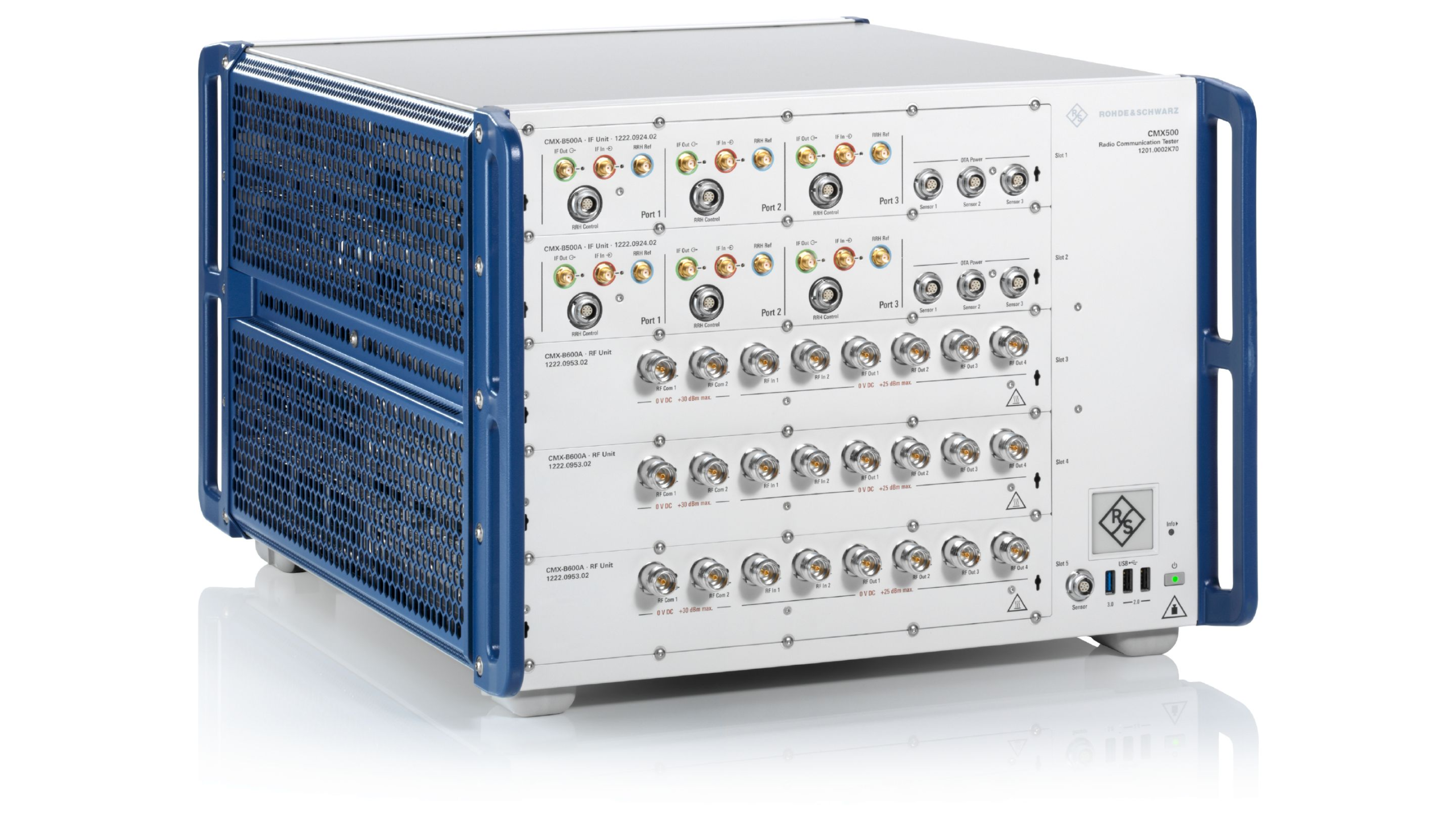
Rohde & Schwarz used its R&S TS8980 Conformance Test Platform and CMX500 5G one-box signalling tester during the NR-NTN validation programme.
The company states that it is the only test and measurement supplier currently providing GCF-approved NR-NTN test platforms across all four categories. That claim concerns its approved platform coverage at the time of the announcement and does not establish exclusive control over GCF certification.
The Samsung chipset used during validation provided a defined reference device against which the testing procedures could be exercised.
Such validation helps establish that the procedures can be implemented and produce the expected results under specified conditions. It does not automatically qualify other semiconductor devices or finished products.
Manufacturers seeking certification must submit their equipment for the relevant assessments and meet the requirements applicable to its intended operation.
The work item is based on 3GPP Release 17, which established the initial framework for NR-NTN. Subsequent releases may introduce additional capabilities requiring further test development and validation.
The activated programme gives semiconductor and module manufacturers an approved set of procedures against which to plan conformance testing.
Rohde & Schwarz has not disclosed the number of devices submitted under WI-555, identified individual commercial products that have completed certification, or provided a timetable for later test coverage.
The immediate development is the availability of a formal certification route, with individual equipment approvals dependent on the results of subsequent conformance assessments.