IN Brief:
- Alexander Battery Technologies has added six hires across engineering, project delivery, and AI at its Peterlee operation.
- The expansion strengthens testing, mechanical integration, and programme control across in-house and OEM battery systems.
- The inclusion of an AI engineering apprenticeship points to more data-driven battery development and manufacturing.
Alexander Battery Technologies has expanded its engineering and project team with six appointments, adding depth in technical leadership, testing, mechanical design, programme delivery, and data-led manufacturing as it scales battery pack development and production for OEM customers.
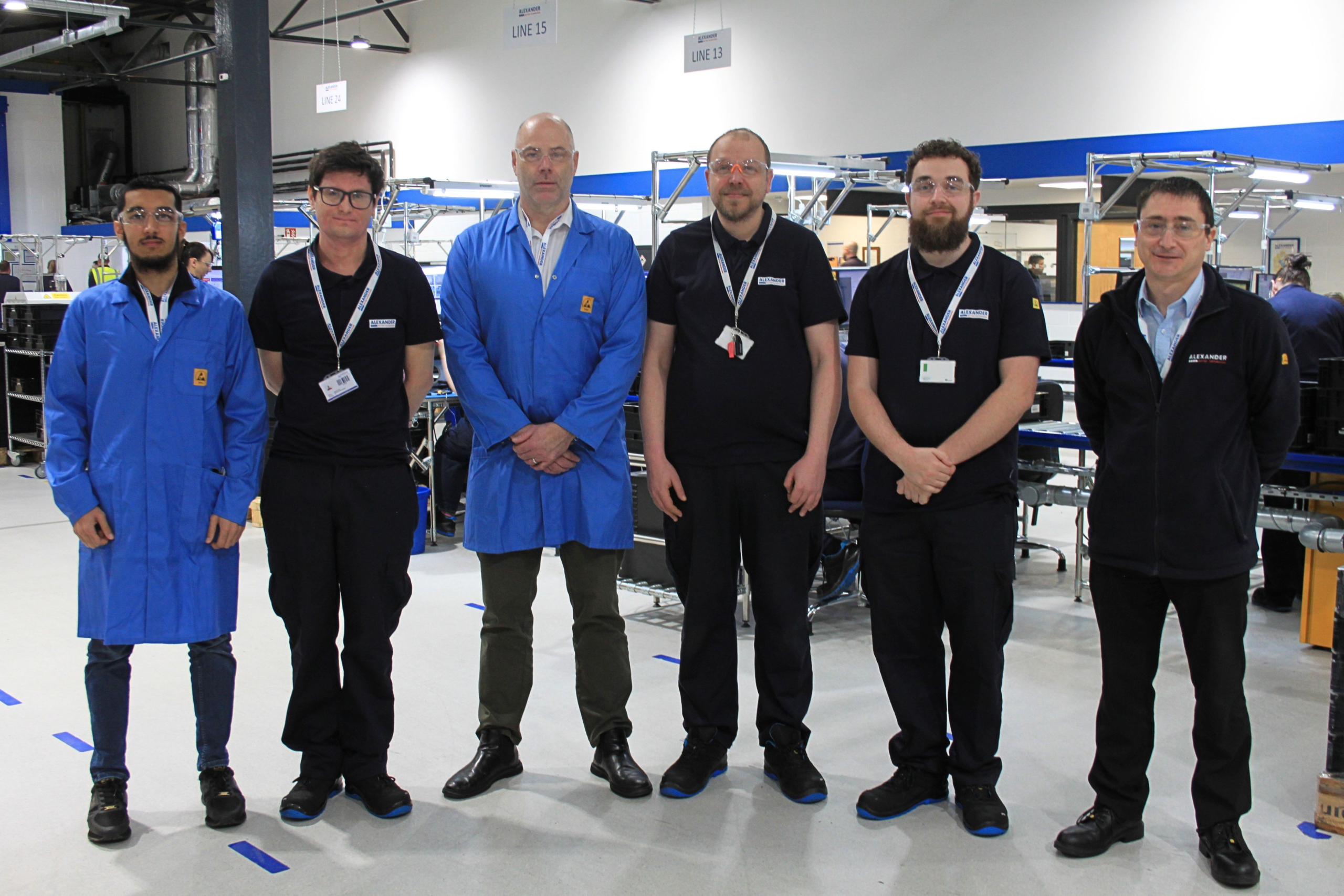
The new hires are Mark Burton as technical manager, Andrew Stevenson as senior test engineer, Alastair Pollitt as electronics test engineer, Chris Muteham as senior project manager, Alexander Johnson as senior mechanical design engineer, and Sameed Rashid as AI engineering apprentice. Taken together, the appointments strengthen the parts of a battery business that usually determine whether programmes move cleanly from design into production: validation, manufacturability, design control, and project discipline.
Burton takes responsibility for engineering operations across electronics, firmware, mechanical design, and test, with a remit that links development to production engineering. Stevenson arrives with more than 15 years in electronics testing and manufacturing environments, including work at Cicor Group, TT Electronics, and Tridonic, where he developed automated manufacturing test systems. Pollitt adds electronics development, prototyping, and software experience, alongside doctoral research at Newcastle University focused on modelling and verification of complex digital systems.
The mechanical and delivery side is expanding in parallel. Johnson joins from Saft and brings battery system development experience shaped by earlier apprenticeship work with Rolls-Royce and Hyperdrive Innovation, while Muteham is expected to strengthen programme oversight as projects progress towards manufacture. Rashid’s role is slightly different, but telling: the apprenticeship centres on analysing production and test data to identify patterns that can improve product performance, pointing to a tighter link between engineering, manufacturing data, and continuous improvement inside the business.
Mark Burton, technical manager at Alexander Battery Technologies, said, “Expanding the engineering team gives us the depth of expertise needed across development, testing and mechanical design.” The company says the enlarged team will support both battery systems developed in-house and packs built for OEM customers, which places extra weight on test repeatability, design transfer, and project management rather than on engineering headcount alone.
The hiring drive lands as the business sharpens its design-to-manufacture model for battery programmes, offering platform-based, semi-custom, and fully bespoke routes that progress into UK volume production. On its website, ABT says some platform-based programmes can move to production in as little as six months, while fully custom systems can take up to 24 months, reflecting the spread between speed-to-market projects and heavily specified battery packs. That model fits the sectors the company already serves, including drones, robotics, industrial power tools, medical devices, and defence applications, where compliance, testing, pack architecture, and traceability all have to line up before a design becomes commercially repeatable.
The company has also outlined its battery pack design routes, spanning platform-based and fully custom development that leads into UK manufacturing. With demand for custom electrified products spreading across industrial and mobile equipment, the extra headcount suggests ABT is reinforcing the harder-to-replace parts of the battery stack: validation capacity, mechanical integration, and the ability to get programmes over the line into production without losing control of performance or process.