IN Brief:
- BAE Systems and Scale AI have signed a strategic agreement focused on mission-edge AI deployment.
- The work targets combat vehicles, deterrence programmes, and future defence platforms.
- The next phase will centre on integrating adaptive software into operational architectures.
BAE Systems has signed a strategic relationship agreement with Scale AI aimed at accelerating the development and fielding of agentic artificial intelligence across US defence mission environments and operational platforms.
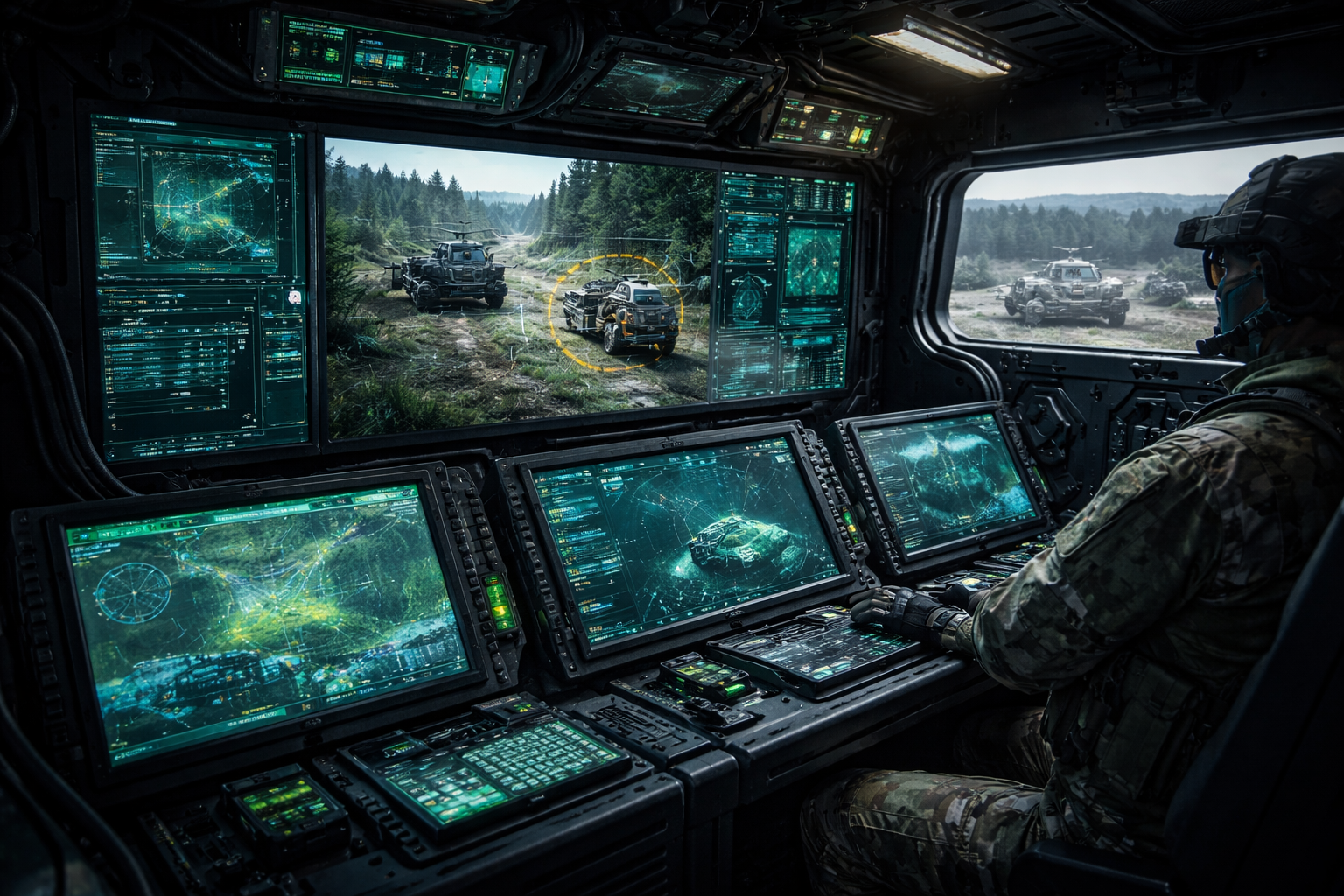
The agreement brings together BAE Systems’ work in mission systems, defence integration, and platform engineering with Scale AI’s data-engineering and generative AI capabilities. The immediate focus is on embedding those tools into the architecture of combat vehicles, deterrence programmes, and future platforms, rather than confining them to separate analytical environments.
That marks a more direct move towards mission-edge deployment. Defence electronics programmes are already carrying more sensing, processing, and networking at the edge, but turning that into useful operational software has been a slower step. The challenge is to connect those elements to systems that can interpret inputs, support operators, and adapt under pressure without introducing fragile complexity into deployed platforms.
BAE Systems has pointed to its Aided Target Recognition capability as an example of how sensor-derived information can be translated into faster, coordinated effects across distributed forces. That framing places the new agreement firmly inside the existing shift towards software-enabled mission systems, where compute, sensing, and autonomy have to operate together in constrained and contested environments.
The broader significance is at platform level. Prime contractors are moving beyond demonstration work and towards software that has to live inside ruggedised, safety-critical architectures with real limits on timing, assurance, power, security, and interoperability. The engineering work now sits in validation, integration, and sustained deployment, not simply in model performance.
For BAE Systems, the agreement strengthens its position at the junction of mission software and platform hardware. For Scale AI, it brings agentic tools closer to the systems where operational decisions are shaped, tested, and executed.