IN Brief:
- LED display energy use, thermal load, and serviceability are moving higher up procurement checklists.
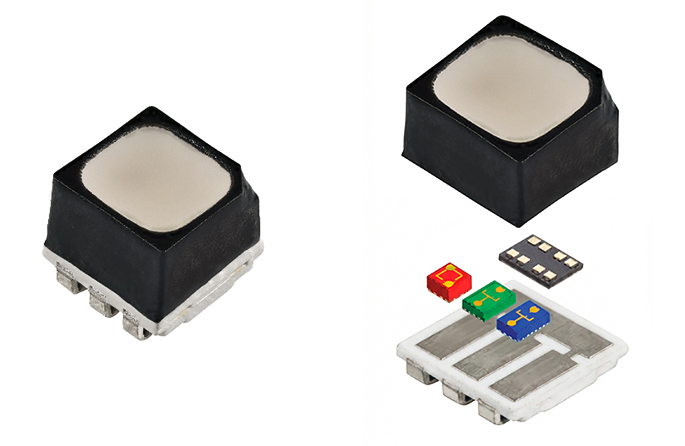
- Cree LED’s OptiLamp puts driver and control logic into each LED package, shifting intelligence down to the pixel.
- Pixel-level monitoring and calibration data could reduce downtime and simplify field repairs for high-availability installations.
Cree LED has launched its OptiLamp LED portfolio, positioning it as an integrated approach to display design that embeds driver and control intelligence directly into every LED pixel. The company says the approach improves display performance and reduces power consumption, while also simplifying system architecture by reducing reliance on external driver ICs and conventional multiplexing schemes.
At the component level, the pitch is straightforward: move more of the control stack into the LED package itself. Cree LED says each OptiLamp device includes onboard logic that actively manages output and monitors health at pixel level, enabling tighter control of brightness behaviour and reducing the number of discrete components required across the module and panel.
That architectural shift targets real deployment pain points. Large-format LED displays can be mechanically and electrically complex, and the supporting electronics contribute to thickness, weight, heat density, and assembly time. Cree LED argues that integrating intelligence into the pixel reduces manufacturing complexity — including separate IC placement steps — and supports thinner, lighter display designs that are easier to ship, install, and service.
Performance claims focus on scan architecture and colour control. Cree LED says OptiLamp enables “true 1/1 scan operation” and “precise pixel-level control,” with the intent of avoiding scan artefacts such as image tearing and synchronisation issues. The company also specifies 24-bit control per channel, aimed at improving gradation smoothness and contrast consistency, including for on-camera use cases where refresh behaviour and artefacts can become visible under capture.
Power is the other headline. Cree LED says the portfolio delivers meaningful efficiency gains at normal brightness levels, which is where many commercial installations operate for the majority of their duty cycle. In practice, lower power draw also reduces thermal load, easing mechanical design constraints and helping operators manage operating costs over long runtimes in control rooms, transport hubs, and industrial signage environments.
Serviceability is a notable part of the design argument. Cree LED says OptiLamp devices include built-in monitoring and calibration data, supporting proactive maintenance and faster field repairs. For high-availability environments, the value is less about headline brightness and more about keeping uniformity under control as panels age, while reducing time-to-diagnosis when a fault begins to propagate across a module.
“OptiLamp technology redefines how LED displays are designed and operated, setting a new standard for large- and small-scale display performance, clarity and power efficiency,” Joe Clark, president of Cree LED, said.
A live OptiLamp demonstration, in partnership with LED Studio, will be shown at Integrated Systems Europe (ISE) 2026 in Barcelona, running February 3–6.