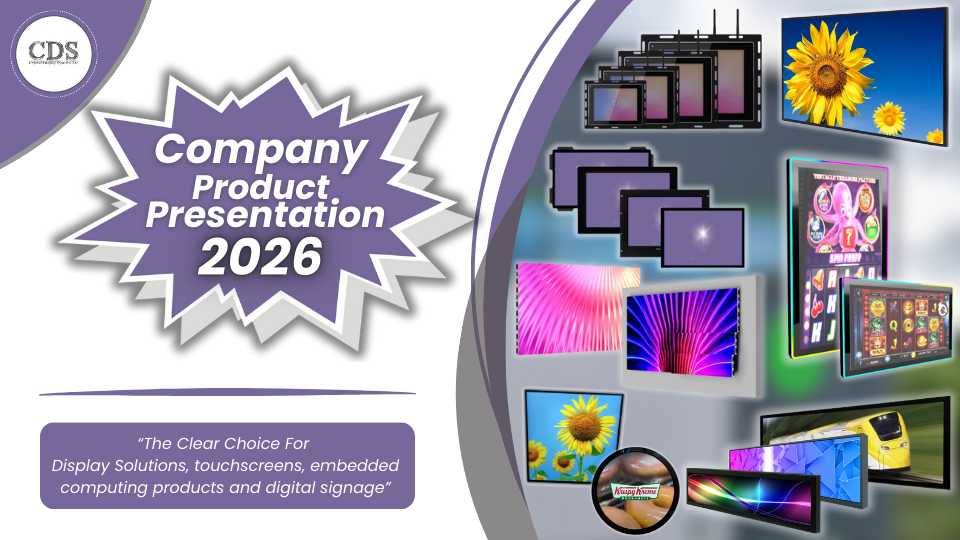
Crystal Display Systems (CDS) has published a new “Display Product Brochure” for 2026, aimed at engineers and OEMs specifying industrial, commercial, and specialist display hardware across multiple verticals. The company is pushing the document as a consolidated reference for product selection, rather than a narrow catalogue tied to a single technology family.
In the brochure launch post, CDS describes itself as a designer, distributor, and value-added manufacturer, and points to more than 1,000 completed projects and over 1,200 customers across more than 50 countries. The company is positioning itself as a long-term supply partner rather than a component reseller, a distinction that matters in a market where panel lifecycles and substitutions frequently disrupt production plans.
Product coverage includes industrial LCD panels such as transflective TFTs, bar-type displays, high-brightness panels, round and square TFTs, monochrome options, and SMART displays, alongside embedded Linux and Android solutions. The underlying message is consolidation — fewer suppliers, fewer interface challenges, and a better chance of maintaining platform stability across extended production runs.
On the monitor side, the brochure details open-frame, chassis, and rack-mount designs, as well as stainless-steel and IP65, IP66, and IP67-rated enclosures. Custom monitor builds are offered from 7in to 85in, with options including optical bonding, anti-reflective and anti-glare treatments, high-brightness operation, wide-temperature tolerance, and standard interfaces such as HDMI, VGA, DisplayPort, and DVI.
Specialist formats also feature prominently, including stretched, square, and circular displays, outdoor-rated monitors, dual-sided window displays, and high-brightness digital signage. As industrial and commercial hardware continues to converge on more visually driven interfaces, CDS is positioning these formats as engineered products rather than consumer-grade adaptations.
The brochure is available directly from Crystal Display Systems and is intended to support early-stage specification as well as design-in decisions for new and evolving programmes.