IN Brief:
- SiC switching speeds are exposing timing drift and noise limits in optocoupler-based drives.
- 1ED301xMC12I targets drop-in replacement, with 40 ns delay and CMTI above 300 kV/µs.
- Infineon is pitching a migration path that keeps legacy control interfaces intact.
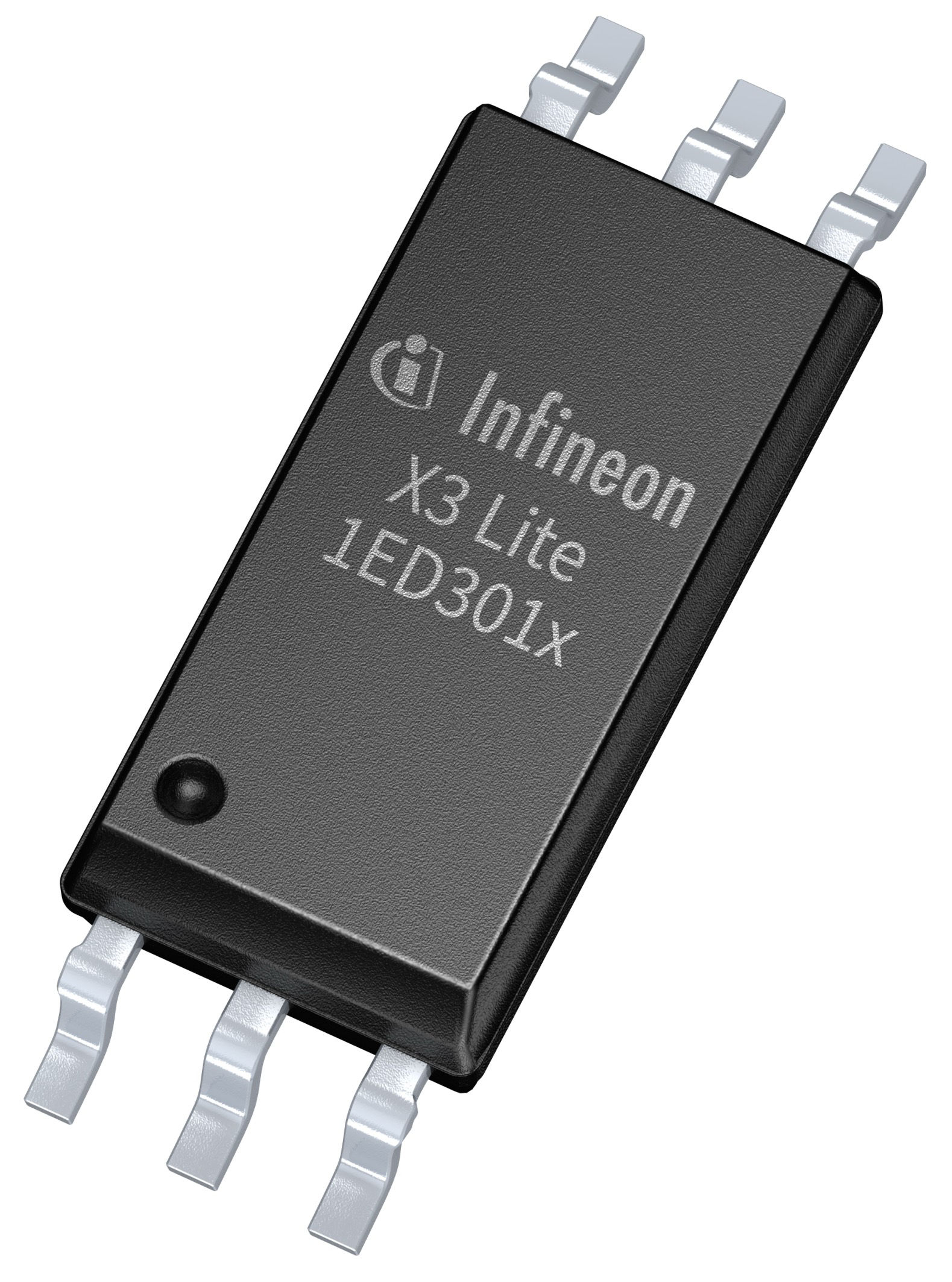
Infineon has launched its first isolated gate driver IC family featuring an opto-emulator input, targeting power conversion designs that are moving to silicon carbide without wanting to rebuild isolation and input circuitry from scratch.
The EiceDRIVER 1ED301xMC12I family is positioned as pin-compatible with existing opto-emulators and optocouplers, a deliberate design choice for industrial power engineers sitting on mature gate-drive layouts that were optimised for silicon IGBTs. SiC MOSFETs switch faster and tolerate higher junction temperatures, but that speed also increases dv/dt stress, pushes common-mode transients harder into the isolation barrier, and makes timing skew a real contributor to EMI and switching loss.
Infineon’s claim is that the new devices allow an upgrade path while keeping the same two-pin input style associated with opto-based drivers. The opto-emulator input uses two pins and is designed for noise robustness, with common-mode transient immunity specified as exceeding 300 kV/µs. Timing is also a headline metric: Infineon specifies 40 ns propagation delay, with timing matching below 10 ns, aiming to reduce part-to-part variation that can complicate parallel switch configurations and multi-leg inverter timing.
The family includes three variants — 1ED3010, 1ED3011, and 1ED3012 — intended to support silicon MOSFETs, IGBTs, and SiC MOSFETs, respectively. Across the line, output drive is rated up to 6.5 A, aimed at driving power modules and parallel switch arrangements where gate charge and Miller effects can turn a weak driver into a reliability problem.
Packaging and insulation details reflect the intended operating environment. The drivers are supplied in a CTI 600, 6-pin DSO package offering more than 8 mm creepage and clearance. Insulation is certified to UL 1577, with IEC 60747-17 certification listed as pending, aligning with industrial requirements where compliance and safety margins are procurement items, not engineering preferences.
The practical win for designers is in board-level churn. If the opto footprint and control interface can remain stable, engineering effort shifts from redrawing isolation and routing to tuning gate resistors, managing layout inductance, and adjusting deadtime for SiC’s faster edges. Infineon is also offering an evaluation board, EVAL-1ED3012MC12I-SIC, intended to speed up bring-up with SiC switches.
The 1ED301xMC12I devices are available now through Infineon and distribution partners, putting the parts directly into the design window where many industrial teams are building SiC variants of established inverter platforms.