IN Brief:
- ROHM has signed a licence agreement to transfer TSMC’s GaN process technology into ROHM Hamamatsu, targeting an end-to-end in-group production system.
- The company already mass-produces 150V GaN at Hamamatsu and has used a 650V GaN process since 2023, with demand rising in AI server power and EV power conversion.
- ROHM says its existing automotive GaN partnership with TSMC will conclude once the transfer is complete, while collaboration continues on higher-efficiency, more compact power supply systems.
ROHM is deepening its GaN strategy by shifting process technology closer to home. The company has agreed to integrate its GaN device development and manufacturing with TSMC’s GaN process technology under a new licence agreement, with the intention of establishing an end-to-end, in-group production system for GaN power devices.
Under the agreement, TSMC’s process technology will be transferred to ROHM Hamamatsu, a site already tied to ROHM’s GaN ramp. ROHM established mass production for 150V GaN there in March 2022, and it has been building out mid-power capability through external collaboration, adopting a 650V GaN process since 2023.
The timing reflects where GaN demand is concentrating. Consumer fast chargers proved the point years ago: high-frequency switching and lower losses make it easier to shrink magnetics and raise efficiency, particularly in compact adapters. The next wave is harder, higher power, and less forgiving. Data centre power shelves feeding AI accelerators are punishing for efficiency and thermal headroom, while EV on-board chargers and DC/DC stages push designers toward topologies where switching loss, EMI management, and packaging all become gating factors.
ROHM’s stated goal is to have the new production system in place in 2027, aligning with what it describes as expanding demand in applications such as AI servers. The company’s framing is “end-to-end” production inside the ROHM Group — a phrase that generally signals more direct control over process integration, yields, and supply continuity, rather than relying on a split model across multiple external partners.
The shift also clarifies how ROHM wants its collaboration with TSMC to evolve. ROHM says that, once the technology transfer is complete, the two companies will conclude their automotive GaN partnership, while continuing to strengthen collaboration aimed at higher-efficiency and more compact power supply systems. In other words, the relationship moves from a co-development posture on automotive GaN into a model where ROHM internalises more of the manufacturing chain, but still leans on joint work that can raise the ceiling on system-level performance.
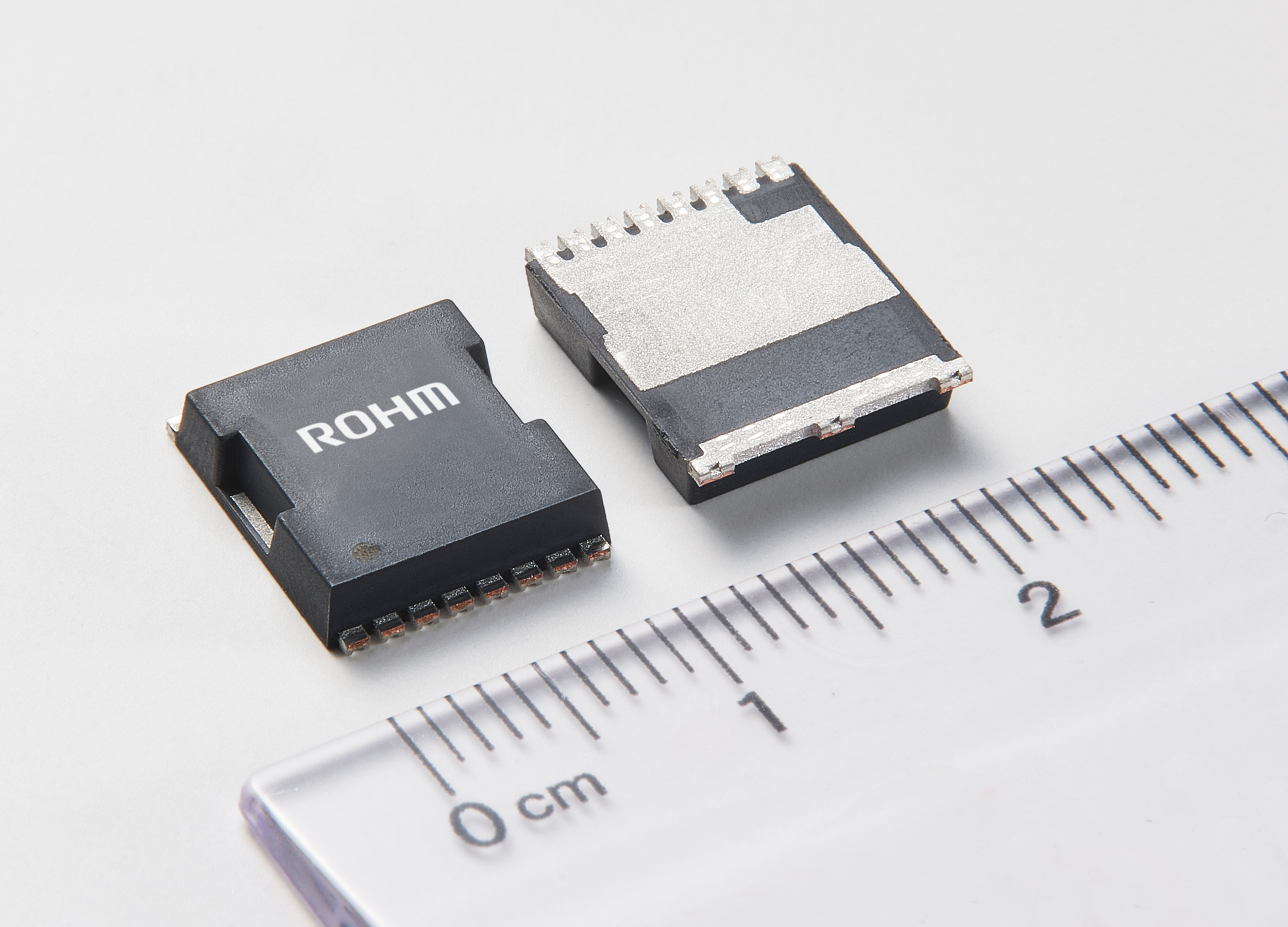
ROHM continues to build its GaN portfolio under its EcoGaN brand, positioning the devices around energy conservation and miniaturisation through reduced application power loss, smaller peripheral components, and simplified designs. The company cites EcoGaN design wins spanning both consumer and industrial segments, including a 45W USB-C adapter and AI server power supplies.
For the broader power semiconductor market, the detail to watch is not the slogan around GaN adoption, but the hard operational outcome: whether tighter process ownership improves ROHM’s ability to supply 650V-class devices at the volumes, quality levels, and qualification depth required by data centre and automotive programmes that are already allergic to surprises.