
IN Brief:
- Adhesive specification should weigh bond performance against the full production process, from preparation and dispensing to cure time and QA.
- Product data sheets can narrow material choice, but production-part trials and supplier experience are needed to interpret laboratory data.
- Simpler bonding processes can cut cost, improve reliability, and support productivity without over-specifying adhesive requirements.
By Peter Swanson, Executive Chair and Founder at Intertronics
There is always a compromise to be made in adhesive specification, and that is often between ultimate adhesive functionality and optimal bonding process. The very best bond strength may come from an adhesive with a complicated preparation requirement and an extensive cure time; but that may not be suitable for the proposed production volumes or speed of manufacture. Sometimes this dilemma stems from over-specifying the adhesive requirements, which limits material choice and so can add cost. Factoring in adhesive “process-ability” can ultimately deliver a faster ROI, without compromising on quality.
It is worth understanding that the adhesive choice will only be one component of the full bonding process — which includes surface preparation, adhesive mixing, application and dispensing, curing and QA — and that it is in this entire process that you are investing. It is important to take a holistic view; for example, application and curing equipment costs, and efficiency of method, are factors that will affect an ROI calculation and so allow comparison to other options.
There is a plethora of materials and a seemingly infinite number of assembly applications, and matching them up optimally requires a real understanding of a complex scenario, in which not every factor is clear-cut.
Let’s add some simplicity to that. Putting aside functionality for a moment, let’s think about the assembly process. How are the parts going to be manufactured or put together? What is the process, and what equipment is needed? How will the bonding process fit into the rest of the ebb and flow of the factory? It is not unusual that the cost of applying and curing the adhesive – the process – is more significant than the cost of the material itself.
So, in this aspect, and paraphrasing Albert Einstein: everything should be made as simple as possible, but not simpler.
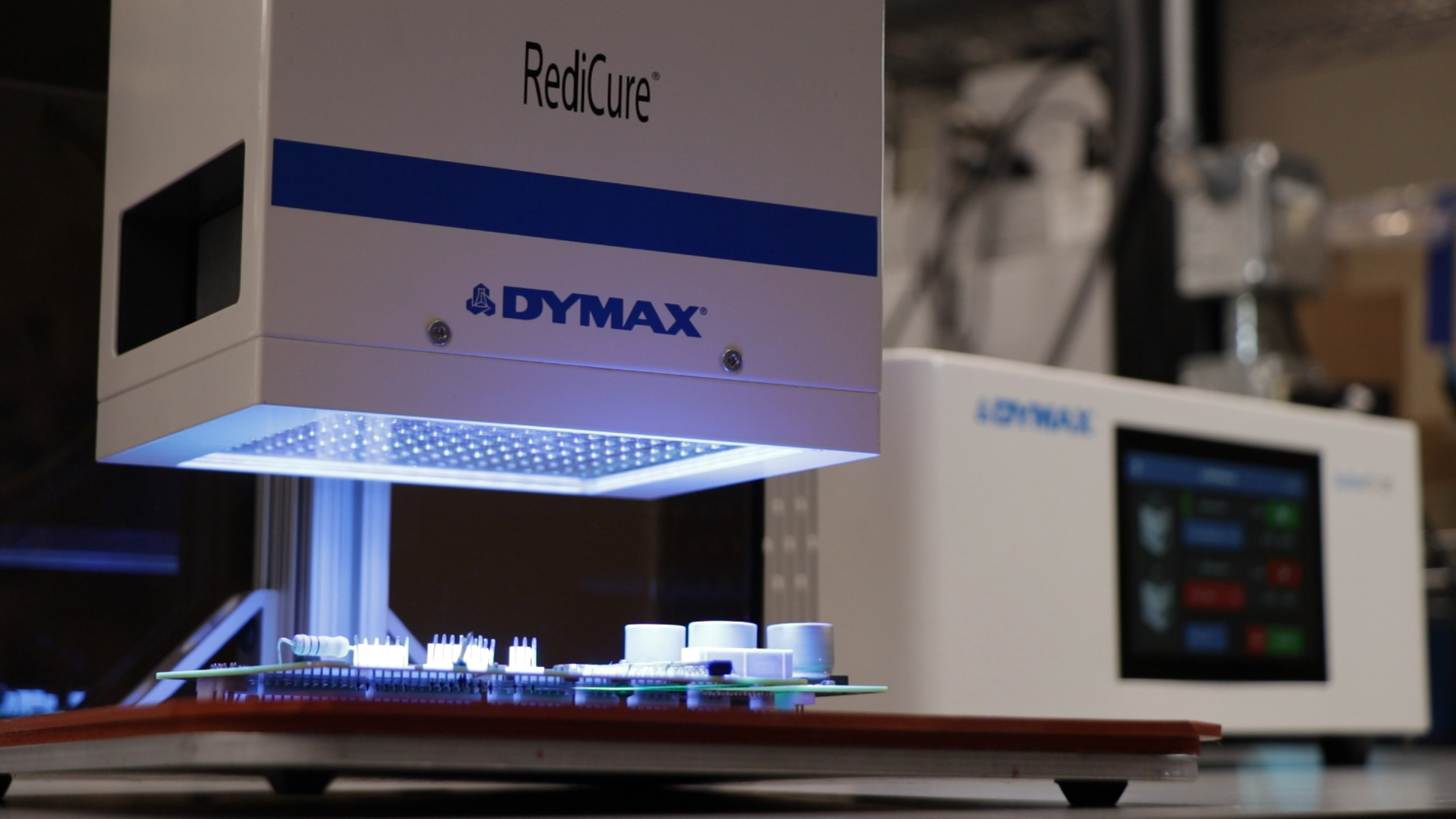
For an adhesive application and curing process, this might mean: straightforward and dedicated automation, single part materials; no mixing, fast cure; curing in-line; cure at room temperature, no decanting; process friendly packaging.
Simplicity of process will reduce cost. Simplicity is a prerequisite for reliability. And most importantly, simplicity helps you win productivity gains. For an adhesive or protective material specification, simplicity of process should be an important selection factor in your complex choice.
That worked in practice, I wonder if it works in theory?
Product data sheets (PDS) and specification documents are very useful when deciding what material or piece of equipment to consider for your new application. Without doubt, a survey of product datasheets for, say, an adhesive will allow you to narrow down the candidate list from many thousands to, hopefully, a handful. This selection can then be put forward to practical testing for your application.
What we would never recommend is the selection of a product based purely on the data sheet alone. For an adhesive or a coating, most of the data comes from testing done in the lab, from test procedures which are well understood, usually in the public domain, universal and repeatable. This information is great for characterising the material – how hard or soft, rigid or elastic, how much force will it take before it breaks, and how much will it stretch before it does so.
In many cases, this data needs interpretation and extrapolation to fit with your circumstances. A good supplier will be able to add significant knowledge to the PDS facts. Years of experience and seeing many successful implementations will have given him insights which aren’t published on the PDS.
The question “That worked in practice, I wonder if it works in theory?” is rhetorical, of course, but it is this acumen and ability to look at your application holistically, from a different perspective, and beyond the data sheet is where we deliver a great deal of value. We have the pragmatic experience to be able to recommend materials and equipment for your evaluation, or to reinforce your choices.
Simple statements rarely match complex reality
Almost the only simple fact is – your application is unique. We may have seen similar projects before, but not your specific one. So, we do not know all of the pertinent facts and parameters about what you have, and what you want to achieve. We will have detailed discussions with you, but the reality is usually even more complex. We (both of us) don’t know what we don’t know.
Hence our approach will always be along the lines of “this material would be a good candidate for you to test”, or “let’s evaluate this proposed process with some trials”. When we say this, it is not because we don’t know what we are talking about. It is quite the opposite; years of experience has shown us that what might appear simple is often complex. Testing with your production parts provides you with the assurance that what you specify will meet your unique and distinct requirements.

