
IN Brief:
- Toray has developed a 4.5 micron resin film for copper coated lithium ion anode current collectors.
- The resulting collector is 50% to 60% lighter than copper foil while retaining comparable cell performance in evaluations.
- Reducing copper and inactive mass could improve battery energy density, range, and exposure to material cost volatility.
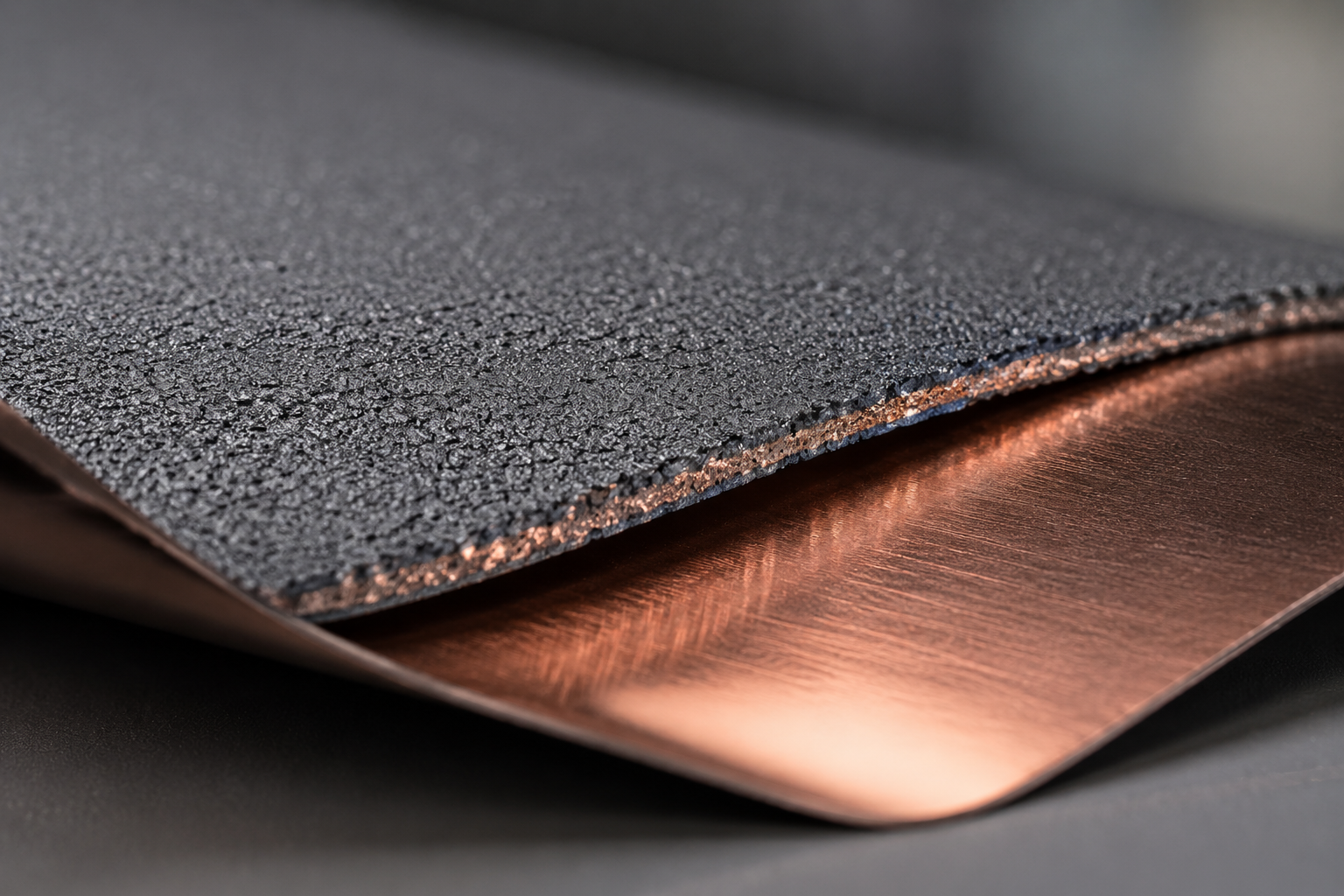
Toray Industries has developed a resin film substrate for lithium ion battery anode current collectors, creating a lighter alternative to the copper foil conventionally used to carry current from the negative electrode.
The material is designed to receive an ultra thin copper coating while resisting the strongly reducing chemical environment at the anode. Toray has combined polymer design, film formation, and polymer alloy technology to balance reduction resistance, metal adhesion, mechanical strength, and thermal stability.
Polyethylene terephthalate can serve as a substrate in some cathode side film collectors, but it degrades under the reducing conditions found at the anode. Toray’s material is intended to retain its structure and bond to the copper layer through cell manufacture and operation.
Anode current collectors produced with the new film have shown mechanical behaviour comparable to copper foil alongside low thermal shrinkage. Battery cell evaluations also returned performance comparable to cells using conventional copper foil collectors.
The film based current collector is 50% to 60% lighter than a conventional copper foil component and could reduce total cell weight by about 10%, depending on the cell design and proportion of inactive material. Toray has produced a standard 4.5 micron grade on mass production equipment and has begun supplying samples.
Current collectors do not store energy, yet they occupy mass and volume inside every cell. Replacing part of the copper with a polymer substrate improves gravimetric energy density without changing the active material or electrochemistry, provided conductivity and mechanical integrity remain stable.
The saved mass can also be reallocated to cathode and anode material while keeping overall battery weight constant. Toray estimates that such a change could extend electric vehicle range by up to 10% under specified assumptions, including retention of the negative to positive capacity ratio.
Actual results will vary with chemistry, cell format, electrode loading, electrolyte volume, thermal hardware, and pack structure. A material level saving can be diluted once modules, cooling, protection, enclosures, and vehicle integration are included.
Bourns’ BMS transformer with integrated filtering addresses another section of the battery stack, where isolation, sensing, communications, and electromagnetic compatibility affect pack performance. Improvements in cell materials and collector mass must operate alongside electronics capable of measuring and controlling the resulting battery safely.
Lower copper content also changes material exposure. Electrification is increasing copper demand across cells, motors, chargers, power electronics, cabling, and electricity networks, while a film collector reduces the amount required within each anode.
That saving introduces new manufacturing requirements. The copper coating must remain continuous and strongly bonded across wide, thin film at production speed, with resistance, thickness, and surface quality controlled closely enough to preserve current distribution across the electrode.
Wrinkles, edge damage, coating defects, or local resistance variation could affect winding, electrode coating, heat generation, and cell yield. Joining the collector to tabs may also require a different process window from solid copper foil because the polymer core responds differently to pressure, heat, and ultrasonic energy.
Safety qualification will examine how the collector behaves during internal short circuits, rapid discharge, puncture, crushing, and overheating. Lower mass may influence the thermal response, but the film must retain electrical continuity during normal cycling and fail predictably under abuse.
Initial applications are expected in small and medium sized batteries for mobile equipment, drones, and electric vertical take off and landing aircraft. These markets place a high value on each gram saved, while offering a potential qualification route before adoption in larger automotive and stationary storage cells.
Toray is also examining thinner grades and eventual use in electric vehicle and energy storage batteries. Commercial adoption will depend on coating compatibility, manufacturing yield, long term cycling, tab connection, and the ability to preserve the demonstrated cell performance at full production scale.
Production equipment has already been used to make the 4.5 micron standard grade, moving the material beyond a laboratory film. Customer sampling will now determine whether the weight reduction can survive the mechanical, electrochemical, and manufacturing demands imposed by commercial battery cells.

