IN Brief:
- Remote, security-hardened infrastructure access is being pulled into standard operations for edge-heavy estates.
- Vertiv’s new KVM-over-IP platform focuses on cryptographic compliance and firmware-level remote recovery.
- Rack density and centralised management integration are shaping next-generation KVM requirements.
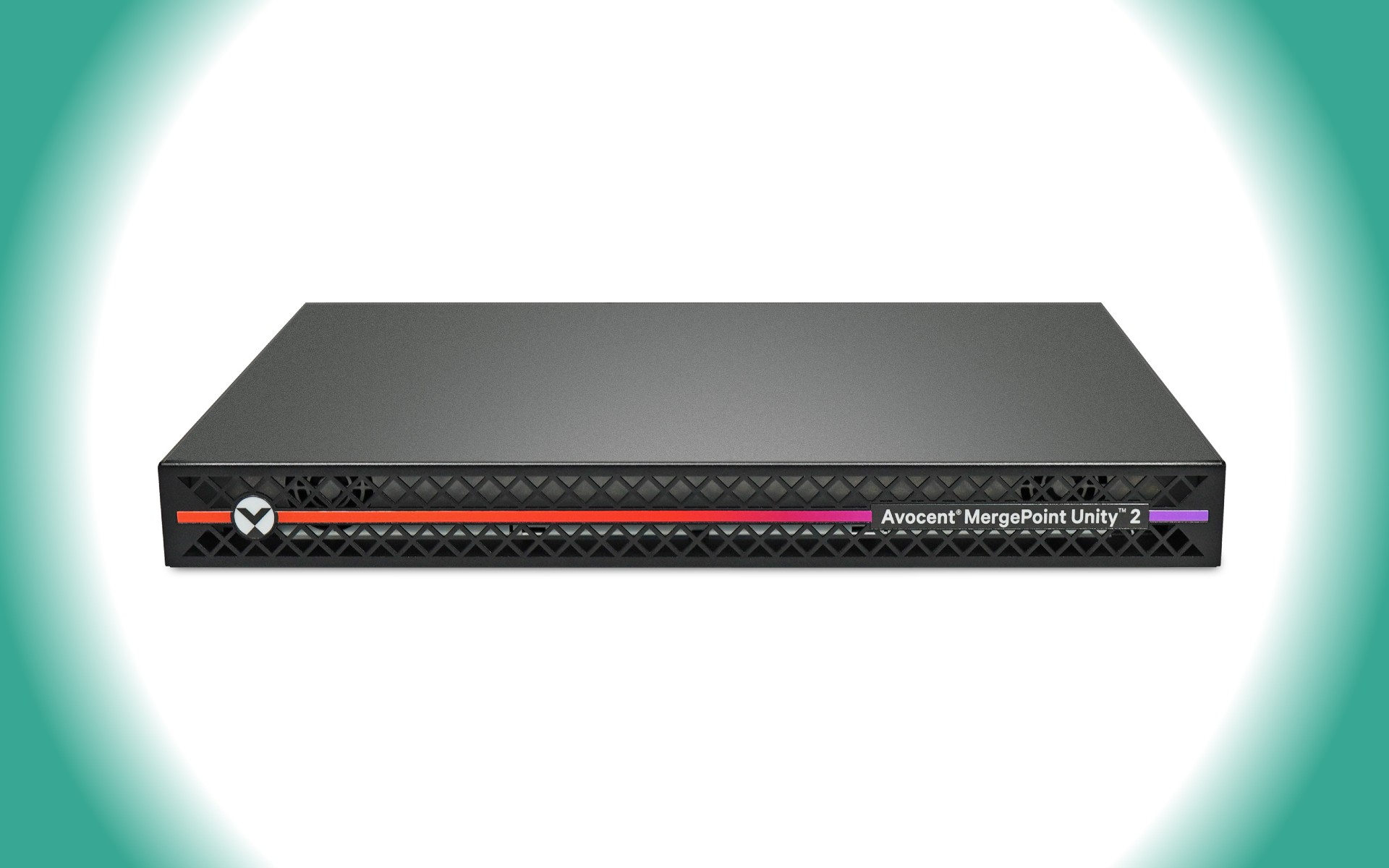
Vertiv has introduced the Avocent MergePoint Unity 2, a next-generation KVM switch platform aimed at secure, centralised management of IT devices across enterprise data centres, distributed edge sites, and branch environments.
The platform is positioned around two priorities that are increasingly inseparable in modern operations: maintaining availability while tightening controls over who can touch critical systems — and how. MergePoint Unity 2 is specified to meet FIPS 140-3 cryptographic standards, and supports smart card and Common Access Card (CAC) authentication, alongside user-permission controls designed to limit access at device and function level.
“As organisations distribute workloads across multiple locations, the complexity of infrastructure management grows accordingly,” said Ramesh Menon, vice president of IT systems solutions at Vertiv. “The Vertiv Avocent MergePoint Unity 2 provides a centralised control point with enterprise-grade security, helping IT teams maintain visibility and responsiveness regardless of where their infrastructure resides.”
The operational feature set leans heavily into remote recovery tasks that previously demanded hands at the rack. MergePoint Unity 2 includes virtual media, allowing operators to remotely mount drives for software and application installs, reducing the need for site visits during patch cycles and rebuilds. It also supports remote UEFI and BIOS interface access — a practical step if the job is firmware updates, boot order changes, or hardware troubleshooting when an operating system is unavailable or unstable.
Vertiv is also emphasising protection against unverified firmware and software. For operators managing mixed hardware fleets across multiple sites, the ability to gatekeep updates and reduce the risk of introducing compromised binaries has become a baseline requirement, rather than a “nice to have,” particularly where regulatory scrutiny extends beyond network encryption into lifecycle and supply-chain controls.
On the deployment side, the company is pitching a compact footprint that can be configured to preserve rack space. Vertiv says the KVM, when paired with the Avocent Local Rack Access (LRA) Console, fits within a single rack unit. In practical terms, that keeps local crash-cart style access available without consuming multiple U of space across high-density racks.
Management is available via a built-in web interface for standalone use, or through integration with Vertiv’s Avocent MP1000 Management Platform as part of the Avocent DSView solution for centralised control across larger estates. The approach reflects a broader shift in infrastructure tooling: device-level access is still required, but operators increasingly want it surfaced through a unified management layer rather than stitched together across multiple utilities.
MergePoint Unity 2 is available in configurations scaling from eight to 32 ports, targeting deployments from single racks through to larger server and network clusters. With edge growth continuing to blur the line between “data centre” and “remote closet,” KVM-over-IP is being rebuilt around the expectation that secure, firmware-level intervention will be routine — and must be auditable.