
IN Brief:
- A $73m acquisition links battery materials discovery, process development, and pilot-scale output under one group.
- High-throughput combinatorial chemistry and terabyte-scale datasets are being paired with screen-printed, water-based electrode processing.
- The combined platform is being positioned for licensing and co-development across cell makers, OEMs, and materials suppliers.
Holyvolt has completed the acquisition of San Diego-based battery materials specialist Wildcat Discovery Technologies in a $73m deal structured as a mix of cash, equity, and deferred milestone payments. The transaction brings together Wildcat’s high-throughput materials discovery platform with Holyvolt’s screen-printing production approach, creating an end-to-end capability that runs from materials screening through to pilot-scale process development.
Wildcat’s High Throughput Platform is designed to synthesise and evaluate thousands of battery material combinations in parallel, compressing the iteration cycles that typically dominate early-stage cell development. The company’s workflow emphasises repeatability and correlation between rapid test formats and larger-format validation, with the aim of improving confidence when moving candidates into prototype cells and pilot lines. That approach has also been built to generate terabyte-scale structured datasets — an enabler for machine-learning-driven optimisation where models can be trained on consistent experimental outputs rather than ad hoc lab results.
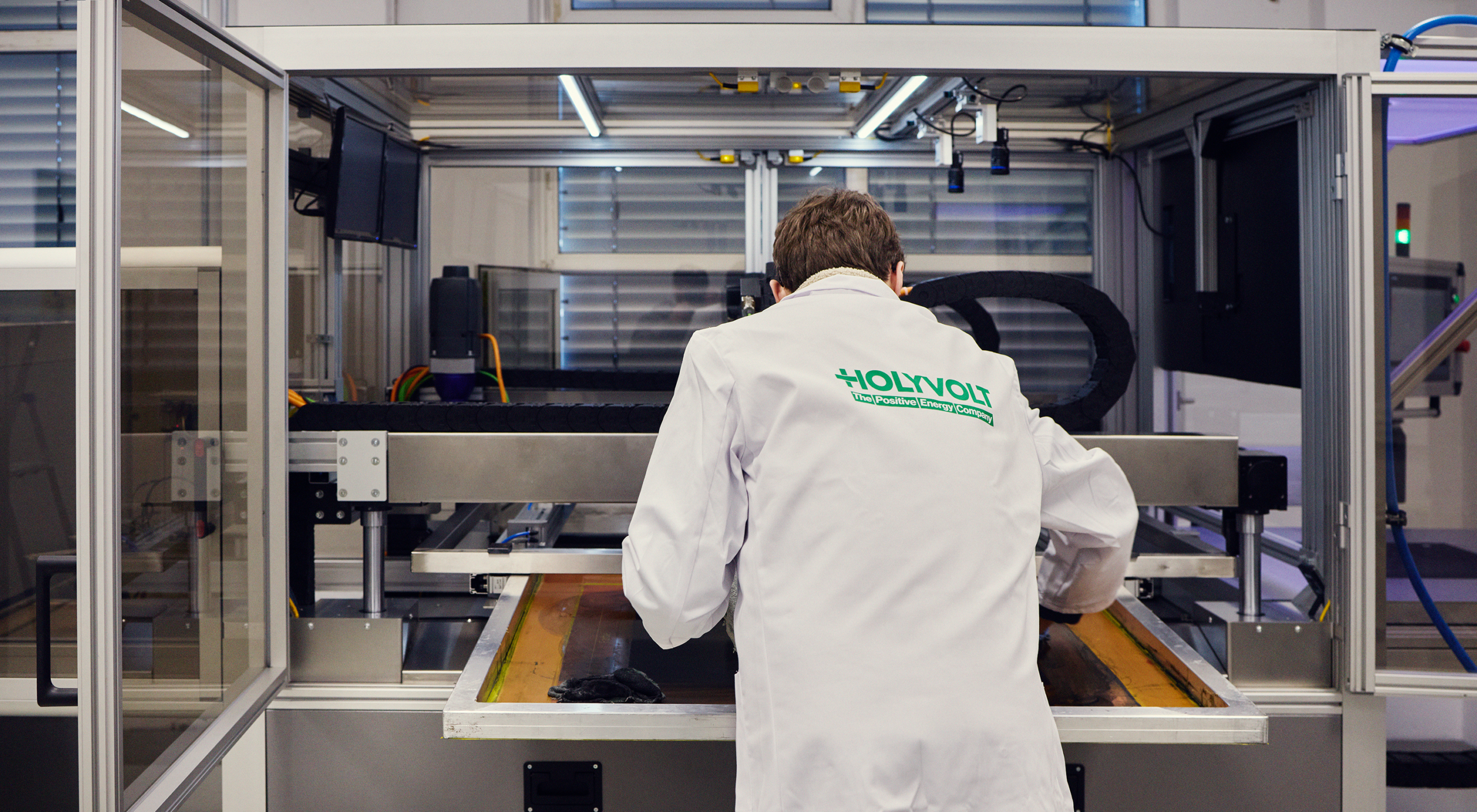
Holyvolt’s manufacturing focus sits on adapting screen-printing methods to electrochemical layer deposition, with water-based processing positioned as an alternative to conventional coating routes that rely on organic solvents. Screen-printing also lends itself to modular equipment layouts and flexible line configuration, which can reduce the penalty of scaling from lab recipes into manufacturable process windows. In combination with faster materials selection and formulation, the target is a shorter path from promising lab chemistry to a pilotable, repeatable manufacturing process.
Mathias Ingvarsson, Founder and CEO of Holyvolt, said: “Holyvolt is focused on developing new processes to make batteries cleaner and more affordable, and Wildcat has been pursuing the same goals via materials development and better chemistry.”
Beyond cycle time, the combined platform is being framed around cost and supply-chain resilience. Wildcat has worked on cobalt- and nickel-free material pathways, which can reduce exposure to volatile raw-material pricing and constrained refining capacity, while Holyvolt’s water-based approach is intended to lower processing overheads and reduce dependence on solvent handling and recovery infrastructure. The companies are also positioning the combined supply base around Europe and North America, reflecting the broader industrial push to localise critical parts of the battery value chain.
The acquisition follows Holyvolt’s recent funding activity, and the group is setting out a commercialisation model that includes technology development partnerships and licensing arrangements tailored to customer requirements. The intended customer set spans automotive, consumer electronics, aerospace, stationary storage, and defence, with the combined organisation aiming to act as a development partner across the battery supply chain rather than a single-product cell supplier.
Mark Gresser, President and CEO of Wildcat Discovery Technologies, said: “With Holyvolt’s vision and financial backing, Wildcat can finally unlock the true potential of high throughput combinatorial chemistry for battery materials.”

