IN Brief:
- Digi’s Connect Sensor XRT-M has reached Mouser, extending availability of a battery-powered cellular telemetry platform for remote monitoring.
- The gateway combines LTE-M and NB-IoT connectivity, MQTT support, edge processing, and Digi Axess cloud integration in a rugged enclosure.
- The product is aimed at field deployments where cabling, power, and local infrastructure are impractical or too costly.
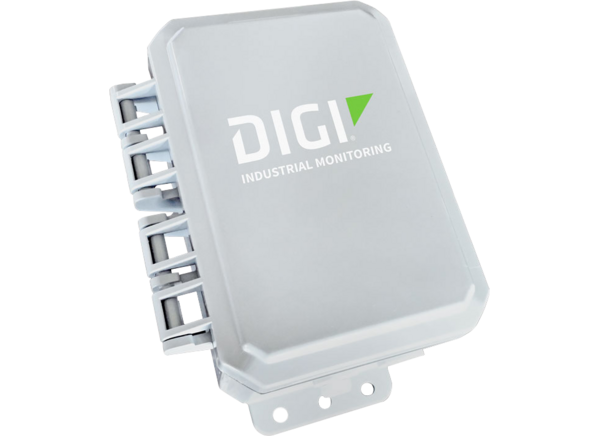
Digi International’s Connect Sensor XRT-M is now shipping through Mouser, bringing a rugged remote telemetry platform into wider distribution just as industrial monitoring projects continue to move further from fixed infrastructure. The device is built around cellular connectivity rather than local network dependency, which keeps it focused on installations where wiring, gateways, and permanent power are either expensive or unavailable.
The XRT-M is a battery-powered cellular gateway designed for zero-infrastructure monitoring, with support for LTE-M and NB-IoT modes, native MQTT messaging, and integration with Digi Axess for edge and cloud-based management. Digi says setup can be completed in under 10 minutes, which places much of the product’s value in deployment speed as much as in connectivity itself. It is also rated for rugged duty, with Mouser highlighting IP68 protection for tougher field conditions.
Application coverage is broad enough to show where the market is moving. Digi is positioning the platform across water and wastewater, oil and gas, industrial automation, mining, environmental compliance, and other telemetry-heavy sectors where distributed assets need regular data collection without a local controls cabinet. The product line also spans mains-powered and mains-or-battery NEMA enclosure variants, giving system builders a few different routes depending on whether the installation starts from an existing powered site or a genuinely remote endpoint.
The wider appeal is that the XRT-M is not trying to be a full control system. It is a field data layer that can connect sensors, move data reliably, and hand it off to analytics and alerting tools without dragging extra infrastructure into the design. More information is available on the Mouser product page.