
IN Brief:
- Taoglas has launched a new embedded antenna family that combines multiple wireless functions in a single compact part.
- The FXP30x and PC30x series target space-constrained devices that need cellular, GNSS, and Wi‑Fi connectivity without a crowded RF layout.
- The portfolio reflects growing pressure on connected product teams to support more radios, more bands, and tighter packaging in the same enclosure.
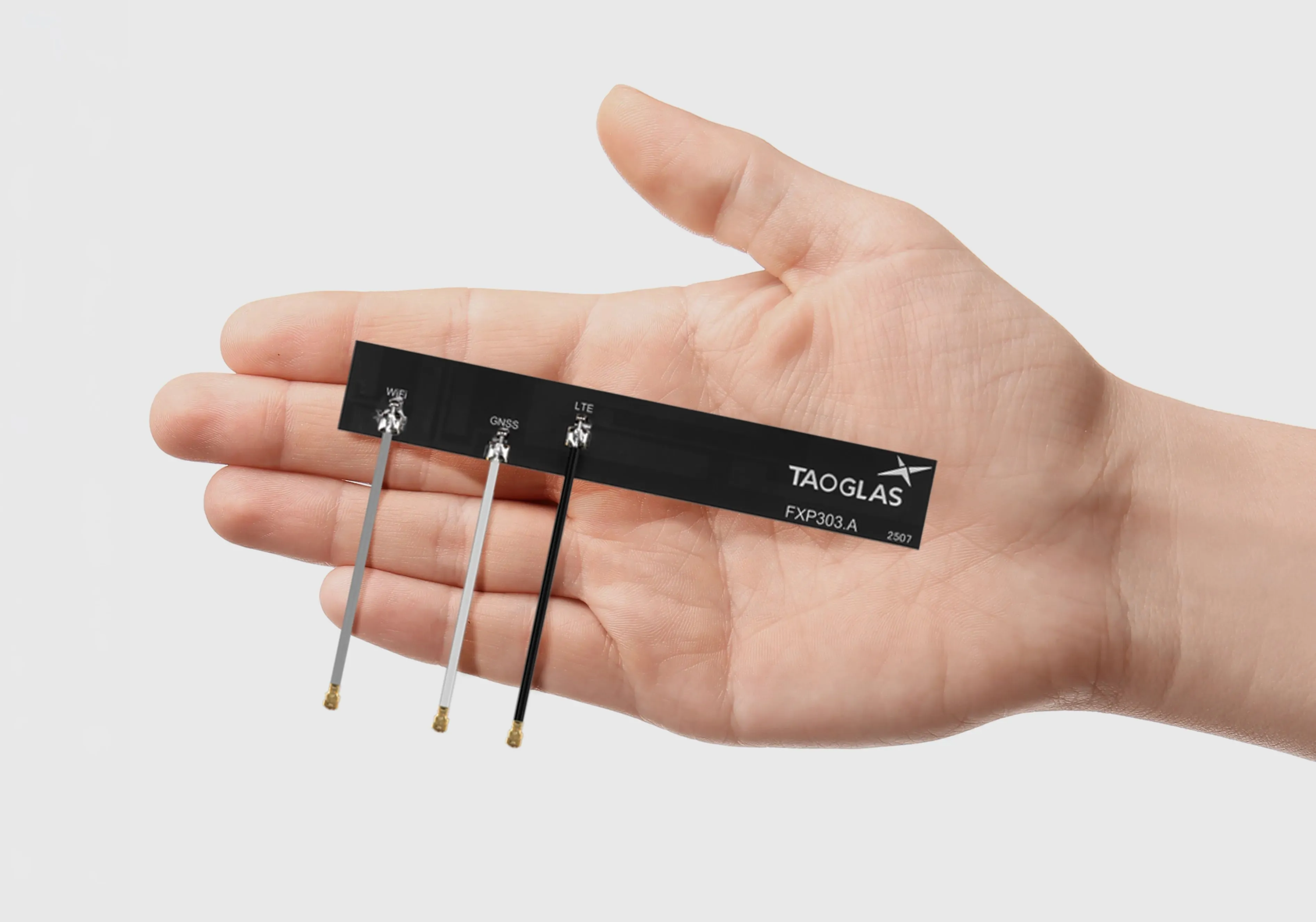
Taoglas has introduced the FXP30x and PC30x series of embedded combination antennas, aimed at devices that need several wireless technologies in a confined internal layout. The new family is built around a straightforward proposition: reduce antenna count, simplify integration, and make it easier to support cellular, GNSS, and Wi‑Fi in the same product without turning the enclosure into an RF compromise.
The launch covers six models split across two mechanical formats. FXP30x parts use flexible PCB construction, while PC30x devices are built on a rigid FR4 substrate. Across both families, Taoglas is quoting cellular support from 600 MHz to 8000 MHz, giving the range enough frequency coverage to address globally connected products without forcing a move to multiple dedicated antenna structures.
The mechanical distinction is central to the pitch. The flexible FXP variants are designed for tight or curved internal spaces and use adhesive mounting on non-metal surfaces such as plastic housings or glass, while the rigid PC versions provide a more mechanically stable option for products where the antenna can be fixed directly into the enclosure with adhesive or plastic screws. Each antenna ships with a pre-assembled cable and I-PEX MHF I connector to reduce assembly friction at the module interface.
The variants are divided by radio mix. FXP301 and PC301 combine cellular and GNSS. FXP302 and PC302 combine cellular and Wi‑Fi, covering 2.4 GHz, 5.8 GHz, and 7.125 GHz bands. FXP303 and PC303 integrate all three technologies in one antenna, giving designers a route to positioning, wide-area connectivity, and local wireless networking inside a single embedded part.
That speaks to a wider packaging problem in connected electronics. A growing number of products now need simultaneous access to location data, wide-area backhaul, and local wireless connectivity, but enclosure sizes are moving in the opposite direction. Combination antennas do not remove the need for careful RF design, isolation work, or verification inside the final housing, but they can reduce part count and shorten the distance between concept and production-ready layout.
Taoglas is positioning the range at asset-tracking devices, telematics and e-mobility platforms, smart agriculture equipment, connected healthcare systems, industrial IoT nodes, and wearables. The new antennas are available through Taoglas’ quote and sample request channel.

