
IN Brief:
- Alexander Battery Technologies is adding six technical hires as it expands custom battery pack development and manufacturing from its UK base.
- The appointments strengthen engineering leadership, electronics test, mechanical design, and programme delivery across in-house and OEM battery systems.
- An AI apprenticeship focused on production and test data points to a broader push towards data-led battery development and manufacturing.
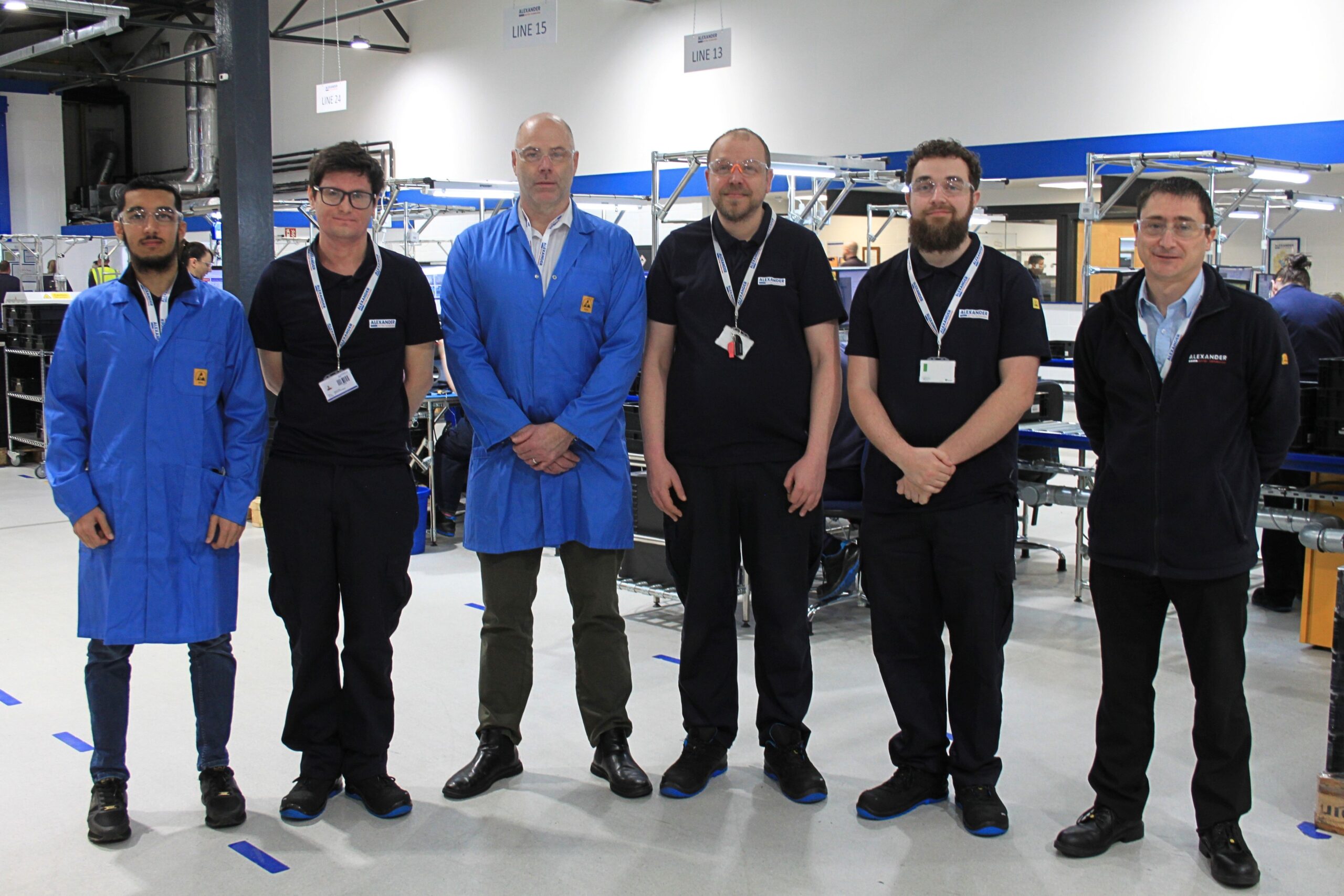
Alexander Battery Technologies has expanded its technical team with six appointments spanning engineering leadership, test, mechanical design, project delivery, and AI, a move that adds weight to the parts of battery development that usually determine whether a programme scales cleanly into manufacture.
Mark Burton joins as Technical Manager, overseeing electronics, firmware, mechanical design, and testing, while linking those functions more closely to production engineering as battery systems move from development into manufacturing. The company has also appointed Andrew Stevenson as Senior Test Engineer, Alastair Pollitt as Electronics Test Engineer, Chris Muteham as Senior Project Manager, Alexander Johnson as Senior Mechanical Design Engineer, and Sameed Rashid as AI Engineering Apprentice.
The shape of the recruitment is notable because it concentrates on the functions that tend to decide whether a battery pack reaches volume production without costly rework: design verification, manufacturing test, mechanical integration, and programme control. Stevenson brings more than 15 years of electronics test and manufacturing experience, while Pollitt adds a mix of electronics development, prototyping, software engineering, and doctoral research focused on modelling and verification of complex digital systems.
Johnson arrives with prior battery-system experience from Saft after a dual engineering apprenticeship with Rolls-Royce and Hyperdrive Innovation, adding further depth to early-stage pack architecture and mechanical integration. Rashid’s apprenticeship, centred on analysing production and test data, suggests the company is also looking to extract more value from manufacturing information rather than treating analytics as a side project.
For OEM customers, the expansion reads less like routine headcount growth than an attempt to thicken the middle of the development pipeline, where validation, compliance, and manufacturability decide whether a battery design survives first contact with production. Alexander Battery Technologies is continuing to take enquiries for new programmes through its contact page.

