
IN Brief:
- Direct Insight has introduced the QSMP-20 solder-down system-on-module.
- The design pairs an STM32MP235 processor with DDR3L memory in a compact QFN-style footprint.
- The module offers a pin-compatible upgrade path while easing exposure to current memory market pressure.
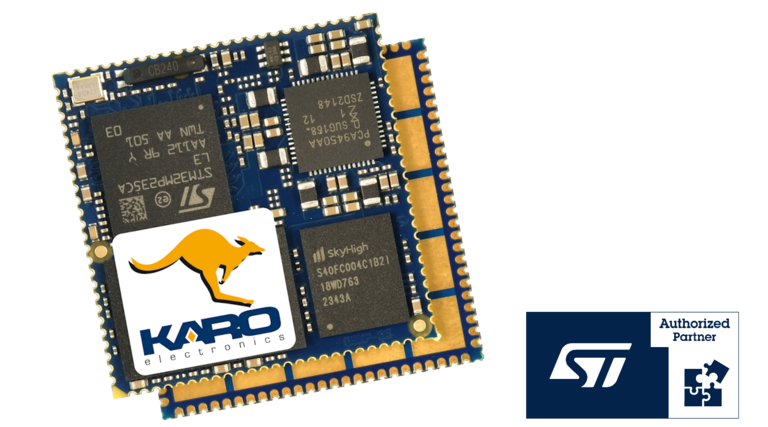
Direct Insight has introduced the QSMP-20, a compact solder-down system-on-module built around STMicroelectronics’ STM32MP235 processor and positioned as a drop-in, pin-compatible successor to the QSMP-15.
The new module keeps to the established QSMP family’s compact QFN-style format while stepping up processing capability. At its core is the STM32MP235, combining dual Arm Cortex-A35 processing with a Cortex-M33 coprocessor, integrated graphics capability, and a neural processing engine intended for edge AI and multimedia workloads. The combination is aimed at developers who need more local processing headroom without committing to a complete board redesign.
One of the sharper design decisions sits in the memory choice. The QSMP-20 uses DDR3L rather than moving directly to DDR4 or DDR5, giving the module a more stable supply position at a time when newer memory generations remain under pressure from AI infrastructure demand. ST has itself highlighted DDR3L support in the STM32MP2 series as a way of maintaining pricing and supply resilience while DDR4 and LPDDR4 markets remain tight.
Direct Insight says the module carries 512MB of DDR3L RAM and 4GB of eMMC in a 27mm by 27mm package with a height of 2.6mm. It supports a single 3.3V supply and exposes a broad range of interfaces including CAN-FD, UART, SPI, I²C, audio, Gigabit Ethernet, SD, USB, and MIPI-DSI. That leaves it well suited to compact embedded HMIs, secure edge nodes, instrumentation, and other designs that need Linux-class capability in a tightly controlled footprint.
The module is supplied with a dedicated development kit and Yocto Linux board support package, which gives developers a clearer route into evaluation and software bring-up. As embedded designs continue to absorb more graphics, connectivity, and local AI tasks, products such as the QSMP-20 show how much value still sits in careful module design, supply-chain pragmatism, and board-level compatibility.

