IN Brief:
- xTool has launched the M2 Color Craft Laser in the UK and globally.
- The desktop system combines CMYK inkjet printing, laser cutting, engraving, dual cameras, and automated alignment.
- Desktop fabrication tools are moving towards integrated workflows that combine imaging, software, safety, and material processing.
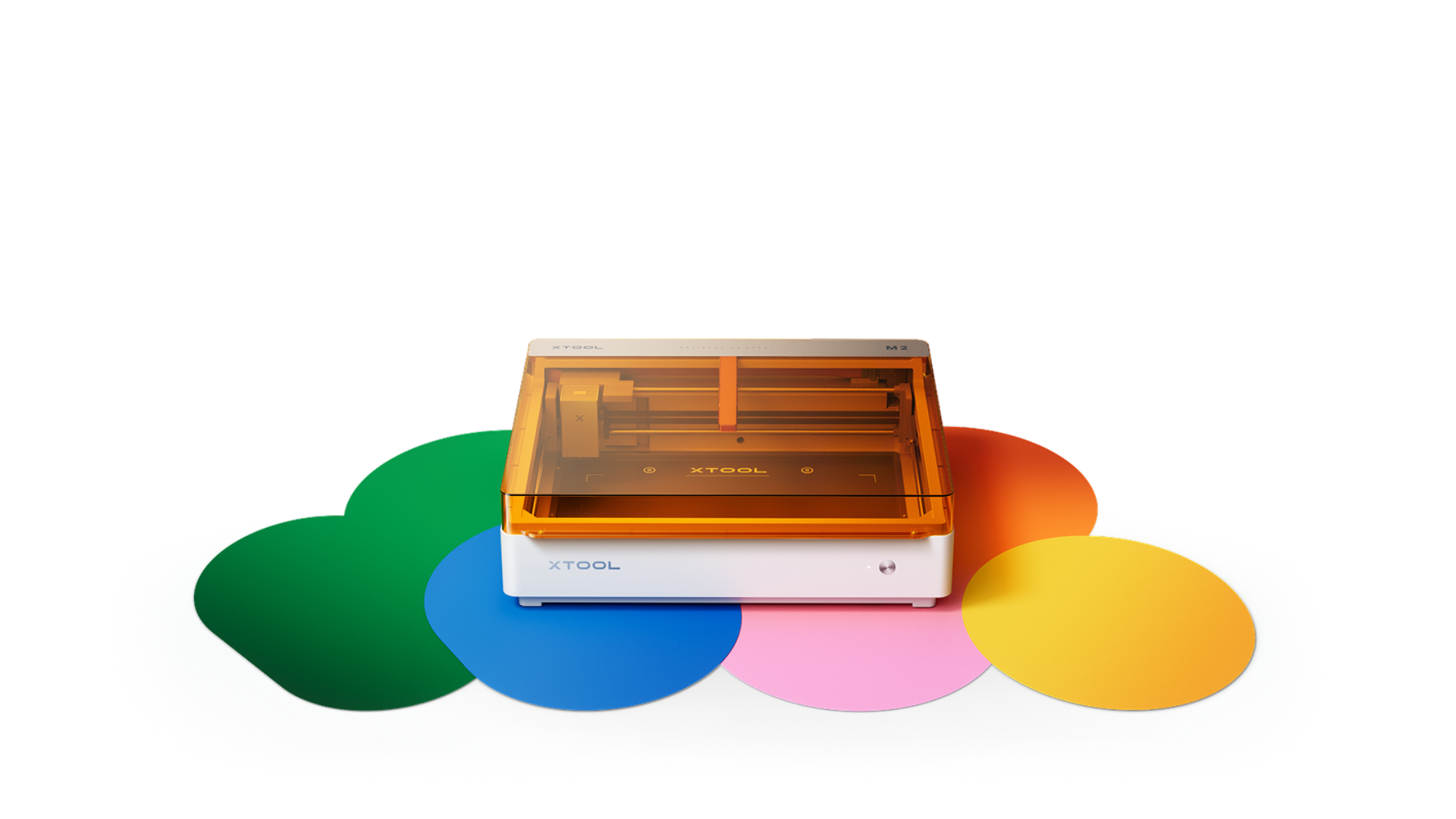
xTool has launched the M2 Color Craft Laser, a desktop fabrication system that combines colour printing, laser cutting, and engraving in one machine.
The M2 is built around a modular workflow that can combine a CMYK inkjet module with diode laser cutting and engraving tools. It can print directly onto materials such as wood, paper, and felt, then cut or engrave the same workpiece without transferring the material to a second machine or relying on manual alignment.
The system uses dual cameras for visual positioning and an Auto-Creation System to automate focusing and alignment. xTool’s Atomm software ecosystem adds templates, presets, and design-support functions, while xTool Studio provides the working environment for layout and production.
The M2 supports flat work and cylindrical engraving, including objects such as mugs and tumblers. xTool says the platform can process more than 100 materials, with power options covering 10W and 20W blue diode laser modules, a 3W infrared module, and the inkjet module. The machine has a fully enclosed design, Class 1 safety certification, and real-time safety monitoring.
UK availability began on 27 May through xTool’s website and Amazon UK. The M2 10W Base is listed at £599, with launch pricing from £549. Bundle options add CMYK printing and higher-power laser configurations, extending the system from entry-level cutting and engraving towards more complete small-format fabrication workflows.
The product sits closer to desktop production and prototyping than to heavy industrial equipment, but the engineering direction is clear. Benchtop machines are no longer simply scaled-down manual tools. They are becoming integrated mechatronic platforms, combining motion control, optics, imaging, embedded processing, software templates, consumables management, and safety interlocks.
That design pattern is spreading across small-format manufacturing and development tools. Industrial inkjet, PCB prototyping, laser marking, additive manufacturing, and test fixtures all rely increasingly on the same combination of software-defined motion, vision assistance, material presets, and process monitoring. The equipment may be compact, but the control architecture is becoming more sophisticated.
Digital deposition and controlled fabrication are also moving into higher-end manufacturing contexts. Xaar’s industrial inkjet work for battery coating occupies a very different part of the market, yet both developments show how software, materials handling, and digitally controlled process steps are spreading across fabrication tasks.
The M2’s camera-assisted alignment is a useful example of that shift. Reducing setup time, material waste, and operator dependency can be just as valuable as increasing headline processing power. For small studios and product teams, more predictable output makes short-run work easier to manage. For engineers, it underlines how sensing and software are now central to machines that would once have been defined mainly by laser power or mechanical envelope.
Desktop fabrication systems will not replace industrial production lines, but they are changing how physical iteration happens. Design teams can shorten the distance between concept, prototype, and low-volume output, while small businesses can bring more of the finishing and customisation process in-house. The M2 points to a market in which integrated vision, process automation, and safer enclosed designs are becoming expected features even at the desktop end of fabrication.