
IN Brief:
- Xaar will demonstrate battery coating applications for industrial inkjet technology at The Battery Show Europe.
- The company’s eX printheads target prismatic and cylindrical battery cell coating processes.
- Digital deposition can improve coating precision, flexibility, uptime, and process control in battery manufacturing.
Xaar will use The Battery Show Europe in Stuttgart to demonstrate how industrial inkjet technology can be applied to battery coating processes, moving functional coating deposition from analogue methods toward digitally controlled production.
The company will exhibit on stand 5A40 from 9 to 11 June, with demonstrations connected to its work with Inkatronic, a specialist in bespoke inkjet machinery and industrial research and development. Xaar will also present on the digitisation of insulating coatings for EV battery cells.
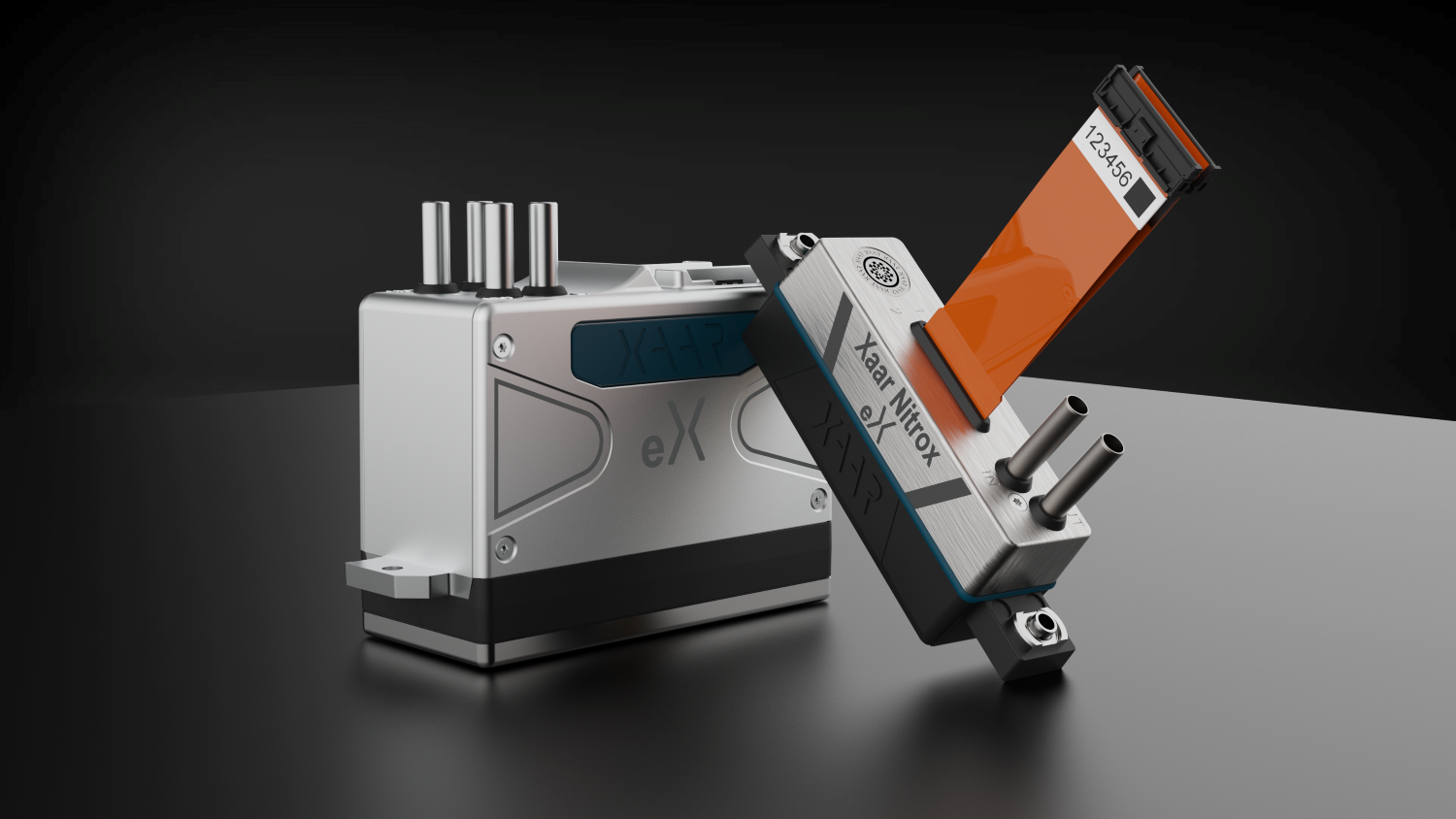
The technology is built around Xaar’s eX series printheads, developed for next-generation battery applications in electric vehicles and energy storage systems. The range addresses both prismatic and cylindrical cell formats, reflecting the different mechanical and production requirements across battery manufacturing lines.
Xaar’s battery coating approach combines several of its printhead technologies. Ultra High Viscosity Technology supports the jetting of advanced functional fluids, while TF Technology recirculation allows coating in different orientations, including sides and corners. High Laydown Technology supports thick, even coatings in a single pass, and SureFlow self-cleaning is designed to reduce blockages and downtime.
Battery coatings are becoming more important as cell and pack designs become denser. Insulating and protective coatings help manage heat generated during charging and operation, while reducing wear in tightly packed assemblies. Traditional PET film and spray coating methods can be less suited to applications requiring tighter deposition control, reduced material waste, and greater flexibility across formats.
The move toward more controlled battery production is visible across the wider test and manufacturing chain. WireFlow’s modular battery monitoring platform addresses flexibility in battery testing and validation, while digital coating tackles a production-stage challenge around process precision and repeatability.
Inkjet deposition can place material only where it is needed. In manufacturing terms, that can reduce overspray, simplify masking, and allow design changes without the same tooling burden as some analogue processes. For battery lines handling multiple cell formats or evolving designs, that flexibility can be valuable.
Functional battery coatings also place tougher demands on the printhead than conventional graphic applications. Materials must meet electrical, thermal, mechanical, and durability requirements, while jetting high-performance fluids at production speed requires stable printhead behaviour, fluid compatibility, process monitoring, and repeatable deposition under industrial conditions.
Xaar’s focus on high-viscosity jetting and recirculation addresses that production challenge. Functional fluids can be harder to handle than standard inks, particularly where solid content, rheology, or curing behaviour affects jetting reliability. Recirculation and self-cleaning functions support uptime, which is essential if inkjet is to move from laboratory trials into battery production.
As EV and energy storage demand grows, battery manufacturers need higher throughput, tighter process control, and lower waste. Digital coating will not replace every established method, but it gives manufacturers another route to precise and adaptable production. Xaar’s Battery Show presence places industrial inkjet deeper into electronics manufacturing, where deposition accuracy and process reliability carry direct performance consequences.

