IN Brief:
- Prima Electro will make its Farnborough International Airshow debut from 20 to 24 July.
- Its capability covers electronic architecture, embedded development, power conversion, industrialisation, and production.
- Aerospace programmes are increasing demand for qualified, upgradeable, and lifecycle-managed electronic subsystems.
Prima Electro will make its first appearance at Farnborough International Airshow, presenting custom embedded, control, and power-electronics development for aerospace and defence programmes.
The company will exhibit from 20 to 24 July within the Piedmont regional pavilion organised by CEIPiemonte. Its engineering activity covers requirements analysis, electronic architecture, hardware and software development, industrialisation, manufacturing, and production support for application-specific systems.
Based in Moncalieri, Italy, Prima Electro forms part of France-based Synov Group and works across industrial automation, rail, energy, electrification, avionics, and defence. Its aerospace activity draws on the specialist supply base around Piedmont, where large manufacturers, smaller engineering companies, universities, and research centres support aircraft and space programmes.
Aerospace electronics rarely follow a straightforward catalogue-selection process, since processing, power conversion, analogue conditioning, communications, interfaces, and control functions must be combined within strict limits on mass, volume, cooling, electromagnetic compatibility, reliability, and maintainability.
Environmental qualification introduces vibration, shock, temperature, humidity, altitude, and power-quality requirements, while civil and military programmes add distinct assurance, certification, cybersecurity, and configuration-control obligations. A device that meets its individual data-sheet limits may still prove unsuitable after these system conditions are applied.
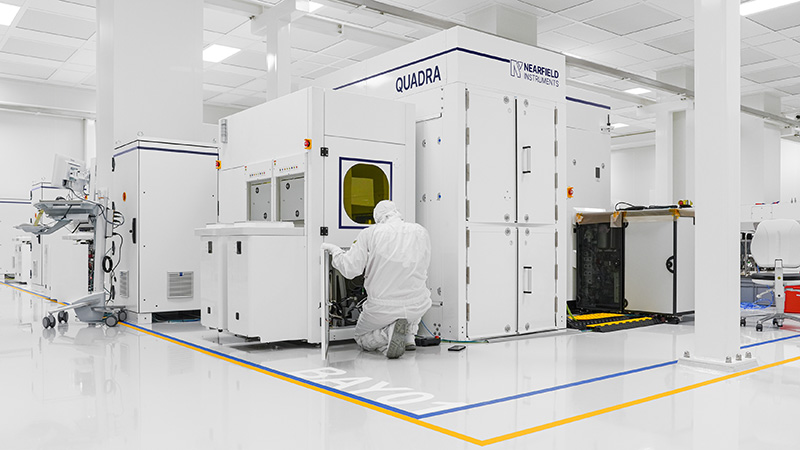
Prima Electro’s development model follows a subsystem from specification into industrialisation and production. Continuity between design and manufacturing can reduce the gap between a prototype that functions under controlled conditions and hardware that can be assembled repeatedly, tested efficiently, repaired, and supported through later changes.
Manufacturability is especially important in low- and medium-volume aerospace production, where automated equipment is often designed around higher-throughput products. Specialist boards may contain expensive processors, converters, FPGAs, connectors, and power devices, making yield loss and rework disproportionately costly.
Design-for-test access, boundary-scan strategy, programming routes, fault isolation, and repair policy consequently need to be established before the layout is frozen. Once a densely populated assembly enters qualification, changes to test access or component placement can require extensive documentation and repeated environmental work.
Power electronics is becoming more prominent as aircraft and defence platforms carry additional sensors, processors, communications, electronic-warfare equipment, and electrically driven subsystems. Increased electrical demand raises the importance of conversion efficiency, thermal management, fault containment, isolation, and power-quality control.
Embedded computing is moving towards heterogeneous architectures in parallel, with CPUs, GPUs, FPGAs, dedicated accelerators, and secure controllers sharing the same platform. Software partitioning, timing, memory bandwidth, and heat dissipation must be managed across those devices rather than treated as separate board-level issues.
The electronics requirements emerging from GCAP illustrate the scale of that integration problem. Sensors, mission computing, datalinks, electronic warfare, power, and thermal control have to evolve together while preserving enough modularity for future upgrades.
Long platform lifecycles add pressure from component obsolescence. Aircraft and defence systems can remain in development and service for decades, whereas commercial processors, memory devices, interface components, and software environments may change within a few years.
Design teams therefore need reliable lifecycle data, controlled substitutions, obsolescence planning, and architectures that allow a processor or interface to be replaced without reopening every aspect of system qualification. Modular hardware can reduce disruption, although electrical, thermal, mechanical, and software compatibility must still be demonstrated.
Farnborough’s industrial programme now extends well beyond aircraft orders, with the Aerospace Global Forum bringing together defence, finance, space, aviation, and technology leaders. The breadth reflects the dependence of future platforms on capital, digital engineering, secure supply, production capacity, and long-term support.
Prima Electro enters that environment as a specialist design and manufacturing partner rather than an aircraft prime or catalogue board supplier. Custom work is most likely where an electronic subsystem requires closer integration than a commercial board can provide, but does not justify a prime contractor maintaining every engineering discipline internally.
Securing programme work will depend on more than exhibition presence. Aerospace customers will require evidence of qualification capability, secure programme handling, configuration control, supply continuity, and the ability to move custom hardware into stable, documented production.
Farnborough provides access to programme teams from the UK and overseas, while the more demanding assessment will follow during technical engagement. Electronic architecture, lifecycle support, and manufacturing evidence will determine whether an initial discussion develops into flight or mission hardware.