IN Brief:
- Incap Electronics Slovakia has added ISO 6–7 cleanroom production capability at Námestovo.
- The investment supports controlled final assembly, material management, monitoring, and box-build work.
- Cleaner production environments are becoming more important as high-reliability assemblies integrate sensors, optics, semiconductors, and medical electronics.
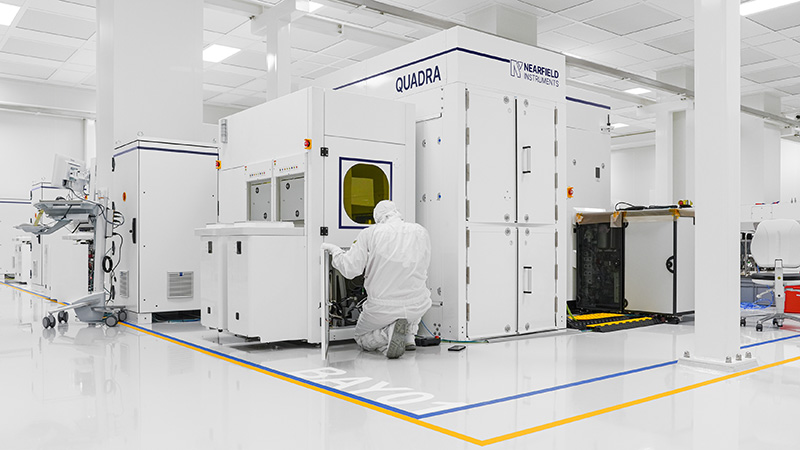
Incap Electronics Slovakia has added cleanroom production capability at its Námestovo facility to support contamination-sensitive electronics assembly, including semiconductor-related applications.
The investment enables final product assembly under ISO 6–7 conditions. The controlled environment covers material management, monitoring and control of pre-assembly processes, and box-build assembly where electronics are integrated into finished products under tighter cleanliness control.
Incap Slovakia has operated in Námestovo since 2008 and provides PCB assembly, electromechanical assembly, and complete product build services from a 6,400m² production site. The facility also includes a dedicated hall for automotive manufacturing, giving the company an established base for more demanding electronic manufacturing services work.
Cleanroom capability changes the type of production a manufacturing partner can credibly support. Contamination-sensitive assemblies can fail through mechanisms that are difficult to detect in standard production environments, particularly where optics, sensors, fine-pitch electronics, semiconductor subsystems, medical modules, or high-reliability hardware are involved.
Box-build work is also becoming more technically demanding. Increasingly, final assembly includes calibrated sensors, optical components, power electronics, embedded compute, wireless modules, thermal interfaces, displays, batteries, precision connectors, and application-specific mechanical integration. Each added subsystem increases the need for process control, traceable handling, and repeatable inspection.
Cleanliness requirements sit alongside wider quality and compliance expectations. Customers in semiconductor-adjacent, medical, aerospace, and automotive markets need evidence that handling, assembly, inspection, and environmental control are repeatable. That evidence becomes part of the production record and, in many cases, part of the customer’s own qualification and regulatory documentation.
European electronics manufacturing is being shaped by regionalisation, component risk, and demand for nearshore production that can support engineering change as well as volume build. Customers are seeking partners able to combine PCB assembly, integration, test development, supply-chain control, and specialist process environments closer to final markets.
Work to strengthen European chip packaging capacity through the Tessalia venture sits at a different point in the electronics value chain, but the same industrial pressure is visible. Advanced electronics increasingly depend on controlled downstream manufacturing as well as wafer fabrication and package-level innovation.
Assembly cleanliness is becoming more important as electronics become smaller and more integrated. Fine-pitch components, high-density interconnects, micro-optics, thermal materials, conformal coatings, and sensor packages leave less tolerance for particulate contamination or uncontrolled handling. The cost of failure rises sharply when a finished product contains several high-value subsystems rather than a simple populated board.
EMS providers have to add such capability without losing production flexibility. Cleanroom work must be balanced with scheduling, training, gowning discipline, material flow, inspection, documentation, maintenance, and customer-specific control plans. Specialist builds rarely behave like uninterrupted commodity runs, so operational control becomes part of the value offered.
Incap’s Námestovo investment gives the company a stronger route into projects where final assembly conditions form part of the product specification. As electronics manufacturing moves further into sensor-rich, semiconductor-linked, and high-reliability assemblies, controlled production environments are becoming a practical manufacturing differentiator.