IN Brief:
- Trelleborg Sealing Solutions has opened an automated European Service Center in Gärtringen, Germany.
- The site uses robotics, automated forklifts, high-density storage, and controlled component-handling services.
- The facility supports more precise and traceable supply of engineered components into regulated and industrial manufacturing sectors.
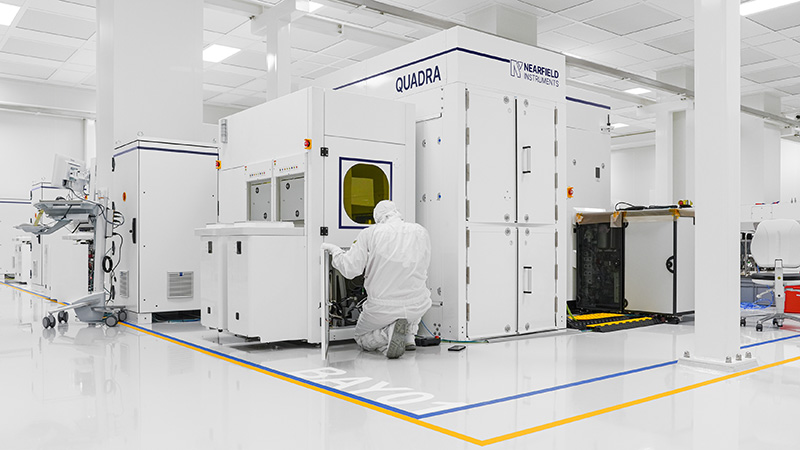
Trelleborg Sealing Solutions has opened a European Service Center in Gärtringen, Germany, bringing automated storage, robotics, clean-room handling, kitting, coating, and component assembly into a single regional logistics and service operation.
The 16,000m² facility includes high-density storage capacity for around 60,000 containers, 32 robots, 26 ports, an automated pallet warehouse, and ten automated forklifts for internal material movement. Alongside distribution, the site provides customer-specific services including cutting, packaging, clean-room handling, component assembly, coating processes, and kitting.
The new centre has been designed to handle more than conventional fulfilment. By placing controlled handling and value-added preparation alongside automated logistics, Trelleborg is reducing the gap between component supply and customer-ready assembly support. That model is increasingly relevant where engineered seals, polymer components, and precision materials support electronic, medical, energy, mobility, and industrial systems that require traceability and repeatable preparation.
A Material Innovation Center at the site will support polymer formulation and development, while a separate recycling development area will focus on material circularity. The combination gives the Gärtringen operation a role in materials development as well as regional service and fulfilment, linking product engineering, handling processes, and logistics automation more tightly than a traditional warehouse would allow.
Controlled component handling has become a more prominent part of electronics-adjacent manufacturing as products move into harsher environments and more regulated use cases. Incap’s cleanroom assembly expansion in Slovakia reflects the same pressure inside electronics manufacturing, where contamination control, process discipline, and traceability are no longer reserved for a narrow group of medical or aerospace products.
Seals and engineered polymer components may sit outside the PCB itself, but they often influence system reliability. Ingress protection, thermal isolation, vibration performance, chemical compatibility, shielding interfaces, and long-term enclosure behaviour can all depend on material choice and preparation quality. A component that is handled poorly, stored incorrectly, or supplied without suitable kitting can create assembly defects that are difficult to diagnose later.
Automation also changes the economics of regional service. Customers are asking for shorter lead times, smaller batches, and more product variants while still expecting documentation and consistency. Manual warehouse processes struggle when every order carries different packaging, preparation, or documentation requirements. Robotics and automated material flow can reduce picking errors and improve responsiveness, provided the system is integrated with quality and customer engineering data.
The Gärtringen investment also reflects a more technical version of European nearshoring. Regional supply does not simply mean holding stock closer to customers; it increasingly means preparing components in the format required by production lines, validation teams, or field-service operations. Kitting, coating, controlled packing, and clean handling reduce work at the point of use and can limit errors during final assembly.
Electronics manufacturers are already familiar with that logic from component reels, pre-programmed devices, test fixtures, and conformal coating. The same discipline is now spreading into supporting materials and mechanical interfaces around electronic systems. As products become more compact and environmentally exposed, the surrounding component ecosystem must meet higher process standards.
Trelleborg’s automated service centre therefore sits within a wider shift in industrial supply. Component availability remains important, but availability without preparation, traceability, and controlled handling is losing value in markets where quality escapes are expensive and product lifecycles are getting more complex.