IN Brief:
- The WMSC family contains more than 20 SiC module variants rated from 1,200V to 2,300V.
- Devices support AC/DC and isolated DC/DC stages using two-level, three-level, LLC, and dual-active-bridge architectures.
- Solid-state transformers are moving towards higher-density DC distribution for AI, charging, and grid equipment.
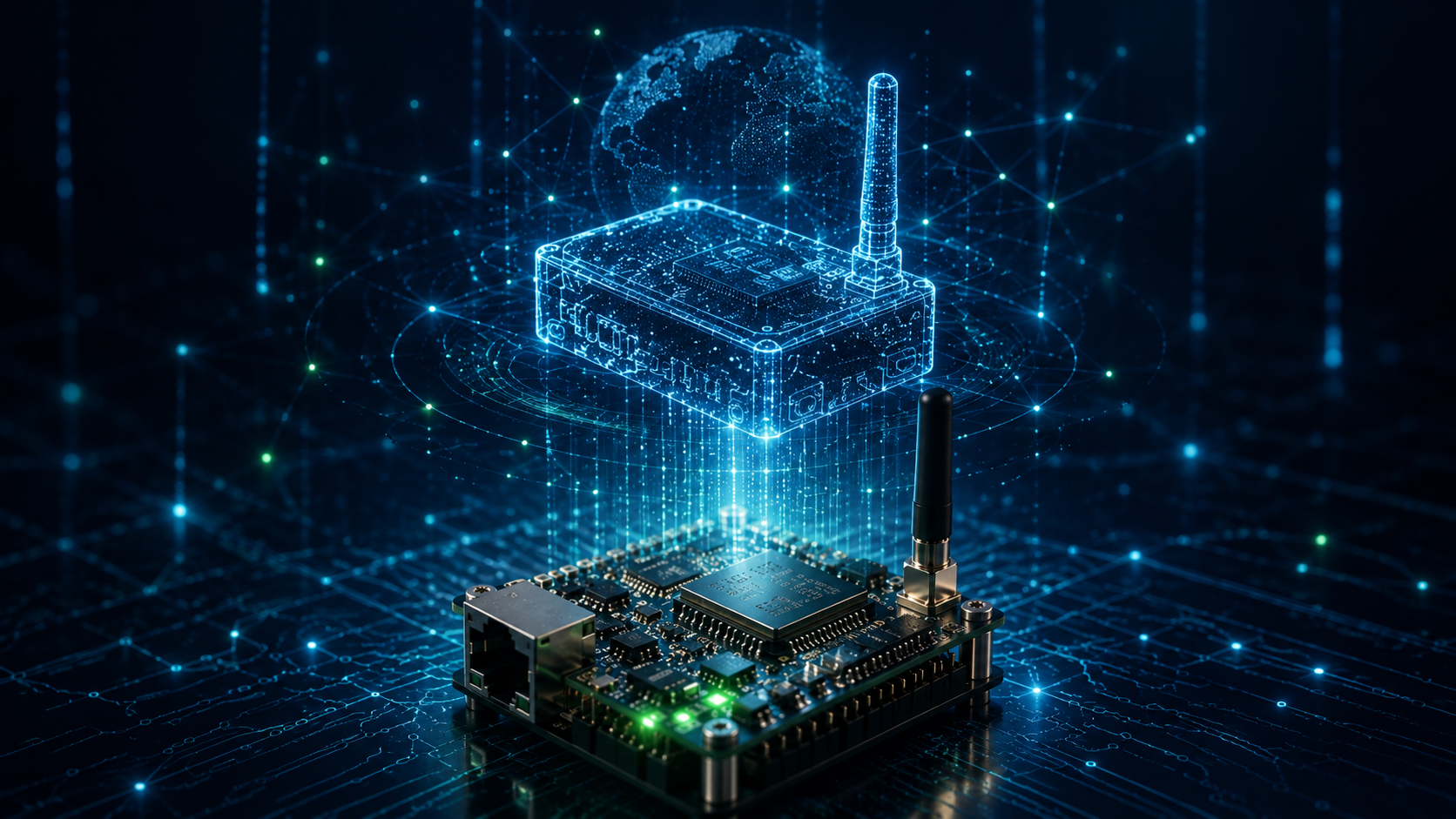
WeEn Semiconductor has introduced more than 20 silicon-carbide power-module variants covering voltage ratings from 1,200V to 2,300V for solid-state transformers and other high-power conversion systems.
The WMSC family includes devices with on-resistance values extending down to 1.5mΩ, supported by several circuit configurations and package formats for front-end AC/DC conversion and isolated DC/DC stages. Target applications include data-centre power, electric-vehicle charging, renewable generation, smart-grid equipment, and industrial energy infrastructure.
Modules are available for two-level and three-level converter topologies, along with half-bridge arrangements suited to resonant LLC and dual-active-bridge stages. The range allows power-system developers to balance switching complexity, voltage stress, electromagnetic interference, thermal performance, and physical size without forcing one module architecture across dissimilar converter functions.
Three-level topologies divide the applied voltage across additional switching devices and can reduce filter requirements and switching losses under suitable operating conditions. Two-level designs generally offer simpler control and fewer active components, while half-bridge modules provide adaptable building blocks for isolated conversion stages where galvanic isolation or bidirectional energy flow is required.
Solid-state transformers approach practical deployment
By replacing much of the passive conversion performed by a conventional low-frequency transformer with controlled semiconductor switching and high-frequency magnetics, a solid-state transformer can combine voltage transformation, power-factor correction, isolation, monitoring, and bidirectional power control within one managed system. The architecture also creates a demanding electronics problem, particularly when medium-voltage inputs must coexist with compact packaging and high switching frequencies.
Insulation coordination, partial-discharge control, thermal cycling, fault management, and fast voltage transitions all need to be resolved before the equipment can compete with transformers expected to operate reliably for decades. Silicon carbide supports higher electric fields and junction temperatures than silicon while switching quickly enough to reduce the size of magnetic and filtering components, although those advantages depend on the surrounding module, gate drive, layout, cooling, and control system.
Stray inductance or poor thermal interfaces can erase much of the performance available from the semiconductor die. WeEn has therefore developed the WMSC range with low-inductance construction and options covering direct-bonded copper substrates, case materials, encapsulation gel, terminals, surface plating, mounting arrangements, and thermal-interface materials. Such configuration reflects the way high-power modules are increasingly incorporated into mechanically and thermally customised assemblies rather than standard board-level footprints.
Data-centre infrastructure is applying particular pressure to conversion efficiency and power density. AI racks can require substantially more power than conventional computing equipment, encouraging operators and equipment manufacturers to examine higher-voltage DC distribution and fewer conversion stages. A related move towards solid-state DC power infrastructure has already brought semiconductor suppliers deeper into distribution architecture, protection, and control rather than leaving them at the level of individual switches.
WeEn identifies conversion from medium-voltage AC distribution to an 800V DC bus as one application for the modules. Removing intermediate conversion stages can reduce cumulative losses, but protection, service isolation, connector design, and standardisation become more difficult as DC voltage and available fault energy rise. The converter must also respond safely to load steps and faults originating in highly dynamic computing equipment.
Charging infrastructure and renewable systems present comparable demands, since bidirectional converters must accommodate wide voltage ranges, rapid load changes, grid-support functions, and prolonged operation at high utilisation. Power-module selection affects cooling-system size, maintenance intervals, acoustic performance, and the usable power rating of the complete cabinet as well as nominal electrical efficiency.
Samples and production quantities of the WMSC family are available. The breadth of the first portfolio points towards platform-level programmes spanning several stages within the same installation, giving developers a common module family while preserving the topology and packaging choices needed for each conversion task.
Solid-state transformers remain more complex than conventional magnetic equipment, yet rising power density and the growth of controlled DC distribution are creating applications where that complexity can be justified. Wide-voltage SiC module families will determine how readily those architectures move from demonstration systems into equipment that can be manufactured, protected, and serviced at scale.