IN Brief:
- G&H supports medical instruments from feasibility and optical design through industrialisation and volume manufacture.
- Demonstrations include technologies used in point-of-care diagnostics, magnetic localisation, perfusion, and digital imaging.
- Integrated development and manufacturing can reduce risk during regulated design transfer and scale-up.
G&H will present its integrated diagnostic-instrument development and manufacturing capability at the ADLM Clinical Lab Expo in Anaheim from 28 to 30 July.
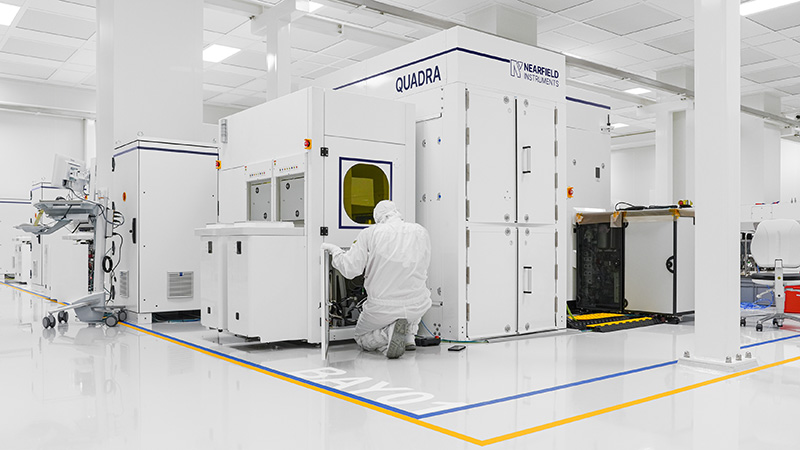
The UK-headquartered photonics and engineering company will show how optical design, electronics, systems engineering, product industrialisation, regulatory support, and ISO 13485 manufacturing can be combined within one development route. The model is intended to take medical technologies from feasibility through verification, design transfer, and controlled production without repeatedly handing the programme between unrelated organisations.
Examples include work with Psyros Diagnostics and Prolight Diagnostics on a compact point-of-care platform intended to identify acute medical events from blood samples. Such systems require high-sensitivity optical detection within equipment suited to use outside a central laboratory, where operator training, maintenance, calibration, sample handling, and turnaround time impose different constraints from conventional analytical instruments.
G&H will also draw on programmes involving Endomag’s Sentimag magnetic localisation system, the OrganOx metra organ-perfusion platform, DYSIS digital colposcopy, and Magnasense diagnostic technology. These projects span optical, magnetic, fluidic, thermal, electronic, and software functions, illustrating how medical instruments increasingly depend on several specialised engineering disciplines working within a single regulated architecture.
Design transfer shapes the finished instrument
A prototype can demonstrate that a sensing principle works without proving that the complete product can be manufactured economically or supported throughout its intended lifecycle. Laboratory assemblies often rely on manually aligned optics, development boards, specialist operators, or components that are poorly suited to repeatable production, all of which must be addressed before validation and volume manufacture.
Because optical instruments are especially sensitive to this transition, lens position, detector alignment, source ageing, contamination, enclosure tolerances, and thermal movement can all alter signal quality. A design that performs well after careful laboratory adjustment may require different mechanical references, calibration routines, or component selections on a production line.
Electronics must be developed with test access and traceability from the outset. Production fixtures need to verify power rails, communications, sensors, emitters, detectors, safety functions, and software configuration without turning every completed instrument into a lengthy manual investigation, and the resulting test records must remain associated with the correct unit under the manufacturer’s quality system.
Since regulatory control makes late design changes costly, replacing an unavailable component can require risk assessment, verification, documentation updates, and possibly further submissions even when the substitute appears electrically similar. A wider examination of resilience in medical-device manufacturing showed how long product lives and shifting semiconductor supply continue to generate engineering work well after initial approval.
Keeping development and manufacturing teams close can expose these constraints before the architecture is frozen. Production engineers can influence component selection, fastening methods, cable routing, optical alignment, calibration, test access, and service procedures while changes remain comparatively inexpensive, and pilot builds can feed directly into the design rather than being treated as a separate manufacturing problem.
Point-of-care diagnostics are driving further integration because instruments must deliver laboratory-quality information from small samples with limited specialist intervention. Stable sensing, controlled fluid handling, automated interpretation, and clear user interaction must coexist inside compact equipment that may be transported, cleaned frequently, or operated in varied environments.
The same convergence is visible in surgical and therapeutic systems, where imaging, localisation, sensing, and software increasingly operate together. Product developers must decide which technologies form the defensible core of the device and which can be entrusted to engineering and manufacturing partners without weakening control over performance, intellectual property, or regulatory evidence.
When G&H exhibits on booth 3463 at ADLM, its presentation will centre on the infrastructure needed to convert specialised photonics and sensing into instruments that can pass validation, enter controlled manufacture, and remain supportable as components, standards, and clinical workflows change.