
IN Brief:
- Femtosecond lasers can create water-repellent microstructures without fluorinated surface coatings.
- LITILIT is building a Vilnius factory with planned annual capacity of 3,000 lasers.
- Chemical restrictions are increasing demand for scalable dry-processing alternatives.
LITILIT is expanding femtosecond-laser production as manufacturers investigate micro- and nanoscale surface texturing to replace selected PFAS coatings and other chemical treatments. The Lithuanian company has begun constructing a 4,000m² factory in Vilnius with planned annual capacity of approximately 3,000 laser sources.
Femtosecond lasers deliver pulses lasting around one quadrillionth of a second, concentrating energy before heat can spread deeply into the surrounding material. Carefully controlled pulses can create microscopic surface structures on metals, glass, stone, and other substrates while limiting the heat-affected zone.
Those structures alter the way a surface interacts with water, oil, ice, light, biological material, or another component. Water repellence, wettability, adhesion, colour, friction, and corrosion behaviour can be modified through geometry rather than an applied fluorinated coating, paint, or ink.
Interest in such processes is rising as European authorities and campaign groups press for tighter control of per- and polyfluoroalkyl substances. PFAS are valued for resistance to water, oils, heat, and chemical attack, but the strength of their carbon-fluorine bonds also allows many compounds to persist in the environment.
A report from the European Environmental Bureau and ClientEarth found substantial delays in the restrictions roadmap adopted in 2022, including measures covering PFAS, bisphenols, flame retardants, and other hazardous chemical groups. Belgium is also facing a human-rights complaint before the European Committee of Social Rights over alleged failures to protect health from widespread PFAS pollution.
Sweden has separately proposed national restrictions on selected consumer uses from 2028, covering products including clothing, footwear, cosmetics, kitchenware, and ski wax. The wider European restriction remains technically complex because fluorinated materials appear throughout electronics, semiconductors, medical devices, transport, seals, membranes, and industrial processes.
Laser texturing can substitute only where the required function arises chiefly from the surface. It cannot replace every fluoropolymer or PFAS use, particularly where the material provides bulk insulation, low friction, high-temperature performance, chemical resistance, or sealing behaviour throughout its thickness.
Applications centred on repellence, bonding, marking, optical appearance, or cell interaction offer a clearer route. The patterned surface must still retain its function after abrasion, cleaning, weathering, contamination, handling, and the mechanical loads encountered throughout the product’s service life.
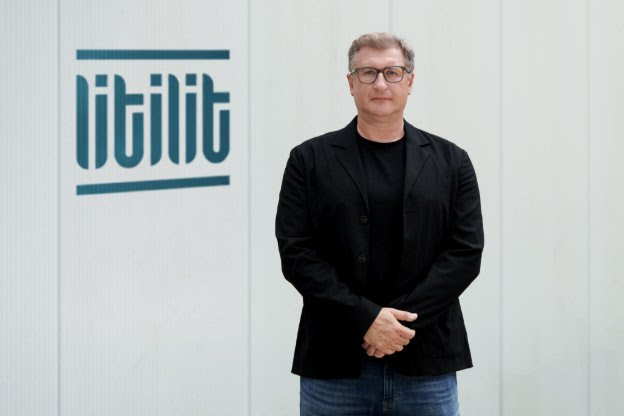
“PFAS coatings are widely used to repel water, oil, and stains, but femtosecond lasers offer another route: they can texture surfaces at micro- and nano-scale to make materials water-repellent without applying a fluorinated coating,” said Nikolajus Gavrilinas, co-founder and chief executive of LITILIT.
Industrial throughput remains a substantial barrier because a laboratory process on a small coupon does not translate directly into production. Fast scanning, stable pulse energy, accurate focus, part handling, extraction, process monitoring, and repeatable motion are needed across surfaces that may vary in shape, finish, and material condition.
The €6 million Vilnius facility is planned to incorporate CNC manufacture, robotic assembly, and automated testing. Output is expected to begin below the final 3,000-unit capacity as equipment, personnel, and manufacturing processes are commissioned and qualified.
Although source availability is essential, it addresses only one portion of the complete laser-processing system. Beam delivery, scanning optics, fixtures, guarding, cooling, extraction, controls, diagnostics, and software must be integrated around the laser, while maintenance routines need to fit the factory rather than remain dependent on laboratory specialists.
Electronics manufacturing already uses laser processes for drilling, cutting, trimming, marking, depaneling, and selective material removal. Investment in laser-based solder-paste printing and higher-power board depaneling shows how optical processing is entering operations previously dominated by stencils, blades, or contact tooling.
Surface functionalisation adds a further qualification burden because the laser defines how the finished material behaves rather than simply its shape. Contact-angle measurement, microscopy, corrosion exposure, optical characterisation, abrasion testing, and accelerated ageing may all be required to confirm that the process remains within specification.
Because substitution can shift burdens between process stages, environmental assessment must account for the complete production route. Replacing a chemical treatment is beneficial only when energy use, extraction, consumables, maintenance, and any preceding or subsequent material steps do not create an equivalent burden elsewhere.
“Manufacturers cannot move away from toxic chemicals at scale if the alternative tools remain expensive, complex and difficult to integrate,” Gavrilinas said. “That is why we are focused not only on making femtosecond lasers work, but on making them easier to produce, easier to install and easier to use in real factories.”
LITILIT’s factory expands the supply base for ultrashort-pulse sources as chemical substitution moves from policy into product and process specifications. Wider adoption will be determined by cycle time, total cell cost, durability of the treated surface, and the ability to qualify each application without transferring risk into another stage of manufacture.

