
IN Brief:
- The AKD1500 M.2 card packages BrainChip's Akida neuromorphic processor in a 22mm × 30mm format.
- It provides 32 neural processing units, 1MB of local memory, and PCIe Gen2 connectivity.
- Low power inference can be added to existing hosts without redesigning their main processor board.
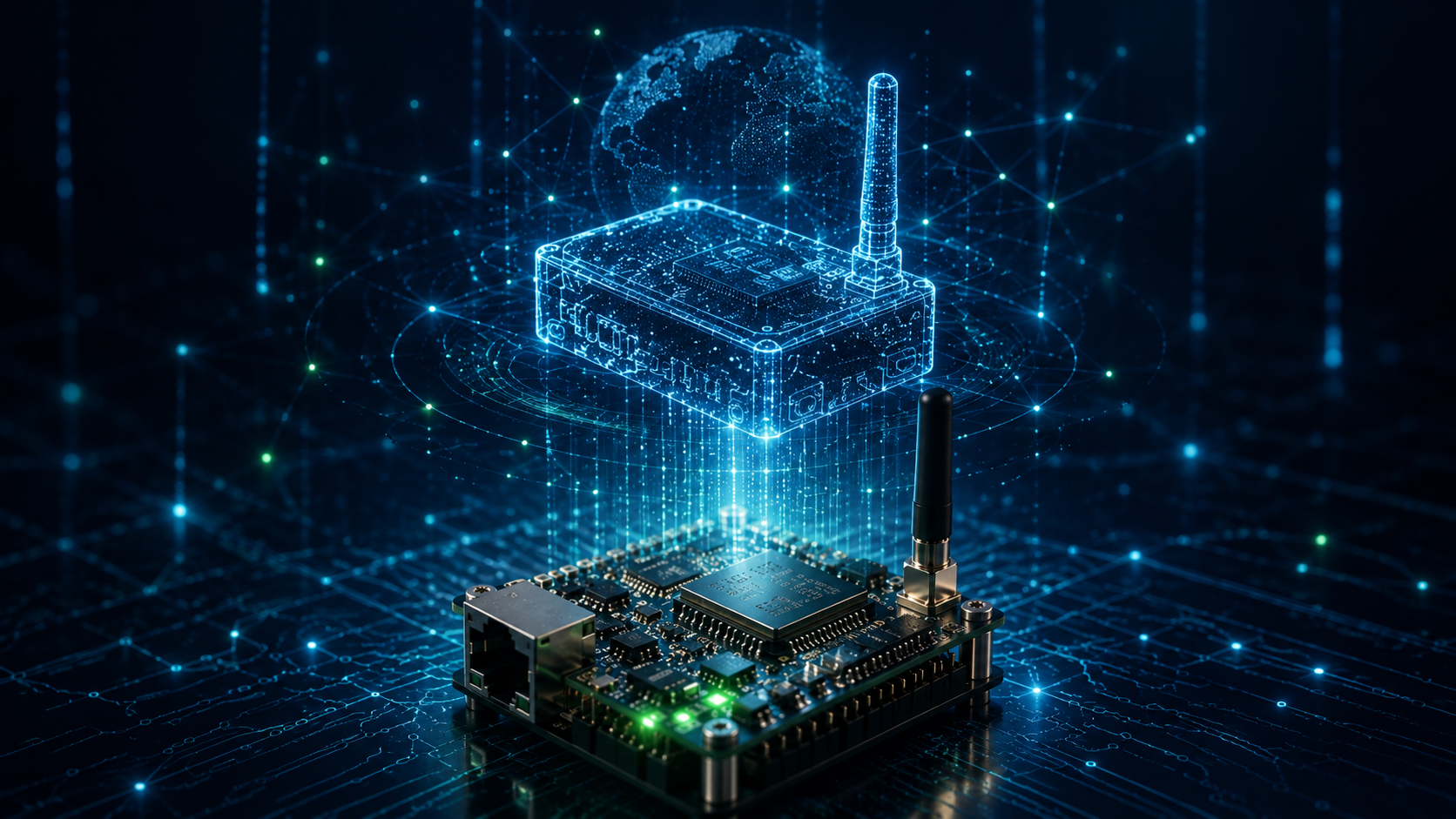
BrainChip has released an M.2 2230 card that brings its Akida neuromorphic processor to existing embedded computers and edge AI development platforms. The AKD1500 measures 22mm × 30mm, uses a B+M keyed connector, and communicates with the host through two lanes of PCIe Gen2.
Inside the card are 32 neural processing units and 1MB of local memory. Typical power consumption is stated at about 250mW while operating at 400MHz, allowing the device to run in fanless systems and other installations where a conventional accelerator would exceed the available thermal or electrical budget.
Akida uses event driven processing, activating computation around relevant changes rather than continuously evaluating every part of an input stream. The architecture supports local inference and on device learning, allowing selected adaptations to occur without sending repeated raw data transfers to a cloud service.
The M.2 implementation can be used with Raspberry Pi 5 systems and other hosts that provide a compatible socket and software environment. By retaining the main processor board, developers can compare models, measure latency and consumption, and establish whether neuromorphic processing suits the workload before committing to custom hardware.
Industrial sensing, machine monitoring, audio analysis, vision, autonomous equipment, and persistent surveillance are among the potential applications. In each case, local processing can turn a continuous stream into events, classifications, or anomalies, reducing network traffic while preserving a faster response to conditions that require immediate action.
Because the processor is supplied as an add in card, the same host can support several accelerator strategies during development. A GPU, NPU, FPGA, or neuromorphic device may be evaluated against the same application data, exposing the difference between nominal compute figures and useful performance on the actual model.
Edge accelerators diversify around workload behaviour
Most embedded AI systems now divide work between a general purpose processor and a more specialised engine. Neuromorphic processing adds another architectural option, particularly when inputs are sparse, activity is intermittent, or sensing must remain active for long periods under a strict energy limit.
Deterministic voice processing on Alif Semiconductor hardware reflects the same movement towards inference that remains close to the sensor. The objective is not to reproduce a cloud platform in miniature, but to choose an architecture whose data movement, memory, latency, and power behaviour match a defined task.
The M.2 format lowers the barrier to evaluation, although it does not standardise every part of the integration. Socket keying, available PCIe lanes, physical clearance, firmware, power provision, thermal spreading, vibration, driver support, and recovery behaviour still have to be checked against the host platform.
Although the mechanical integration is relatively familiar, model conversion can prove considerably more demanding. Event driven hardware does not accelerate every neural network equally, and the result depends on sparsity, quantisation, supported operators, training method, accuracy targets, and the amount of data transferred between the host and coprocessor.
When large tensors move repeatedly across PCIe, interface overhead can erode the energy saved inside the accelerator. Greater gains are likely where preprocessing, feature extraction, inference, and limited adaptation remain local, allowing the host to receive a compact result instead of supervising each stage.
Where on device learning is enabled, adaptive behaviour has to remain bounded and observable. Industrial, medical, transport, and security equipment needs a defined account of which parameters may change, how the updated state is validated, and how the system returns to a known configuration after maintenance, corruption, or abnormal operation.
A widening range of commercially available edge AI hardware is giving engineering teams more choice, but it also makes benchmark selection more important. Throughput, latency, energy per inference, model accuracy, memory use, and software maturity need to be measured together.
By using a standard expansion format, the AKD1500 provides a comparatively direct route into that comparison. Its strongest applications are likely to combine sparse data, persistent sensing, local adaptation, and modest power budgets, conditions under which event driven computation can be tested on an existing host before the architecture is fixed into a production design.

