IN Brief:
- Infineon radiation-hardened HiRel power semiconductors are aboard NASA's Nancy Grace Roman Space Telescope.
- The devices are qualified to MIL-PRF requirements with Total Ionising Dose and Single Event Effects characterisation.
- Roman is travelling to Sun-Earth L2 and is expected to downlink around 1.4TB of raw science data each day.
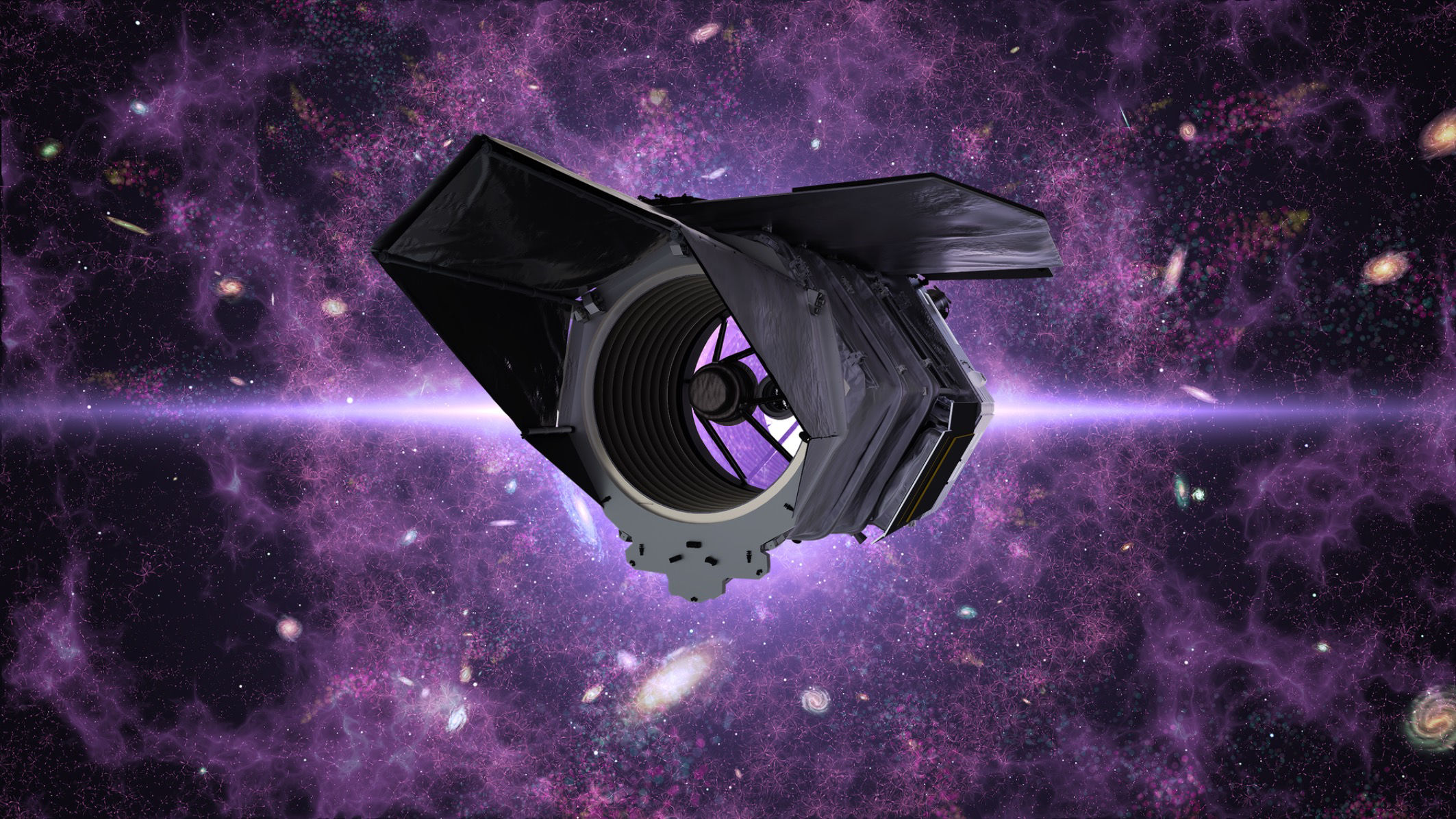
Infineon Technologies radiation-hardened power semiconductors are aboard NASA’s Nancy Grace Roman Space Telescope following its successful launch from Kennedy Space Center, placing the company’s HiRel electronics into a mission expected to operate more than 1.5 million kilometres from Earth.
Roman lifted off on 30 August aboard a SpaceX Falcon Heavy and is now travelling towards the second Sun-Earth Lagrange point, L2. The observatory will share the broad orbital region used by the James Webb Space Telescope, where the combined gravitational behaviour of the Earth and Sun allows spacecraft to maintain a relatively stable geometry while remaining well positioned for deep-space observations.
Infineon says its contribution includes radiation-hardened HiRel power semiconductor components qualified to MIL-PRF requirements and characterised for both Total Ionising Dose and Single Event Effects. The company has not identified individual Roman part numbers, so the hardware should be treated as part of the mission’s power-electronics infrastructure rather than attributed to a specific subsystem without further NASA disclosure.
That qualification is central to electronics intended for long-duration operation beyond the protection available to terrestrial systems. Total Ionising Dose describes the cumulative energy deposited in semiconductor materials by radiation over time, potentially shifting transistor characteristics, increasing leakage, or degrading device performance as exposure builds across the mission.
Single Event Effects are different. A high-energy particle can deposit enough charge in a semiconductor structure to create an immediate transient or permanent failure mechanism, ranging from logic upsets to destructive events in power devices. Designing electronics for deep-space operation therefore requires both long-term dose tolerance and resistance to individual particle strikes.
Power semiconductors are especially important because practically every spacecraft subsystem depends on controlled conversion and distribution of electrical energy. Instruments, processors, communications electronics, heaters, actuators, sensors, and data-handling equipment all rely on power stages that have to continue switching and regulating correctly after years of radiation exposure.
Roman’s operating environment raises the cost of failure considerably. Once the observatory reaches L2, physical access is not a realistic maintenance option, placing greater emphasis on device qualification, derating, redundancy, fault protection, and long-term component availability during the design phase.
The telescope is expected to produce approximately 1.4 terabytes of raw science data each day, which Infineon describes as the highest data volume yet planned for a NASA astrophysics mission. That data will be transmitted to ground stations in New Mexico, Australia, and Japan, making reliable spacecraft power part of the chain that keeps instruments, processing electronics, and communications hardware continuously available.
Roman’s scientific programme centres on dark energy, dark matter, exoplanets, and wide-field infrared astronomy. NASA says the telescope combines Hubble-class image sharpness with a field of view at least 100 times larger, allowing it to survey much greater areas of sky while maintaining the resolution required for detailed astrophysical measurements.
That wider field changes the electronics workload as well as the scientific one. Large image volumes have to be captured, conditioned, processed, stored, and moved through onboard systems before transmission, placing sustained demand on power conversion and distribution across the observatory rather than concentrating the challenge solely in the imaging sensors.
Infineon’s wider HiRel portfolio includes radiation-hardened silicon power MOSFETs, gallium nitride transistors, gate drivers, solid-state relays, and diodes. The company also manufactures a JANS-qualified 100V radiation-hardened GaN transistor under MIL-PRF-19500, although Infineon has not stated that this particular device is installed on Roman.
GaN is attracting interest in spacecraft power conversion because its switching characteristics can reduce conduction and switching losses while supporting higher switching frequencies than many conventional silicon devices. Higher-frequency operation can, in turn, reduce the size of magnetic components and filters, cutting mass and volume in systems where every additional gram has a launch and structural penalty.
Those advantages do not remove the qualification burden. Space-qualified GaN devices still have to demonstrate predictable behaviour under radiation, temperature extremes, electrical stress, and long-duration operation, while gate-drive circuitry and packaging must withstand the same environment as the transistor itself.
MIL-PRF qualification provides one route for establishing that assurance through controlled manufacturing, screening, traceability, and defined performance requirements. For mission designers, that framework can reduce uncertainty around component behaviour across production lots and over the extended procurement cycles common to major spacecraft programmes.
Infineon traces its space-electronics involvement back to the 1970s and says its radiation-hardened components have supported hundreds of missions, including navigation satellites, the International Space Station, and NASA’s Artemis programme. The company estimates that hardware using its HiRel products has travelled collectively more than 20 billion kilometres from Earth.
Roman adds another demanding reference because of the combination of mission duration, distance, scientific data throughput, and the impossibility of conventional servicing at L2. Semiconductor performance has to remain within design margins while the observatory experiences radiation exposure and repeated thermal and electrical cycles over years of operation.
The launch is only the beginning of that validation. Roman is now undertaking an approximately three-month journey towards L2, after which commissioning will establish whether its instruments, communications, thermal systems, and supporting electronics are operating as intended before the full science programme begins.
For Infineon’s HiRel devices, success will be measured in a less visible way. The power semiconductors are not the payload that will produce Roman’s images, but they form part of the electronic infrastructure required to keep that payload powered, controlled, and communicating while the telescope conducts one of NASA’s most data-intensive astrophysics missions.