IN Brief:
- Sypris will provide another production tranche of advanced electronic power-supply modules for a classified missile avionics programme.
- The customer, missile type, quantities, electrical specifications, and contract value remain undisclosed.
- The latest award extends an existing production relationship, with deliveries under the new contract beginning in early 2027.
Sypris Electronics has secured another follow-on contract to provide advanced electronic power-supply modules for a classified missile programme, extending an established manufacturing role within the weapon system’s avionics suite into deliveries beginning in early 2027.
The customer, missile platform, quantity, electrical specification, and financial value remain undisclosed. Sypris describes the work as a further production award for a programme it has supported for several years, making the industrial development an extension of manufacturing scope rather than the introduction of a new missile system.
That distinction matters because Sypris announced another follow-on award for the same classified missile avionics programme in September 2025. That earlier tranche covered manufacture and test of advanced electronic power-supply modules with production scheduled to begin in 2026. The latest contract moves the programme forward again, with deliveries under the new award due from early 2027.
The electronics involved sit inside the avionics power chain. Power-supply modules convert and condition the electrical input required by processors, sensors, communications equipment, guidance electronics, and other loads. They have to maintain stable output rails while controlling ripple, conducted noise, transient behaviour, efficiency, temperature, and fault propagation.
Those requirements become more demanding in missile and aerospace applications, where electronics may experience substantial vibration, shock, temperature variation, and tight mechanical constraints. A converter design that operates adequately inside stationary equipment may require different component selection, assembly methods, test coverage, and qualification when failure can remove several downstream avionics functions at once.
Sypris has not published the converter topology, input voltage, outputs, current capability, power density, semiconductor technology, efficiency, or environmental ratings of the contracted modules. Assigning any of those characteristics would therefore go beyond the available information. The confirmed engineering development is the continuation of production and test work for an existing high-reliability avionics module.
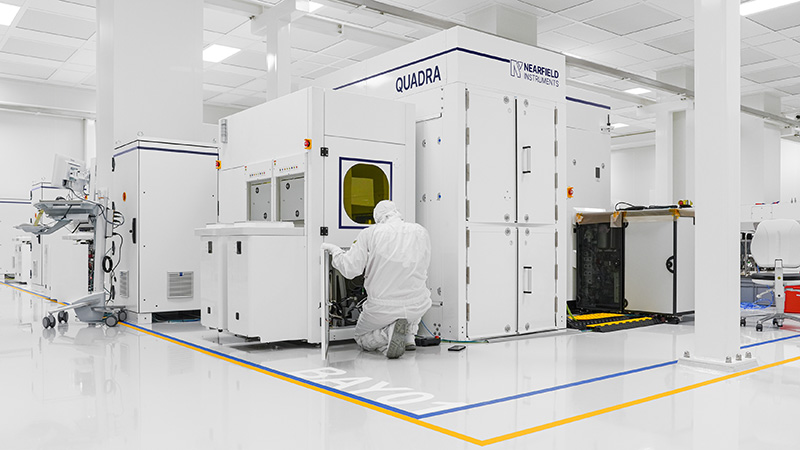
The company specialises in high-mix, low- to medium-volume electronic manufacturing for mission-critical systems. Its defence work includes circuit-card assemblies, subassemblies, modules, complete box builds, power supplies, communications equipment, radar systems, and other high-reliability electronics.
Sypris’ Tampa manufacturing operation includes three surface-mount production lines and reconfigurable production cells, while its listed credentials include AS9100D, Nadcap accreditation, CMMC Level 2, IPC-A-610 Class 3, and J-STD-001 Class 3-related manufacturing controls. Those certifications govern processes and quality systems; they do not disclose or certify the electrical performance of the classified module itself.
The latest award also sits against increasing demand across Sypris’ defence and space manufacturing activities. Recent programmes include high-volume satellite power-processing units, NASA Orion electronics, communications hardware, electronic warfare equipment, and other mission-critical assemblies. Managing that mix places pressure on materials planning, specialist test equipment, qualified labour, configuration control, and suppliers of long-lead electronic components.
Missile production adds another difficulty because manufacturing rates can change faster than the underlying electronic design. A module previously built in modest quantities may have to move into a higher-output production environment without allowing workmanship, traceability, yield, or test coverage to deteriorate. Procurement capacity becomes an engineering concern when magnetics, semiconductors, connectors, substrates, and controlled components have limited alternative sources.
Sypris linked the new contract to the wider US effort to increase and accelerate munitions production. For an electronics manufacturer, higher volume does not simply mean adding operators or running equipment for longer. Production records, component traceability, controlled processes, fault screening, rework restrictions, and customer configuration requirements all have to remain stable as throughput rises.
Power supplies occupy an unforgiving position in that chain because their failure can disable otherwise functional avionics. Incoming component control, soldering quality, thermal design, protection circuitry, and production test are consequently part of the system’s reliability architecture rather than administrative manufacturing details.
The current contract establishes another production milestone but leaves the technical system intentionally opaque. The useful measure will be whether Sypris can move the additional tranche into 2027 deliveries while preserving the process controls expected of classified, high-cost-of-failure electronics. In this programme, the significant change is not a new power-supply specification disclosed to the market; it is the continuing expansion of manufacturing scope around one that remains undisclosed.