IN Brief:
- Teledyne HiRel will initially offer Everspin's 256Mb PERSYST STT-MRAM for military and aerospace electronics.
- The agreement also covers 64Mb and 128Mb PERSYST devices for programmes requiring different memory densities.
- Products are due to ship from Teledyne HiRel's Milpitas facility, with customer availability anticipated in Q4 2026.
Everspin Technologies and Teledyne HiRel Semiconductors have formed a supply and support partnership around PERSYST spin-transfer torque MRAM for aerospace, defence, and other long-lifecycle electronic systems.
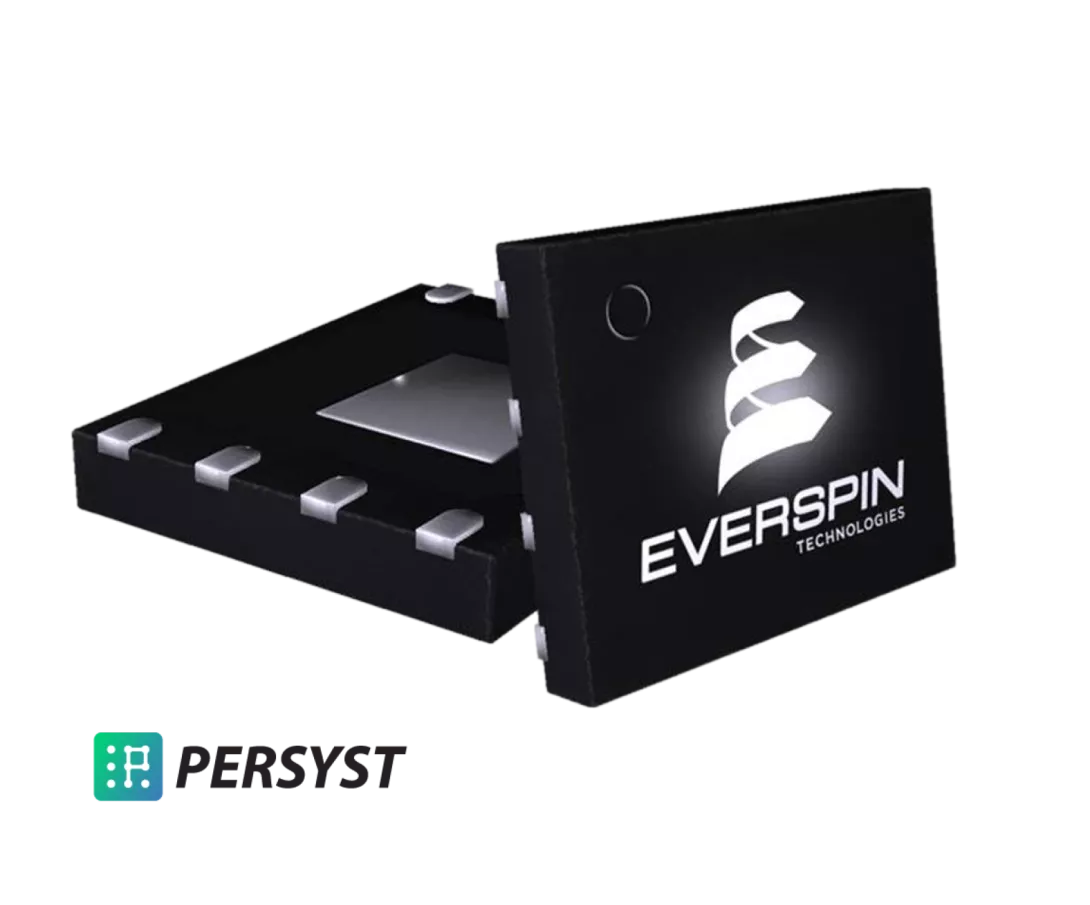
Teledyne HiRel will initially offer Everspin’s 256Mb PERSYST STT-MRAM through its memory portfolio for military and aerospace customers. The agreement also covers 64Mb and 128Mb devices, giving programmes several density options within the same persistent-memory family.
Target applications identified by the companies include avionics, VPX and single-board computers, radar and electronic-warfare payloads, satellite electronics, autonomous systems, and other equipment where stored information has to survive a power interruption, reset, or unexpected shutdown.
PERSYST combines non-volatility with RAM-like access characteristics. Unlike volatile SRAM or DRAM, data is retained when power disappears, while the technology can support frequent write operations without relying on the erase-and-program behaviour associated with conventional flash memory.
That combination is useful for system state, configuration data, event logs, recovery information, and other records that may change repeatedly but have to remain available when the equipment restarts. Everspin positions the devices as a replacement or complement to NOR flash in some workloads and as a way to reduce reliance on battery-backed SRAM, hold-up power, or capacitor-backed retention schemes.
The architectural advantage depends on the application. A design that currently combines volatile working memory, non-volatile storage, backup power, and protection circuitry may be able to consolidate some of those functions into persistent memory, but density, interface requirements, cost, qualification, and write behaviour still determine whether the substitution is worthwhile.
For aerospace and defence programmes, component availability introduces another consideration. Platforms can remain in production or service long after mainstream commercial electronics have moved through several generations, so lifecycle planning, documentation, screening, and obsolescence management can carry almost as much weight as the initial memory specification.
Teledyne HiRel’s role reflects those programme requirements. It will provide product guidance, screening flows, qualification documentation, procurement support, and obsolescence management alongside access to the Everspin devices.
Mont Taylor, vice president of business development at Teledyne HiRel Semiconductors, said such programmes require “long operating lifecycles, documented qualification requirements and reliable performance in harsh environments”.
The partnership therefore adds more than another distribution channel. Everspin gains access to an organisation already structured around high-reliability electronics programmes, while customers gain a supply path designed to handle qualification and continuity requirements over a longer period than is typical for high-volume commercial hardware.
The 256Mb device is the starting point because it provides enough density for substantial persistent state and logging workloads while retaining the fast-access characteristics that distinguish STT-MRAM from slower non-volatile storage technologies. The 64Mb and 128Mb alternatives allow designers to avoid carrying unnecessary density where the retained dataset is smaller.
The release does not state that the devices are radiation hardened, and aerospace or satellite positioning should not be interpreted as evidence that they satisfy every radiation requirement associated with a particular mission. High reliability, screening, endurance, temperature operation, and radiation tolerance are separate qualification questions, and programme designers still have to match the selected device to the applicable environment.
That distinction is particularly important in defence electronics, where terms such as mission-critical and high-reliability cover a wide range of systems. A memory device used in a ground-based radar processor faces a different qualification regime from one used on a spacecraft, even if both applications value non-volatile retention and long supply life.
The partnership’s immediate value is therefore in persistent-memory availability and programme support rather than a new claim about the underlying MRAM physics. Everspin already supplies commercial MRAM; Teledyne HiRel is adding a route for bringing the technology into programmes where procurement and lifecycle requirements create additional barriers to adoption.
Products will ship from Teledyne HiRel’s facility in Milpitas, California, with customer availability anticipated during the fourth quarter of 2026. That gives designers a more concrete milestone than a technology-development announcement, although individual programmes will still require their own qualification and sourcing decisions.
Persistent memory can be particularly useful when a system has to recover rapidly after interruption. Retaining configuration or state without a battery-backed memory path can simplify restart behaviour and reduce the number of components whose sole purpose is to preserve data while the main supply is absent.
The trade remains one of system architecture rather than memory fashion. MRAM will not displace every flash or volatile-memory function, but it becomes more compelling where frequent writes, immediate retention, simplified power-loss handling, and long programme lifecycles occur in the same design.
Everspin and Teledyne HiRel are addressing that combination with an established memory technology and a supply model aimed at customers for whom component continuity lasts rather longer than the average semiconductor product launch. In aerospace and defence, keeping the bits through a reset is useful; being able to buy the same qualified part years later is often the harder requirement.