IN Brief:
- Carbon AM67 combines four Cortex-A53 cores, three Cortex-R5F cores, and up to 4 TOPS of AI processing.
- Four MIPI CSI-2 interfaces, Wi-Fi 6, Bluetooth LE, graphics, and security target vision-intensive embedded systems.
- Samples are available, with mass-production modules and kits scheduled for October.
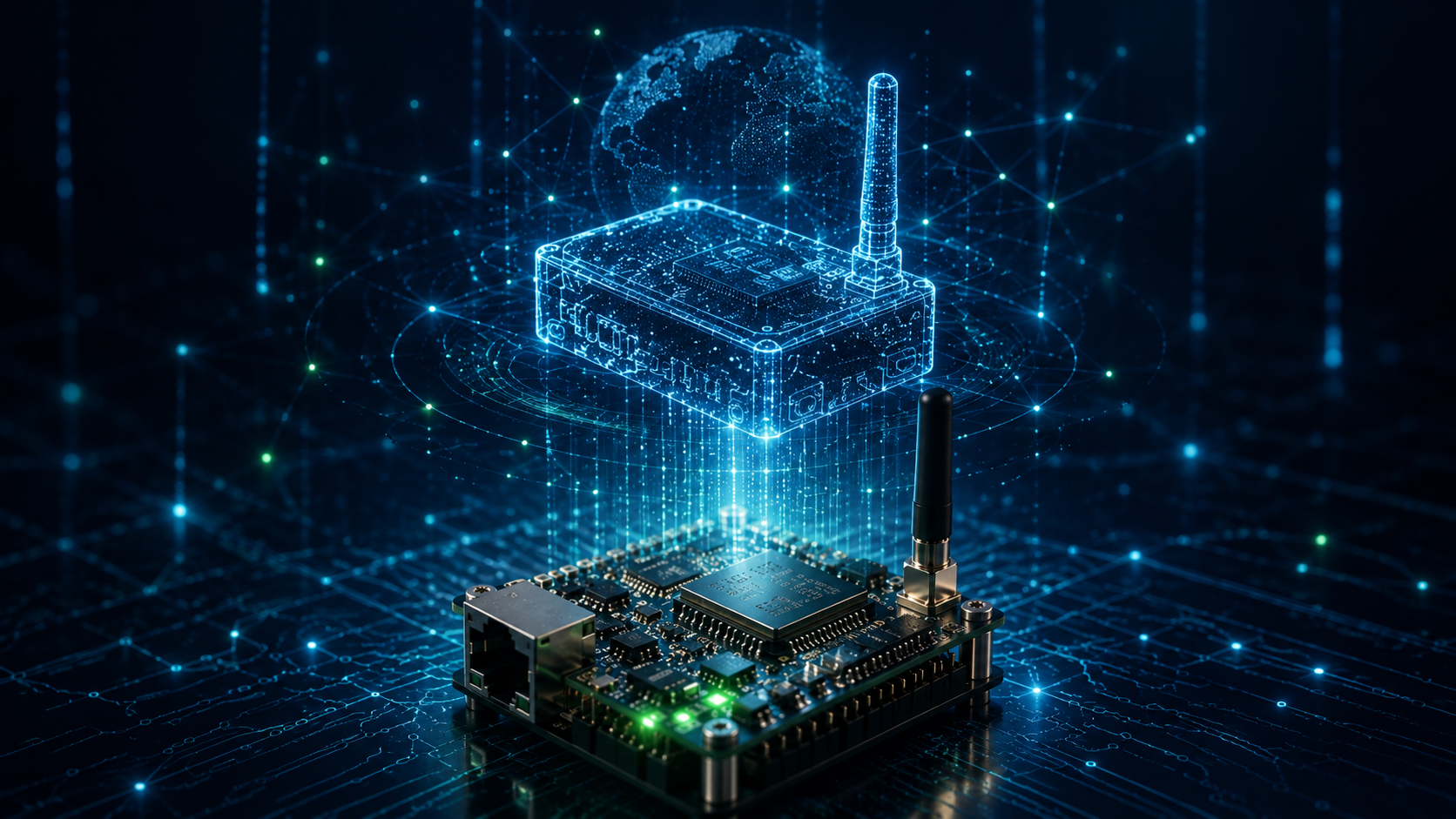
Ezurio has introduced the Carbon AM67 OSM-MF system-on-module, combining Texas Instruments’ AM67x processing platform with integrated wireless connectivity, machine-vision interfaces, security functions, and industrial-temperature options.
The 45 × 30 mm module conforms to the SGET OSM-MF v1.2 specification and is intended for commercial, industrial, and medical human-machine interfaces, machine vision, test equipment, building controls, energy systems, and other connected embedded equipment. Samples are available, with mass-production modules and kits scheduled for October.
Processing is divided between four 1.4 GHz Arm Cortex-A53 application cores and three 800 MHz Cortex-R5F real-time cores. That arrangement allows Linux-class application workloads to sit alongside deterministic control functions, while two deep-learning accelerators provide up to 4 TOPS of aggregate AI performance.
The imaging subsystem is particularly prominent. Carbon AM67 provides four MIPI CSI-2 interfaces, each supporting up to 16 virtual channels, together with an image signal processor rated at 600 megapixels per second. Up to three independent displays can operate at resolutions reaching 3840 × 1080, with graphics support including OpenGL ES 3.2 and Vulkan 1.2.
Those resources suit systems where vision, local inference, control, and graphical output have to share the same compact platform. An inspection terminal or medical interface can require several camera streams, a machine-learning model, real-time I/O, operator graphics, and network connectivity without enough board area or thermal headroom for several separate compute devices.
Wireless connectivity comes through Ezurio’s Sona TI351 module, using Texas Instruments’ CC3351 companion IC for Wi-Fi 6 and Bluetooth Low Energy. Ezurio offers wireless variants with global regulatory certifications, reducing the amount of radio certification work required when the same embedded platform is used across several markets.
The module integrates LPDDR4 memory, eMMC storage, and TI’s TPS65224 power-management IC. Configurations include 4 GB or 8 GB of LPDDR4, with interfaces spanning USB 2.0 and 3.0, Gigabit Ethernet, MMC/SD/SDIO, MIPI display and camera connections, UART, SPI, I²C, CAN-FD, PWM, and GPIO.
Security is implemented through both the processor hardware and Ezurio’s board-support software. Carbon AM67 supports secure and encrypted boot, a dedicated secure enclave, and protected file storage, while the EZ BSP adds signed software and chain-of-trust mechanisms based on Yocto and Buildroot.
Those functions become more important as embedded platforms remain deployed for longer periods. An industrial SOM may stay inside the same machine for years, which places software maintenance, secure updates, key handling, and vulnerability management alongside processor performance when the platform is selected.
Commercial variants are rated from 0°C to +70°C, with industrial versions extending from -40°C to +85°C. Software options include Yocto Linux, Buildroot, and FreeRTOS, giving developers a choice between richer application environments and real-time implementations.
Evaluation kits are available with a 7-inch display and an optional 8.3-megapixel camera, providing a route to test vision, graphics, wireless, and AI workloads before committing to a custom carrier board. That is particularly useful where camera bandwidth, thermal behaviour, and power consumption have to be assessed together rather than as isolated specifications.
The module’s 4 TOPS AI figure is modest beside dedicated high-end accelerators, but Carbon AM67 is designed around integration rather than maximum inference throughput. Processing, real-time control, machine vision, security, certified wireless connectivity, and the software stack are contained within a compact standardised module.
For equipment that needs moderate local AI performance alongside cameras, controls, and long-term embedded support, that balance can be more useful than a much faster accelerator requiring substantially more external integration. Production availability in October will test how effectively Ezurio can turn that integration into a repeatable platform for industrial designs.