IN Brief:
- Zhenwu V900 provides 216GB of memory and 1,200GB/s of inter-chip bandwidth for AI training and inference.
- Alibaba claims three times the performance of the earlier M890 and native support for FP8 and FP4 data formats.
- Commercial release and mass production are scheduled for Q1 2027.
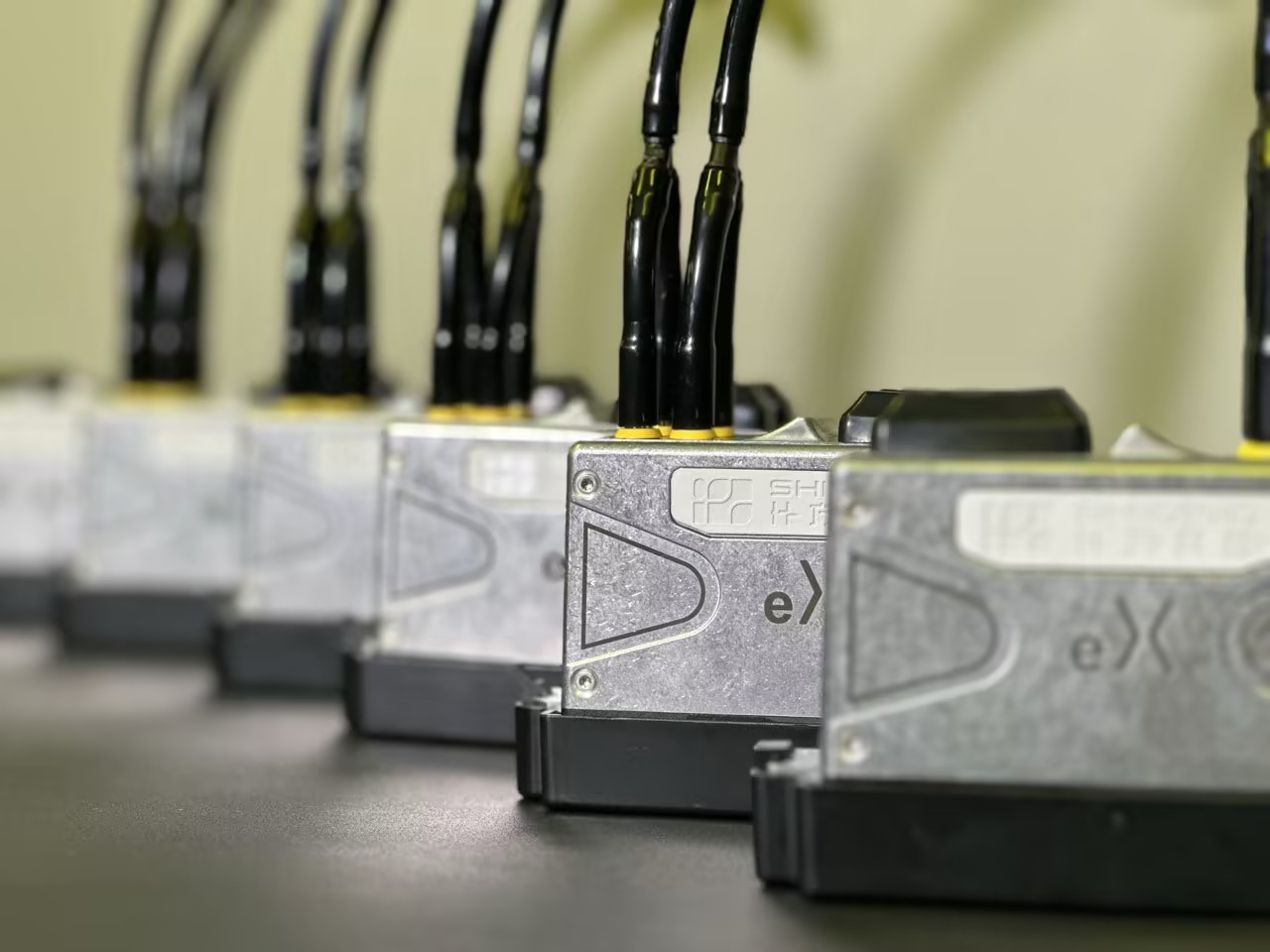
Alibaba has unveiled the Zhenwu V900 AI accelerator from its T-Head semiconductor unit, combining 216GB of memory, 1,200GB/s of inter-chip bandwidth, and support for FP8 and FP4 data formats ahead of mass production and commercial release planned for the first quarter of 2027.
The processor is designed for both AI training and inference. Alibaba claims that V900 delivers three times the performance of the Zhenwu M890 introduced in May, although it has not published enough directly comparable benchmark, power, process, or package information to place that figure against accelerators from other suppliers.
The memory specification gives a clearer indication of the intended workload. Large models can exceed the local capacity of a single accelerator, forcing weights and intermediate data to be split across devices. Increasing onboard memory can reduce some of that partitioning and the communication overhead it creates, although actual performance still depends on memory bandwidth inside the package as well as the capacity available.
The 1,200GB/s inter-chip figure addresses the next level of the system. Training and serving large models require many processors to exchange data, making accelerator-to-accelerator communication a substantial part of overall performance. A fast individual device can remain underused if collective operations or model transfers are restricted by the surrounding fabric.
T-Head is consequently presenting V900 as part of a larger architecture rather than an isolated processor. Alibaba’s upgraded supernode combines the accelerator with its ICN Switch, Panmai SmartNIC, and Zhenyue SSD controller, linking compute, networking, and storage components developed within the same wider group.
The company says the resulting architecture can support clusters containing as many as 500,000 accelerator cards. That figure describes a system-scale target rather than a disclosed deployment. Operating at anything approaching that scale places demands on networking topology, failure recovery, power distribution, cooling, workload scheduling, and software orchestration that cannot be inferred from the processor specification alone.
Native support for FP8 and FP4 reflects the growing use of lower-precision numerical formats in AI computing. Reducing the number of bits used for weights or calculations can lower memory traffic and increase effective throughput, particularly during inference, provided the model and software can maintain acceptable accuracy.
The benefit is workload dependent. Training may require different precision at different stages, and not every model can move cleanly to aggressive quantisation. Compiler behaviour, framework support, numerical handling, and library optimisation will therefore determine how much of the theoretical efficiency reaches an application.
Alibaba says Zhenwu products are already serving more than 650 customers across industries including automotive, finance, large language models, embodied intelligence, energy, and manufacturing. That is a company-reported customer count rather than a shipment figure, but it shows T-Head positioning the architecture beyond internal Alibaba Cloud use.
The wider strategy also reduces the number of infrastructure layers Alibaba has to source independently. Developing processors, network silicon, storage controllers, servers, cloud software, and AI models within one organisation allows the company to optimise interfaces across the stack. It also means T-Head has to provide the compiler, library, diagnostics, and management environment needed to make those components usable outside tightly controlled internal deployments.
Manufacturing remains another constraint. High-end AI accelerators depend on advanced wafer processing, packaging, memory, substrates, power delivery, and cooling infrastructure. Alibaba has disclosed V900’s memory capacity and inter-chip bandwidth but has not detailed the manufacturing process, packaging arrangement, power envelope, or memory sourcing behind the device.
Those details will become more important as Q1 2027 approaches. Production hardware will allow developers to compare sustained application performance, software maturity, energy consumption, and cluster efficiency rather than vendor-level performance claims. The disclosed specifications establish V900 as a substantial system component; the production programme will determine how effectively that component scales outside the launch architecture.