IN Brief:
- The A8481 uses a 1280 × 1024 cooled mid-wave infrared detector.
- A motorised filter wheel and Gigabit Ethernet or CoaXPress interfaces support scientific measurement.
- The camera is intended for research, test and measurement applications.
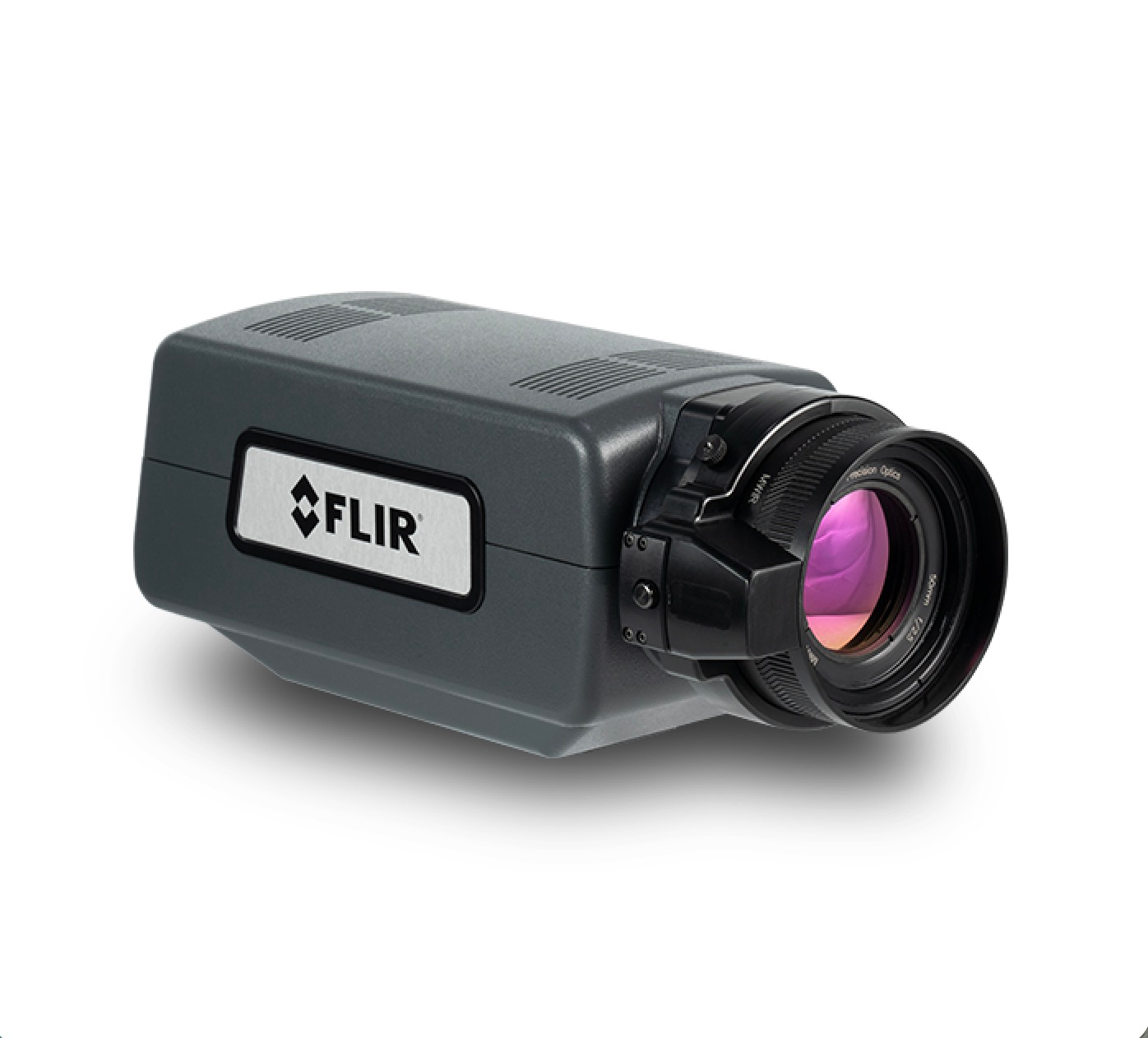
Teledyne FLIR has introduced the A8481, a compact mid-wave infrared scientific camera combining a cooled 1280 × 1024 detector with radiometric measurement functions and high-speed data interfaces. The model expands the company’s A-Series scientific imaging range for research laboratories, electronics development and industrial testing.
The camera uses a strained-layer superlattice detector sensitive to the mid-wave infrared region. Its more than 1.3 million detector elements can provide spatial detail when engineers examine the temperature distribution across electronic assemblies, provided the lens and working distance deliver enough resolution at the surface being inspected.
Infrared measurement differs from ordinary visible-light photography. The camera detects radiation reaching its detector, but calculating surface temperature requires calibration and assumptions about the subject's emissivity. Highly reflective components can also return infrared radiation from their surroundings, causing apparent temperatures to differ from actual temperatures.
Mixed electronic assemblies present a particular measurement challenge. A circuit board can contain semiconductor packages, exposed metallic conductors, solder joints and polymer surfaces with different emissivities. Directly comparing displayed temperatures between these materials can therefore be misleading unless the measurement setup accounts for their surface characteristics.
The A8481's motorised three-position filter wheel permits a user to select optical filtering appropriate to the experiment. Wavelength selection can help isolate a spectral band or limit unwanted radiation, but the correct filter depends on the material, the temperature range and the objective of the measurement. Optical configuration must be considered together with detector calibration.
Teledyne FLIR supplies Gigabit Ethernet and CoaXPress interface options. Ethernet provides a familiar integration route for laboratory networks, while CoaXPress addresses applications requiring high-speed image transfer. The sustained recording requirement depends on the image size, pixel depth and frame rate, so the acquisition computer and storage system must also be specified appropriately.
When thermal events occur rapidly, synchronisation with electrical or mechanical instrumentation becomes important. An engineer may need to relate a temperature change to an input current, switching event or operating cycle. The usefulness of the resulting dataset depends on consistent acquisition timing as much as the imaging performance of the infrared detector.
Cooling the detector supports demanding infrared measurement, although a cooled camera also has operational considerations that differ from those of an uncooled instrument. Detector sensitivity is one part of overall performance: the lens, calibration, thermal stability and background environment can materially influence the quality of a scientific measurement.
For power electronics testing, infrared imaging can reveal local heating around semiconductor packages, current paths and interconnections under load. A surface-temperature image does not directly establish the junction temperature inside a semiconductor die. The temperature difference depends on the package thermal resistance, dissipated power and the conditions during the test.
Likewise, a higher pixel count does not guarantee the ability to resolve a microscopic hotspot. The field of view and lens determine the area represented by each detector element, and a very small target may occupy too little of the image for a reliable quantitative measurement. Lens choice remains a critical part of designing an experiment.
The A8481 has been positioned as a compact upgrade option for established scientific camera workflows. Compatibility with a particular mount, lens, recording system or control application still needs to be checked against the supplied interface and product documentation rather than assumed solely from the A-Series designation.
The A8481 product specification establishes its detector resolution, filtering arrangement and interface options. Engineers evaluating the camera will need to compare the available acquisition configurations and calibration requirements with the temporal and spatial characteristics of their intended experiments before selecting the appropriate measurement setup.
The camera's intended scientific role also distinguishes radiometric recording from thermal visualisation alone. A visually clear infrared picture can help locate a region of interest, but a quantitative temperature trend requires a stable measurement arrangement. Changes in focus, reflections or surface finish can alter apparent readings without an equivalent change in the subject's physical temperature.
Laboratory integration should also account for the size and handling of recorded datasets. Repeated high-resolution acquisitions can place demands on storage bandwidth, time stamps and analysis software. Those supporting systems need to preserve the relationship between frames and experimental conditions if results are to be compared across tests.