IN Brief:
- ASMPT secured HK$8.85bn in third-quarter equipment bookings, up 137.9% year on year, with a book-to-bill ratio of 1.69.
- Semiconductor equipment orders rose 156.3%, supported by thermocompression bonding and photonics manufacturing systems.
- Surface-mount equipment bookings rose 122.1%, although some purchases were brought forward from later periods.
ASMPT secured HK$8.85bn in equipment orders during the third quarter of 2026 as semiconductor assembly and optical-component manufacturing investment accelerated. Bookings rose 137.9% year on year and 24.7% quarter on quarter, with demand concentrated in thermocompression bonding, photonics machinery and surface-mount assembly systems.
The group recorded a book-to-bill ratio of 1.69, its highest since the first quarter of 2021. That compares the value of new orders with revenue recognised during the period; it does not measure the number of machines already delivered or installed at customer facilities.
Semiconductor equipment bookings increased 156.3% year on year and 31.3% from the second quarter. ASMPT identified advanced packaging as a major contributor, particularly chip-to-substrate thermocompression bonding equipment ordered by outsourced semiconductor assembly and test companies serving an advanced-logic customer.
Thermocompression bonding applies heat and force to establish connections between semiconductor components and a receiving substrate or wafer. The technique is used where interconnect dimensions, placement accuracy and mechanical constraints make the assembly process demanding. Bonding conditions must be controlled to obtain reliable connections without damaging dies or adjacent structures.
The manufacturer reported record orders for chip-to-substrate equipment used with larger compound-die assemblies. These package designs combine semiconductor functions within an advanced assembly, increasing the importance of alignment, thermal behaviour and the consistency of connections across the package.
ASMPT also received repeat chip-to-wafer thermocompression bonding orders from a global integrated device manufacturer developing advanced processors for client computing and AI inference. Chip-to-wafer processes attach individual dies to positions on a wafer, presenting a different equipment and production workflow from attaching dies to finished package substrates.
Both approaches demand consistent placement and bonding conditions, but the resulting throughput and yield depend on the package structure and customer process. The company has not supplied equipment quantities or named the customers associated with these orders, limiting any estimate of the manufacturing capacity they will add.
Photonics equipment achieved record bookings and revenue, supported by production ramps for 800G, 1.6T and newer optical modules. These assemblies combine emitters, receivers and optical interfaces with electronic components, with small alignment errors capable of affecting optical coupling and insertion loss.
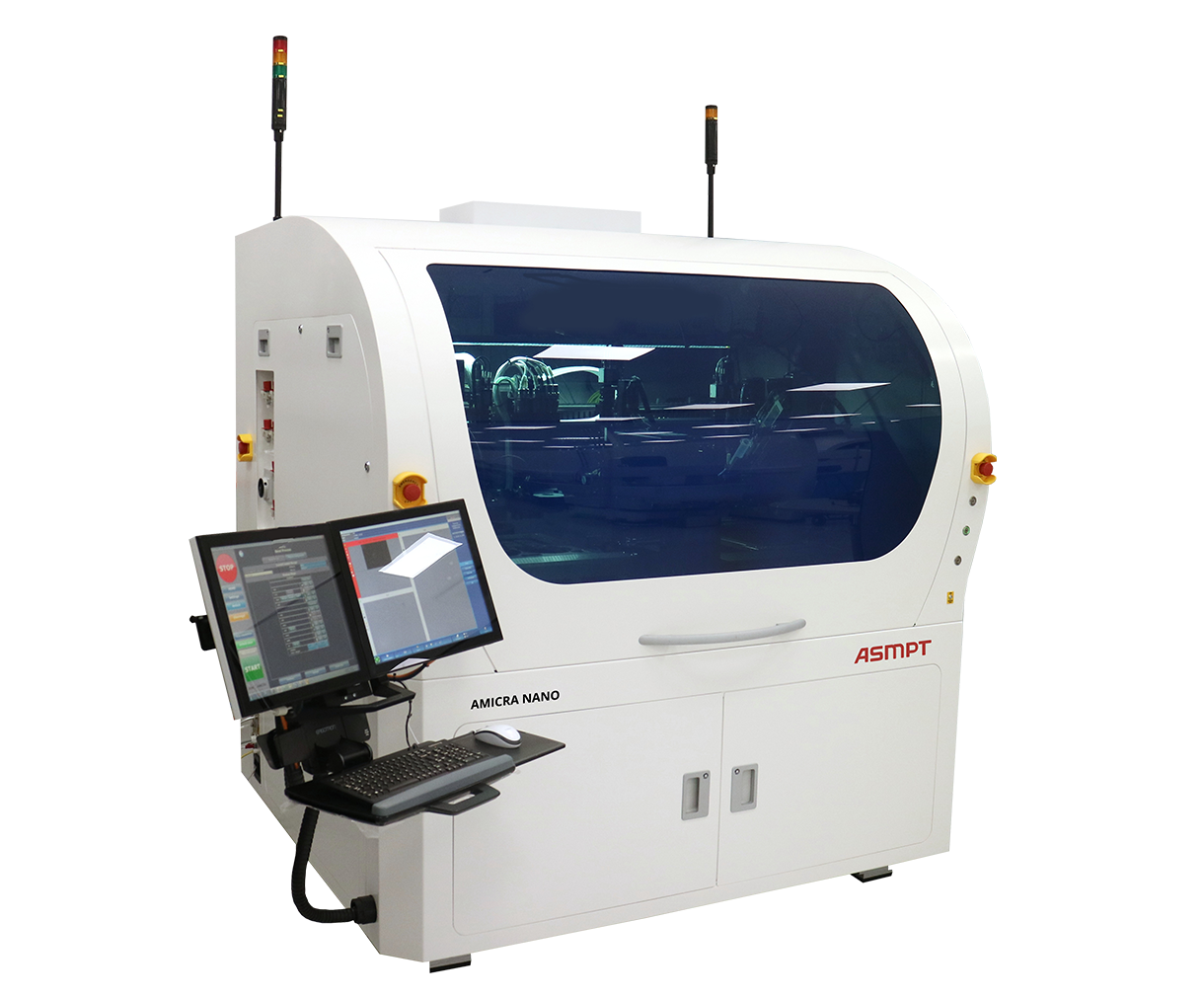
ASMPT’s AMICRA business secured a bulk order for near-packaged optics equipment and its first orders from a communications services provider for high-precision optical-transceiver bonding. The company also reported engagement with developers of co-packaged optics, but did not identify equivalent production orders for every prospective architecture.
Near-packaged optics brings optical components closer to processing or networking silicon, reducing some high-speed electrical interconnect distances. Co-packaged optics involves tighter integration within a shared package or closely coupled assembly, with different demands on thermal management, serviceability and precision assembly. The two approaches should not be treated as interchangeable.
Surface-mount technology bookings reached a third consecutive quarterly record, increasing 122.1% year on year and 18.9% quarter on quarter. ASMPT attributed demand to AI server boards and optical transceiver assemblies, including more than US$100m of bulk orders and customer purchases brought forward from later periods.
Surface-mount equipment places packaged components onto printed circuit boards before soldering. Server and optical equipment assemblies can combine dense component layouts with large devices and strict placement tolerances, requiring production lines to balance placement throughput, process control and inspection.
The orders brought forward create an important qualification when interpreting the record quarter. They increase reported bookings now without necessarily representing an equivalent rise in underlying demand during later periods. ASMPT expects fourth-quarter bookings to remain well above the year-earlier level but below the third-quarter record.
Group revenue reached HK$5.25bn, up 48.7% year on year and 6.3% quarter on quarter. Adjusted gross margin increased to 42.9%. These measures cover recognised sales and profitability, whereas the HK$8.85bn bookings total represents new orders secured during the quarter.
For the fourth quarter, ASMPT forecasts revenue of US$670m–US$730m. The company expects double-digit sequential growth in surface-mount revenue, while semiconductor equipment revenue is forecast to remain broadly flat because advanced-packaging systems have longer lead times.
The combination of stronger bonding-equipment orders, photonics demand and surface-mount bookings indicates investment across several stages of electronic hardware manufacture. Actual production increases will depend on equipment delivery, installation, customer process qualification and the yields achieved once those systems enter operation.