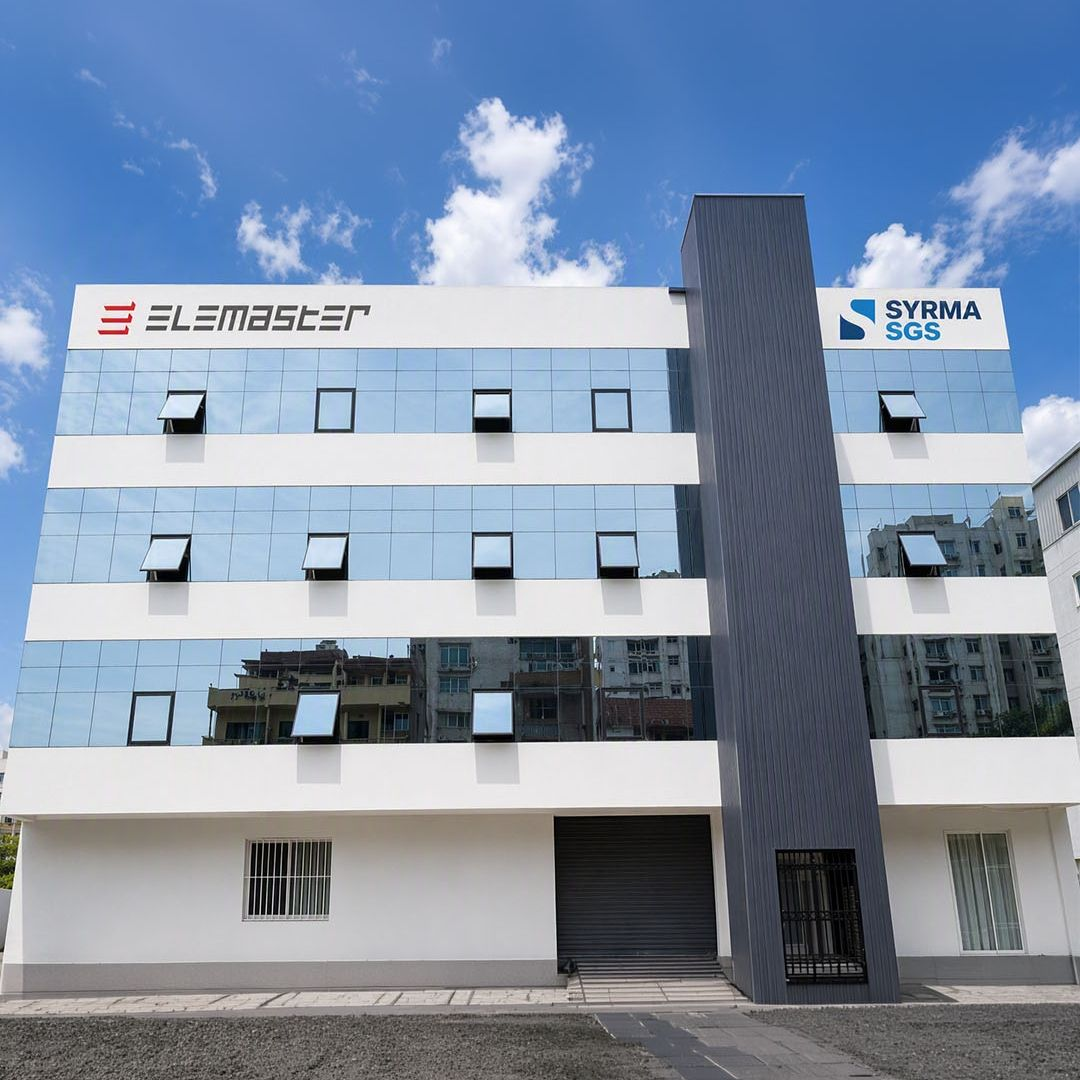
IN Brief:
- Syrma SGS recorded ₹19,897 million of second-quarter operating revenue and ₹19,995 million of total revenue.
- Automotive and industrial revenue grew 91% and 86% respectively year on year, according to the company’s segment analysis.
- Exports accounted for approximately 26% of operating revenue during the quarter.
Syrma SGS Technology recorded ₹19,897 million in revenue from operations during the quarter ended 30 September 2026, a 73.6% increase from a year earlier. Total consolidated revenue, including other income, reached ₹19,995 million, while profit after tax rose to ₹1,242 million. The Indian electronics manufacturing services company reported growth across automotive, industrial, consumer, healthcare, and IT and railway programmes.
Revenue from operations rose from ₹11,459 million in the equivalent 2025 quarter, producing the reported 73.6% year-on-year growth rate. Including other income, total quarterly revenue increased from approximately ₹11,546 million to ₹19,995 million, a slightly different comparison. Other income contributed about ₹99 million to the latest total, so the company’s two revenue measures should remain separate in comparisons of operating performance.
Operating EBITDA, which excludes other income, reached ₹1,933 million, compared with ₹1,152 million a year earlier. The corresponding margin was 9.7%, down from 10.1% in the year-earlier quarter. On the company’s broader EBITDA measure, earnings reached ₹2,031 million, an increase of approximately 63.9%, with a 10.2% margin. Profit before tax rose to ₹1,652 million, and profit after tax reached ₹1,242 million.
The company’s end-market breakdown shows the relative contributions of several electronics manufacturing programmes. Automotive revenue increased by 91% year on year to ₹5,169 million, representing 26% of quarterly operating revenue. Industrial revenue rose 86% to ₹4,935 million, or 25% of the mix, while consumer electronics brought in ₹5,727 million and accounted for 29% of the total.
Healthcare contributed ₹1,340 million, up 61% from a year earlier, while IT and railway programmes generated ₹2,727 million, an increase of 69%. Combined with the automotive, industrial, and consumer figures, these rounded end-market values broadly reconcile to the reported ₹19,897 million of operating revenue. They describe customer-market exposure rather than five separately reported legal business segments.
Automotive and industrial growth changes the production mix handled by the same manufacturing network. Vehicle electronics can demand detailed traceability and process approval for component changes, while industrial control products may involve smaller runs and a wider range of component configurations. Consumer production can require faster volume changes and fixture turnover. The company reported stronger sales in each category without attributing specific factory utilisation or operating margins to individual programmes.
Export revenue reached ₹5,138 million, an increase of 91% year on year, equivalent to 26% of revenue from operations. The export contribution places the company’s Indian production capacity within wider international electronics supply chains. Customers using outsourced electronics manufacturing must coordinate material availability, approved component substitutions, process validation, and cross-border deliveries, particularly where printed circuit boards and assembled modules pass through several suppliers.
Gross profit for the quarter was ₹4,193 million, giving a 21.1% gross margin against revenue from operations. That compares with 23.8% in the year-earlier period and 24.5% in the preceding quarter. Materials consumed rose to ₹15,703 million. Revenue growth therefore occurred alongside changes in cost mix, which helps explain why the company’s operating earnings increased at a different rate from sales.
For the first six months of its 2027 financial year, Syrma SGS reported total revenue of ₹36,032 million and EBITDA of ₹3,798 million. Profit after tax for that half-year reached ₹2,299 million. The six-month results provide a broader reference point than a single strong quarter, particularly when production schedules and customer inventories can change the timing of deliveries between reporting periods.
Syrma SGS is also building out printed circuit board manufacturing through its existing investment programme, adding a stage of production upstream of board assembly. Fabrication forms the board’s conductive layers, drill structures, and surface finishes; assembly subsequently mounts and solders electronic components and validates the completed circuitry. Local PCB capacity could alter sourcing lead times and material control once the planned manufacturing stages are commissioned, while the quarter’s reported operating revenue reflects activity already recognised.
Higher sales have increased gross earnings in absolute terms, even as the quarter’s gross and operating margins were below their year-earlier levels. Automotive and industrial customers contributed ₹10,104 million in combined revenue, and exports represented around one-quarter of operations. Syrma SGS enters the next reporting period with this larger production mix while the PCB fabrication investment remains a separate capacity project.