
IN Brief:
- AliveCor has secured CE mark for its handheld Kardia 12L ECG system in Europe.
- The device uses a single cable and five electrodes to deliver 35 cardiac determinations.
- Portable diagnostic hardware is moving further into primary care, urgent care, pharmacy, and community settings.
AliveCor has received CE mark for its Kardia 12L electrocardiogram system, clearing the way for a European rollout of its handheld 12-lead platform. The company said the product will launch first for healthcare providers in France, Germany, Italy, Spain, and the UK, bringing a more compact ECG format into settings where full cart-based systems can be difficult to deploy.
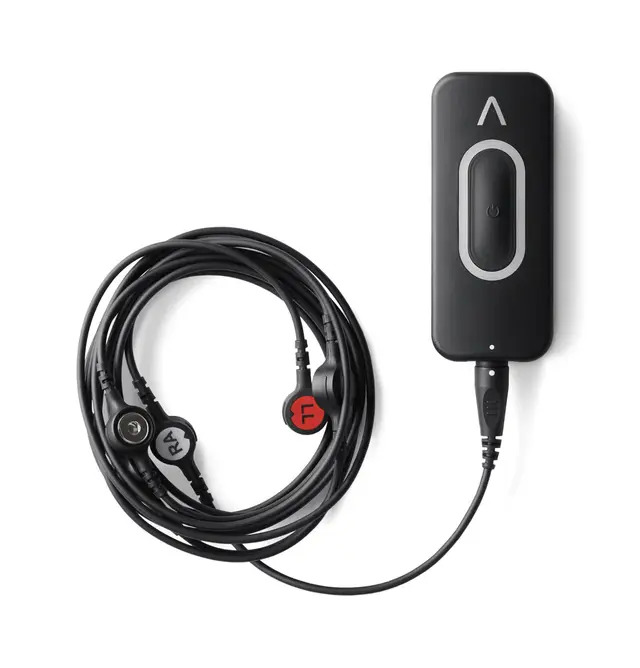
Kardia 12L uses a single-cable, five-electrode design and is powered by the company’s KAI 12L AI technology. AliveCor said the system can detect 35 cardiac determinations, including 14 arrhythmias and 21 morphologies such as acute myocardial infarction and common forms of cardiac ischaemia. The hardware weighs 0.13kg, runs on battery power, and is intended for use by healthcare professionals in settings ranging from urgent care and primary care to pharmacy, home visits, and rural clinics.
The company also said the reduced leadset shortens acquisition time versus conventional 12-lead workflows, with published research showing nearly a 30% reduction. That is a meaningful hardware proposition, because the bottleneck in point-of-care cardiac diagnostics is often not the algorithm but the time, training, and physical setup needed to obtain a clean trace. A system that cuts cable complexity while preserving a 12-lead style output changes where ECG-grade information can realistically be captured.
That shift has wider consequences for medical-electronics design. Portable diagnostics have been moving steadily away from large centralised instruments toward lighter systems that can be carried into more care environments without losing clinical depth. The engineering challenge is to compress sensing, signal quality, battery operation, user guidance, and analysis into a device that remains quick to set up and hard to misuse. In cardiac monitoring, that means solving for electrode placement, motion tolerance, and acquisition speed at the same time as software interpretation.
The Kardia 12L launch also points to a broader redesign of front-end medical instrumentation. Traditional carts were built for controlled clinical environments and trained operators. Newer systems increasingly assume a more distributed model of care, where urgent-care staff, pharmacists, mobile clinicians, and community teams need access to higher-grade diagnostics without the footprint of legacy hardware. That changes priorities for product developers. Weight, lead management, battery life, onboarding, and mechanical simplicity all become as important as raw detection performance.
Europe is a significant market for that transition. Health systems are under pressure to widen access to early cardiac assessment without pushing every patient into a hospital workflow, and medtech suppliers are responding with more portable, software-guided platforms. The competitive question now is how much diagnostic complexity can be removed from the hardware without compromising output quality. AliveCor’s answer is a five-electrode, single-cable device wrapped around AI analysis. If adoption follows, it will strengthen the case for a new class of handheld medical instruments that sit between wearable monitoring and traditional bedside equipment.

