IN Brief:
- Belden has introduced a hardware-agnostic virtual firewall for industrial and OT environments.
- The company has also launched new LioN-X LC digital I/O modules with multiprotocol support.
- Both releases are aimed at improving security and flexibility in converged industrial networks.
Belden has launched a new virtual firewall and digital I/O modules for industrial networks, targeting applications where IT and OT systems are increasingly being linked across plant and process environments.
The new Belden Virtual Firewall is designed to help users segment and protect industrial networks without replacing existing routing infrastructure. The company said the platform is hardware-agnostic and can be deployed across industrial, OT, and data centre environments.
The firewall includes features such as deep packet inspection for industrial protocols, intrusion prevention, and high-availability support. Belden is offering the platform in three licensing tiers, allowing users to scale deployments according to network size and security requirements.
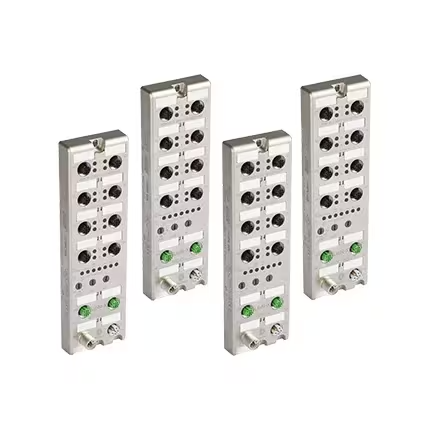
Alongside the firewall release, Belden has introduced its new LioN-X LC Digital I/O Modules. These are the first digital I/O modules launched under the Belden brand and are intended for industrial automation systems requiring compact, rugged field connectivity.
The modules support PROFINET, EtherCAT, EtherNet/IP, Modbus TCP, and CC-Link IE Field Basic. Belden said the units are designed with lower Pin 1 current to reduce overall system cost and are housed in metal enclosures rated to IP65, IP67, and IP69K for use in demanding environments.
The company has also built in cybersecurity-related features including Syslog support and ACHILLES certification, reflecting the growing focus on network visibility and resilience at field level as more devices connect directly into wider plant architectures.
The launch comes as manufacturers continue to tighten network segmentation between control systems and enterprise infrastructure while avoiding major disruption to installed systems. In that context, virtualised security tools and multiprotocol edge devices are becoming a more common part of plant network design.