IN Brief:
- The CSI2F-6918, CSI2F-7036, CSI2F-8518 and CSI2F-8536 families span 25 µΩ to 200 µΩ.
- Bourns rates the new shunts for up to 36 W continuous power under the specified 125°C terminal condition.
- Horizontal and vertical connection options support integration into high current power paths and busbar assemblies.
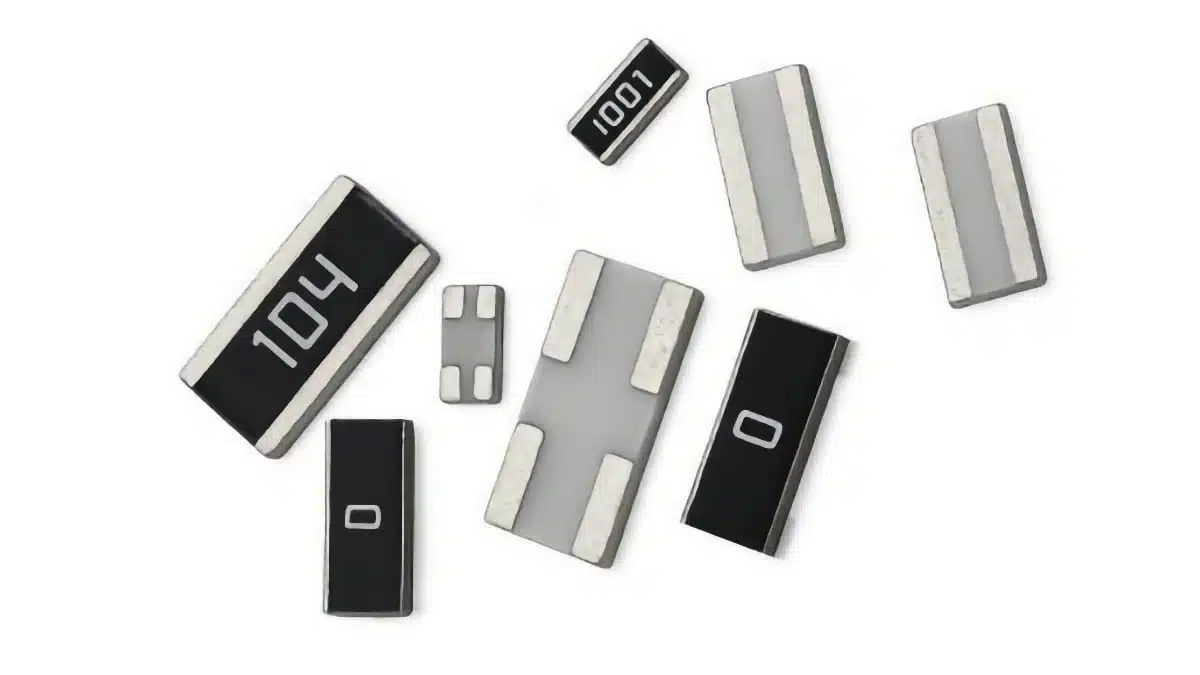
Bourns has introduced four CSI2F current sense resistor families for high current measurement, extending its large-format shunt portfolio with resistance values from 25 µΩ to 200 µΩ and continuous power capability of up to 36 W under the specified terminal-temperature condition.
The CSI2F-6918, CSI2F-7036, CSI2F-8518 and CSI2F-8536 series are designed for circuits where the load current is too high for conventional chip resistors to measure efficiently. Their low resistance limits voltage drop and power loss in the main current path while still producing a measurable voltage for the surrounding control electronics.
A shunt derives current from the voltage developed across a known resistance. Moving towards a lower value reduces I²R loss but also reduces the voltage available to the measurement amplifier, while a higher resistance produces a larger signal at the expense of additional dissipation. The 25 µΩ to 200 µΩ range gives designers several points along that trade-off.
Bourns specifies continuous power capability of up to 36 W at a terminal temperature of 125°C. That figure depends on the stated thermal condition rather than representing a power level that can be assumed in every assembly, because heat generated in the resistive element has to pass through the terminals and surrounding conductors.
Busbar geometry, copper area, airflow, enclosure temperature and neighbouring heat sources can therefore change the temperature reached in service. At these resistance values, the physical current path becomes part of the thermal design rather than simply an electrical connection to the component.
Temperature coefficient is also important because any change in resistance with temperature becomes a current measurement error. Bourns uses a low temperature coefficient resistance alloy, but the accuracy of the complete path still depends on the terminal construction and the exact points from which the voltage is measured.
Kelvin measurement is commonly used around such shunts so that the heavy current path and the voltage sense path remain separate. Resistance in bolts, copper, solder joints or busbars can otherwise become comparable with a shunt measured in tens of micro-ohms and materially distort the calculated current.
The CSI2F families are offered with connection arrangements suited to different mechanical orientations, including horizontal and vertical configurations. That allows the resistor to be integrated into busbar assemblies, battery conductors and other power structures rather than being limited to a conventional low-current PCB layout.
Operation from -40°C to +125°C gives the families scope for industrial environments where ambient conditions and self-heating can vary substantially. The specified ±5% resistance tolerance also means applications requiring tighter absolute accuracy may need calibration or software compensation elsewhere in the measurement chain.
The shunt itself remains only one source of error. Amplifier offset, common-mode range, ADC resolution, trace routing, thermal gradients and Kelvin connection placement all contribute to the final measurement uncertainty, particularly as the sensed voltage falls into the microvolt range at lower currents.
Bourns added the CSI2F-6918, CSI2F-7036, CSI2F-8518 and CSI2F-8536 to its range on 2 October. Their combination of very low resistance, relatively high dissipation and alternative mechanical orientations places them between smaller PCB-mounted sense resistors and larger custom busbar shunts.