IN Brief:
- Collins Aerospace has completed altitude testing of its Enhanced Power and Cooling System.
- EPACS ran for several days at mission-representative power levels and multiple simulated altitudes.
- Testing gathered performance data, checked emergency-power delivery, and validated system models.
Collins Aerospace has completed altitude testing of its Enhanced Power and Cooling System, advancing the next-generation power and thermal management architecture being developed for the F-35 and other future aircraft applications.
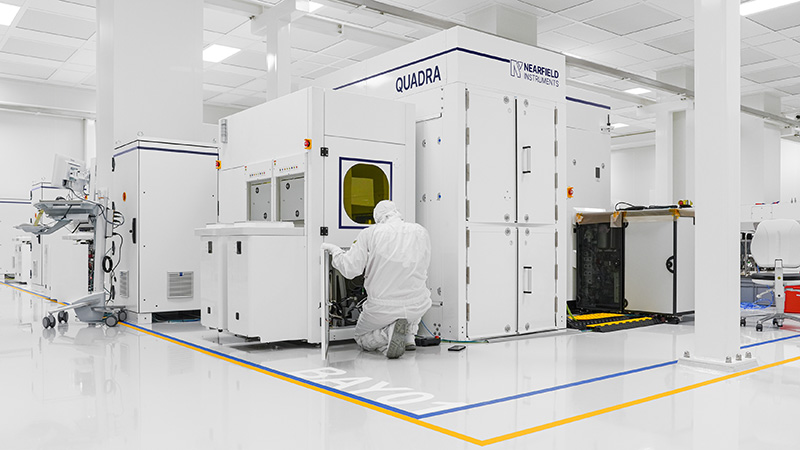
The test campaign ran for several days at power levels intended to replicate mission requirements. Engineers operated EPACS across several simulated altitudes, pushed the system towards its operational limits, collected performance data, assessed emergency-power delivery, and compared measured behaviour with existing system models.
The work follows Collins’s 2025 announcement that EPACS had met requirements for aircraft integration. Altitude testing adds a more representative environmental condition to that earlier development work, allowing the company to examine whether cooling and power functions behave as predicted as ambient pressure and air density change.
Ira Grimmett, vice-president of Environmental & Airframe Control Systems for Power & Controls at Collins Aerospace, said: “Successful altitude testing validates system performance in real-world flight conditions.”
Power and cooling are increasingly linked design constraints on combat aircraft. Radar, electronic warfare, communications, processors, displays, sensors, and other mission electronics all draw electrical power and ultimately reject much of it as heat into an airframe with finite space and thermal capacity.
Adding a higher-performance sensor or computing system therefore affects more than the device itself. Electrical generation and distribution must support the added load, while the thermal system has to remove the resulting heat without exceeding temperature limits elsewhere in the aircraft.
The problem becomes more difficult when electronics are upgraded during a platform’s service life. The F-35 is intended to receive successive mission-system improvements, meaning its supporting power and thermal architecture has to retain enough margin for equipment that did not exist when the aircraft’s original systems were designed.
EPACS is Collins’s response to that constraint. The system combines power and thermal management functions and is intended to provide additional cooling capacity and emergency electrical power for planned upgrades.
The latest test focused on system behaviour rather than an individual component. That is important because compressors, heat exchangers, power electronics, controls, airflow, electrical loads, and aircraft operating conditions interact in ways that can be difficult to reproduce through component testing alone.
Altitude changes one of the basic parameters governing the system. Reduced atmospheric pressure and density affect airflow and heat rejection, so a cooling architecture that performs adequately at ground-level laboratory conditions must still show that it can meet requirements across the flight envelope.
The emergency-power requirement introduces a separate operating case. Critical aircraft loads need support when the normal electrical configuration is disrupted, forcing the system to operate under conditions that may differ substantially from steady-state cruise or ground operation.
Collins says the altitude campaign demonstrated that EPACS could supply the expected emergency power while producing data used to validate its performance models. Those models matter because aircraft integration depends on predicting behaviour across conditions that cannot all be recreated continuously during development testing.
The company is also positioning the architecture for future defence and commercial aircraft, where electrical loads are increasing as mechanical and hydraulic functions are progressively replaced or supplemented by electrically driven systems.
For the F-35, however, the latest announcement remains a development milestone rather than a production selection. Successful altitude testing does not mean EPACS has been ordered for fleet-wide installation, and the release does not establish a retrofit timetable.
It does remove another layer of technical uncertainty. Collins has taken the system from earlier integration-readiness work into multi-day testing under varying altitude and power conditions, while confirming emergency-power behaviour and collecting data against its engineering models.
The next significance will come from the programme decision rather than another laboratory figure. Power and thermal margin has become a gating issue for increasingly capable airborne electronics; whether EPACS becomes the F-35’s long-term answer will depend on how the validated system moves from development hardware into aircraft-level implementation.