IN Brief:
- congatec and CODESYS are developing virtualised real-time control platforms for mixed-critical industrial workloads.
- The partnership combines congatec’s conga-zones hypervisor with the CODESYS Control runtime system.
- The architecture allows PLC control and general-purpose operating systems to run on one isolated embedded platform.
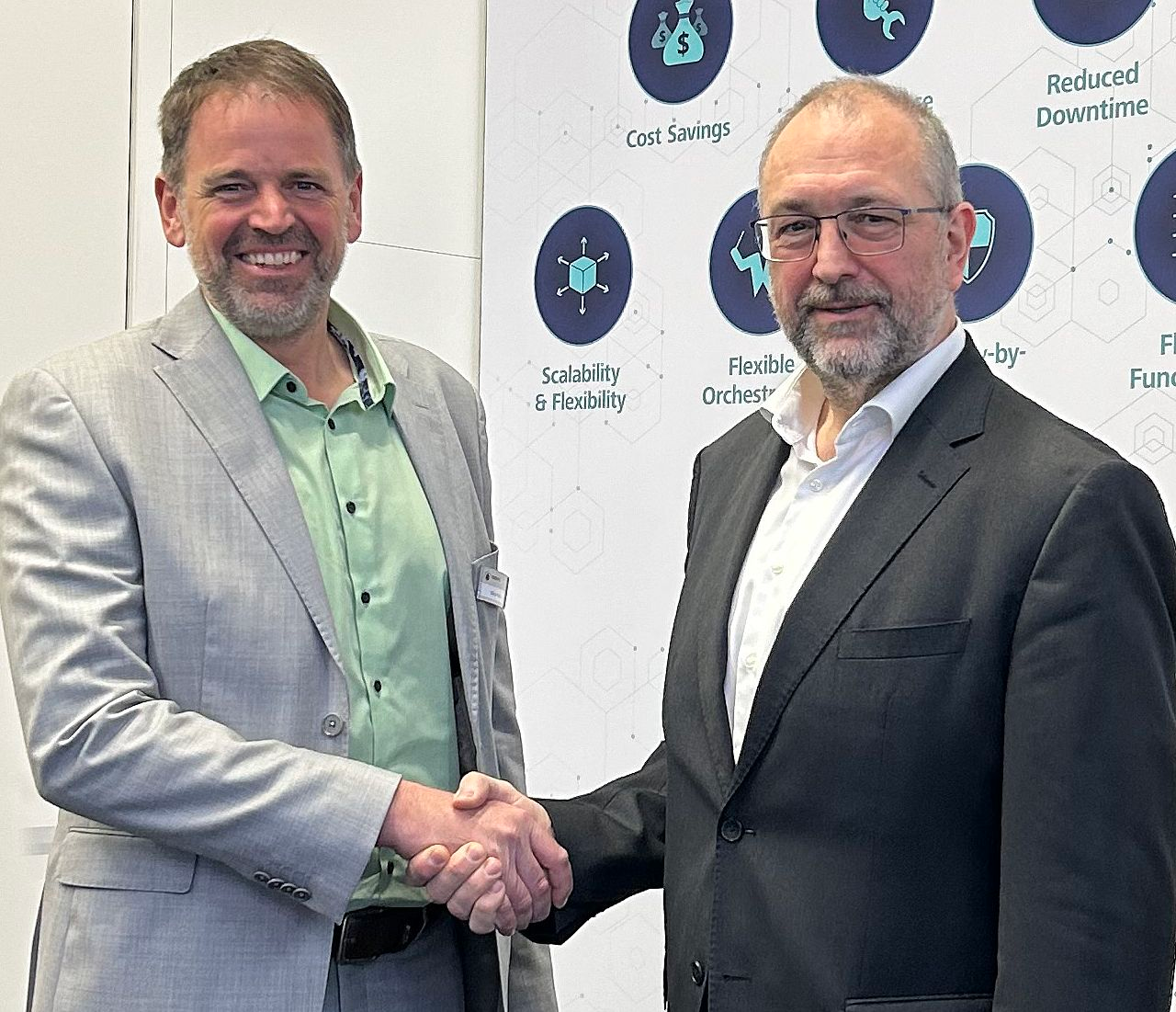
congatec and CODESYS have started a strategic partnership to deliver virtualised real-time control platforms for mixed-critical industrial workloads.
The collaboration combines congatec’s aReady.VT virtualisation technology, including the conga-zones hypervisor, with the CODESYS Control runtime system. The combined platform is intended to turn industrial controllers into software-defined IEC 61131-3 PLCs while allowing general-purpose operating systems to run alongside them on the same embedded hardware.
The conga-zones hypervisor separates the embedded platform into dedicated zones, allowing real-time control functions to operate in isolation while other workloads run in parallel. That separation is central to a machinery environment where deterministic PLC control, visualisation, connectivity, analytics, edge AI, security services, and remote maintenance are increasingly expected to coexist.
Industrial control hardware is moving away from single-purpose controller boxes toward software-defined platforms that can host multiple functions. The pressure is practical: machine builders want to reduce cabinet space, wiring, component count, and maintenance effort, while operators want better data access and more flexible update paths. Virtualisation gives that consolidation a structure, provided it preserves timing behaviour and isolates critical workloads from less predictable software.
Control technology is not naturally forgiving of general-purpose computing habits. A PLC task that misses its cycle time can affect motion, process stability, or safety behaviour, while an HMI, analytics agent, or gateway service can tolerate a wider range of timing variation. Running those workloads on shared hardware requires strict partitioning of CPU time, memory, I/O, interrupt handling, and update processes.
The congatec and CODESYS partnership puts that problem directly into the embedded platform layer. Standard hardware can be configured to run PLC logic, operating systems, and application services in separate zones, creating a more flexible alternative to multiple physical controllers. In product families with several machine variants, that flexibility can reduce redesign effort when different combinations of control, visualisation, networking, and diagnostics are required.
Automation suppliers are already broadening the component base around machinery architectures. Mouser’s expanded industrial automation component line-up brought together connectivity, sensing, power, control, cabling, and instrumentation for factory systems. The congatec and CODESYS work applies the same consolidation pressure to control software, where the boundary between PLC, gateway, HMI, and data platform is becoming less rigid.
Productivity pressure is also forcing a more disciplined approach to industrial technology adoption. The Royal Academy of Engineering’s warning over UK engineering technology adoption pointed to a persistent gap between available automation tools and practical deployment. Virtualised control will not solve that gap by itself, but it can reduce the hardware fragmentation that often slows modernisation programmes.
The technical test will be repeatability. Virtualised PLC functions must deliver the timing behaviour, support model, and validation confidence expected from dedicated controllers, including under load, during updates, and over long equipment lifecycles. Flexibility has little value in industrial automation if it introduces uncertainty into commissioning or field support.
By joining congatec’s hypervisor technology with the CODESYS PLC runtime, the partnership gives machine builders a more direct route into consolidated control architectures. The result will be strongest where virtualisation remains invisible to the control task and useful to the wider machine architecture.