IN Brief:
- Fraunhofer IIS has established the MOTIONS industrial connectivity application centre across three locations in Germany.
- Testing covers industrial wireless technologies, coexistence, real-time communication, security, and integration with existing systems.
- The publicly funded programme runs until September 2029, providing independent testing and technology transfer services.
Fraunhofer IIS has established MOTIONS, an industrial connectivity application centre providing facilities for testing and comparing wireless communication technologies. Operating across three German locations, the initiative allows manufacturers and technology providers to evaluate communication systems under representative production and logistics conditions before committing to deployment.
The centre has been accessible to companies since October 2026 and was formally introduced on 19 November. It covers 5G mobile networks, Wi-Fi, DECT NR+, IO-Link Wireless, and other industrial connectivity technologies, with testing arranged according to the operating requirements of individual applications.
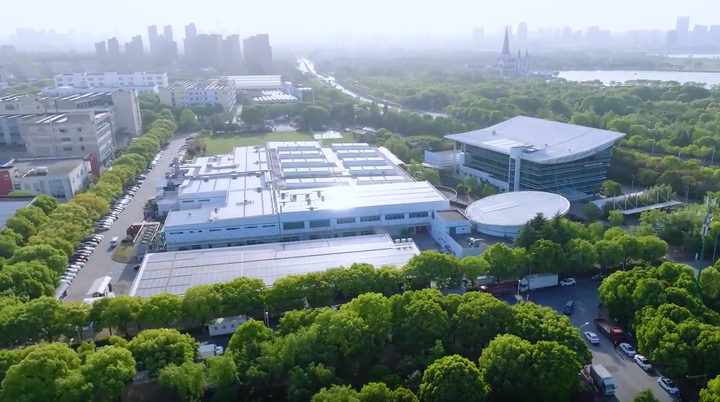
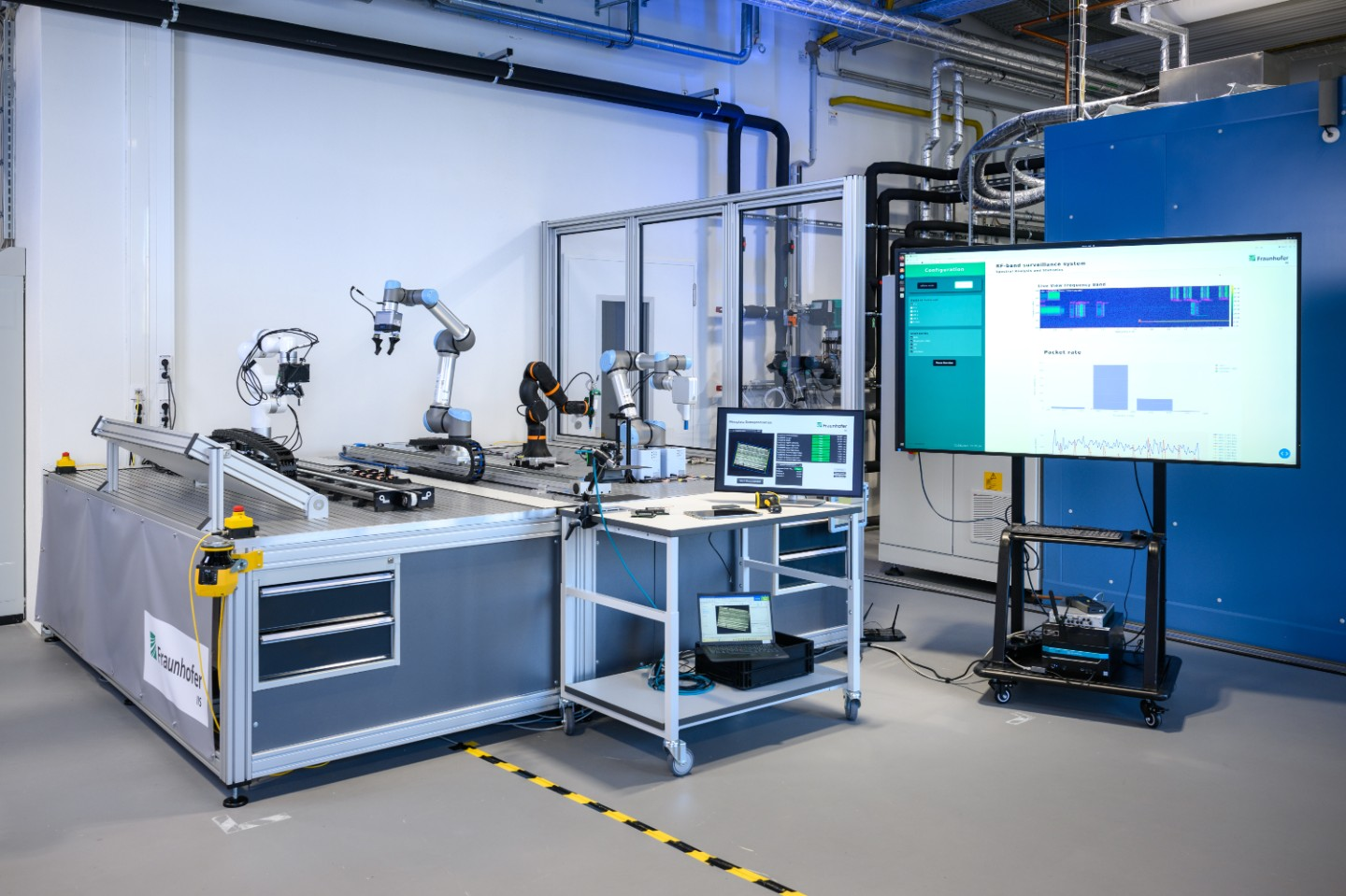
MOTIONS combines the L.I.N.K. Test and Application Center in Nuremberg, a demonstration production environment in Dresden, and specialised laboratories in Erlangen. Each location provides different infrastructure, allowing evaluations to cover radio communication, system integration, and practical industrial operating scenarios.
The programme addresses a recurring difficulty in factory connectivity: the technical performance of a wireless system depends on the environment in which it operates. Industrial buildings contain machinery, metallic structures, moving equipment, electrical systems, and other physical features that can influence radio propagation and network performance.
Communication requirements also differ substantially between industrial applications. A condition-monitoring sensor transmitting periodic measurements may tolerate delays that would be unacceptable for a tightly coordinated control system. Mobile robots, production equipment, and distributed sensors can place different demands on network coverage, device mobility, available bandwidth, and response time.
Radio-frequency conditions complicate those requirements. Signals can be reflected, attenuated, or obstructed by equipment and building structures, while multiple wireless systems may compete for available spectrum. As machinery moves or a factory layout changes, the communication environment can change with it.
Testing technologies under representative conditions allows their behaviour to be evaluated against application requirements rather than relying solely on published equipment specifications. Relevant measurements may include communication delays, reliability, coverage, interference behaviour, and the ability to maintain connections while devices move between different parts of a facility.
Fraunhofer is providing a technology-neutral and vendor-neutral environment for these evaluations. The centre will support comparisons between available approaches rather than assuming that one wireless standard is appropriate for every industrial application. Its facilities include demonstrators, laboratory infrastructure, and technical expertise for application-oriented testing.
The programme is organised around six technical areas: real-time information, coexistence management and sensing, security, Shared Safety, smart multi-RAT connectivity, and data-centric connectivity. Together, they address the characteristics of the wireless connection and the way communication supports the wider industrial system.
Coexistence management examines how different wireless systems operate in shared environments. Multiple technologies may use overlapping frequency bands or encounter interference from nearby equipment. Understanding those interactions can help developers determine whether changes to network configuration, device placement, or communication architecture are necessary.
Smart multi-RAT connectivity concerns the use of multiple radio access technologies within a connected system. An installation may have different communication requirements across its equipment, creating opportunities to combine technologies rather than applying one network architecture throughout the facility. Such arrangements introduce additional integration and management requirements, particularly where devices or applications depend on communication across network boundaries.
Real-time communication introduces a separate constraint. Some industrial processes require information to arrive within defined limits so that control actions can be coordinated predictably. Average network performance may be insufficient to establish suitability when occasional delays or interruptions could affect the operation of the equipment.
Security and safety-related communication require careful treatment. Wireless connectivity can support monitoring and information exchange involving safety-related equipment, but the network design must be assessed against the requirements of the complete application. A successful wireless demonstration does not automatically establish functional safety compliance or certify an industrial control system.
Data-centric connectivity extends the investigation beyond radio transmission. Information collected from sensors or machines must be transferred to control systems, computing platforms, or monitoring applications in a form they can use. Differences in device interfaces, protocols, data structures, and application requirements can create integration problems even where the radio connection performs adequately.
Fraunhofer intends MOTIONS to support technology transfer through individual cooperation projects, open laboratory access, workshops, and training. Companies can use the infrastructure to assess proposed communication architectures and develop practical implementation approaches before introducing equipment into their own production environments.
An Innovation Advisory Board will help identify industrial requirements and guide the programme's technical activities. The centre is also intended to work with universities, standardisation organisations, equipment manufacturers, systems integrators, and industrial users to support the exchange of technical knowledge.
MOTIONS forms part of Germany's InnoNT+ programme for smart connectivity in business and industry. The initiative is supported by the Federal Ministry for Digital Transformation and Government Modernisation and runs from 1 October 2026 to 30 September 2029.
Access to independent test facilities can reduce uncertainty during technology selection, although it does not remove the need for site-specific engineering. Results obtained in a laboratory or demonstration environment must still be assessed against the physical layout, equipment configuration, and operational conditions of the final installation.
Fraunhofer IIS will present MOTIONS at SPS – Smart Production Solutions in Nuremberg from 24 to 26 November 2026, in Hall 6, Booth 240. The centre is already accepting industrial testing activities, with its three-year programme intended to support the evaluation and implementation of wireless connectivity across manufacturing and logistics applications.