
IN Brief:
- Fraunhofer used its 2026 annual assembly in Leipzig to press for faster movement from scientific work into industrial deployment.
- The agenda spans contract research, licensing, spin-offs, technological sovereignty, and Germany’s wider High-Tech Agenda.
- Electronics, photonics, sensors, power systems, and deep-tech manufacturing all depend on stronger lab-to-factory transfer routes.
Fraunhofer-Gesellschaft has called for faster technology transfer in Germany, arguing that scientific results must move more effectively into industrial use, commercial products, and strategic capability.
The research organisation used its 2026 annual assembly in Leipzig to focus on the route from scientific excellence to economic value. Held under the theme “Fraunhofer — Transfer for Our Future,” the event brought together leaders from research, industry, and government as Germany develops its High-Tech Agenda and seeks to reinforce technological sovereignty.
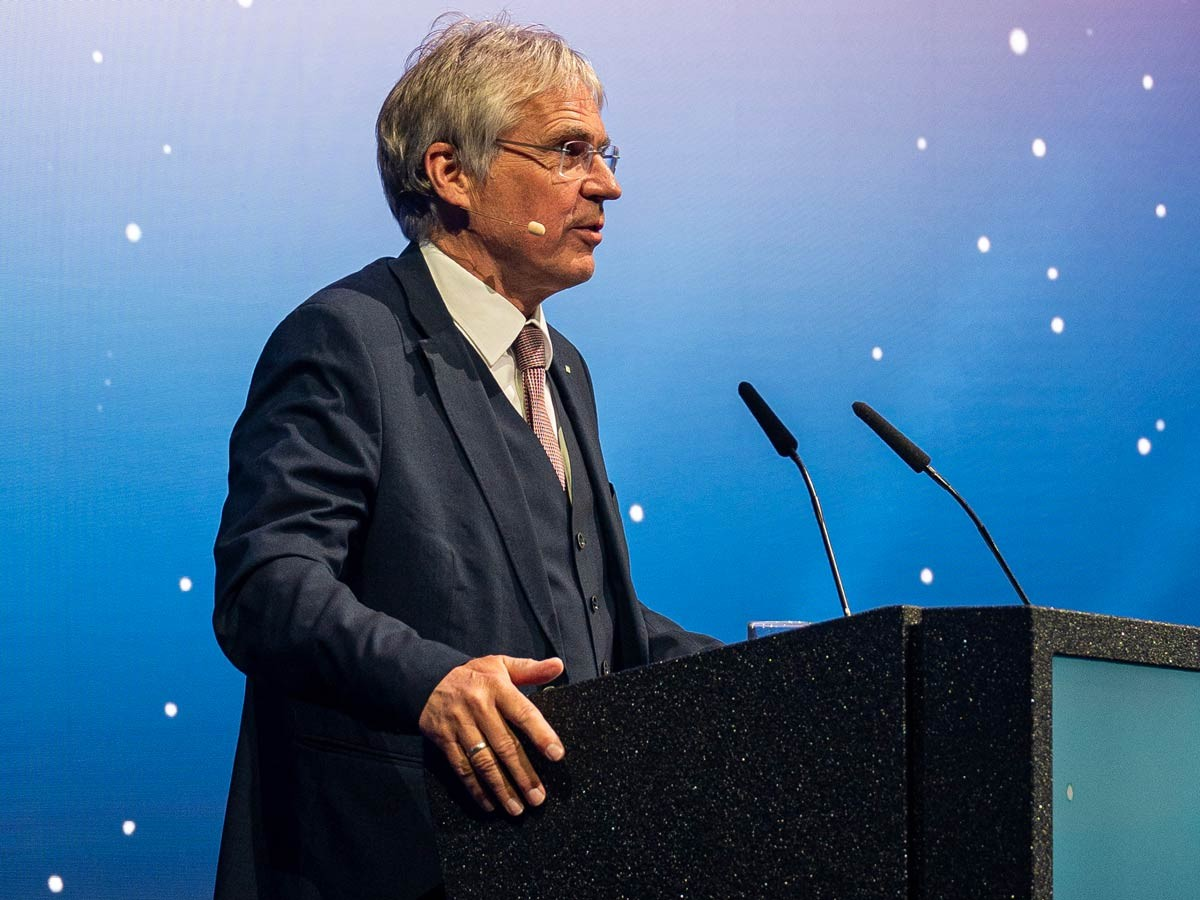
Fraunhofer President Holger Hanselka linked competitiveness to a broader approach across contract research, licensing, and spin-offs. The emphasis was not on a single research programme, but on how quickly applied science can be shaped into marketable systems, reliable industrial processes, and new companies able to carry specialist technologies into production.
The issue is especially sharp across electronics and adjacent deep-tech sectors. Germany and wider Europe retain strong research capacity in semiconductor devices, sensors, photonics, power electronics, hydrogen technologies, advanced manufacturing, and industrial automation. The harder task is moving results through validation, cost reduction, qualification, standards alignment, production tooling, and customer adoption.
That transfer stage is where many promising technologies slow down. Demonstrators can prove feasibility, while commercial deployment demands stable process windows, documented reliability, accessible design data, service support, and supply chains that can absorb technical risk. In electronics, the jump from a successful device, module, or material stack to a manufacturable platform is often longer than the research milestone suggests.
Applied power electronics work shows the problem clearly. A 1200V-class GaN charging module demonstrates the technical potential of compound semiconductors in bidirectional EV charging, but adoption depends on packaging, gate-drive behaviour, thermal design, reliability data, protection, and converter-level validation. Research strength starts the process; industrial evidence finishes it.
The same pattern runs through photonics, embedded sensing, coatings, precision optics, and microelectronics. A laboratory process can show strong performance while still lacking the cost model, repeatability, documentation, and manufacturing partners needed for customers to specify it with confidence. European research organisations have become more active in pilot lines and shared infrastructure because isolated inventions are insufficient when competing technologies can reach the market faster.
Technology transfer also carries strategic weight. Semiconductors, RF systems, sensors, embedded controllers, and power modules underpin defence, transport, energy infrastructure, medical technology, communications, and factory automation. If the commercialisation stage is weak, value can migrate away from the region that funded and developed the original science.
Germany’s challenge reflects a wider European tension between research excellence and manufacturing scale. Pilot lines, reference processes, shared test facilities, early customer access, and spin-out support are becoming as important as research grants. When those elements align, companies gain technologies they can qualify and build around; when they do not, prototypes accumulate without becoming useful industrial assets.
Faster transfer does not mean lighter engineering. It means reducing avoidable delay between discovery, validation, and adoption, while preserving the reliability and qualification discipline that industrial electronics requires. In sectors with long product cycles, a technology that arrives late can miss a design window by years, leaving technically stronger work stranded behind more available alternatives.
Fraunhofer’s pressure for a wider transfer framework lands at a moment when Europe is trying to secure deeper value from its research base. Scientific output alone will not close the gap. The deciding work sits in the unglamorous middle: pilot manufacturing, test evidence, supplier readiness, design enablement, and the commercial structures that allow engineering teams to use new technology without carrying all of the risk themselves.

